Skip to Content
Streetsblog Massachusetts home
Log In
Transit

MIT Study: High Fares Limit Low-Income Households’ Mobility

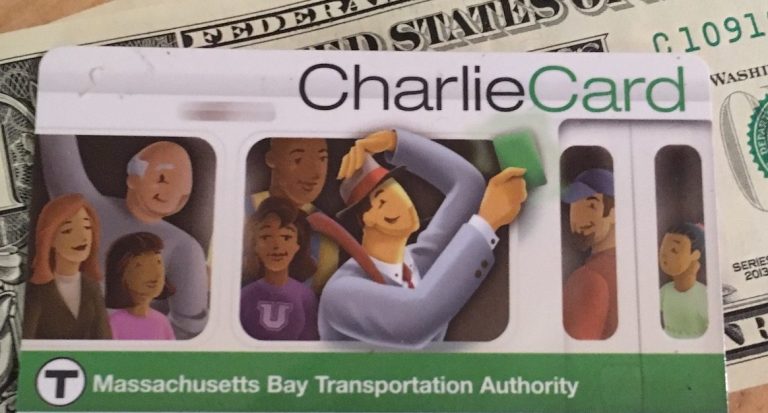
A CharlieCard on top of stacked dollar bills

A team of MIT researchers today announced the results of a study that concluded that a discounted transit fare for low-income households could offer significant benefits to those households without necessarily contributing to peak-hour crowding in the MBTA system.

In a new whitepaper, "How Low-income Transit Riders in Boston Respond to Discounted Fares: A Randomized Controlled Evaluation," researchers Jeffrey Rosenblum, Jinhua Zhao, Mariana Arcaya, Justin Steil and Chris Zegras outline the preliminary results of an experiment in which they recruited Boston-area participants from households in the federal Supplemental Nutrition Assistance Program (SNAP) and analyzed the effects of discounted fares on their transit use.

Half of the experiment's participants received a specialized CharlieCard that offered a 50% discount on all MBTA fares; the other half, a control group, received regular CharlieCards. Participants from both groups were then surveyed on a daily basis to learn why, and how often, they used the MBTA throughout the course of the study.

Unsurprisingly, people who paid half price for transit fares used transit more often: the group that received the discounted CharlieCard took, on average, about 30% more trips per week than the control group paying full price. Participants who received a discounted fare were more likely than their counterparts in the control group to use transit to get to healthcare and social services appointments.

While transit agencies might be concerned that offering a discounted fare to lower-income riders might increase crowding, the study's data show that lower-income households (with and without the discount) were actually more likely to ride during off-peak times, especially in the early-morning hours before 7 a.m., and in the mid-day hours between 9:30 a.m. and 4 p.m.:

From "How Low-income Transit Riders in Boston Respond to Discounted Fares: A Randomized Controlled Evaluation" by Jeffrey Rosenblum et al, MIT Department of Urban Studies and Planning

This evidence suggests that the benefits of additional ridership from discounted fares for low-income riders would largely occur at times when buses and trains have excess capacity.

Since lower fares increase ridership among low-income people for households’ medical and social services appointments, it’s reasonable to ask to what degree even higher fares would suppress those trips. With another MBTA fare hike taking effect on July 1, it’s a timely and important question.

The MIT study comes on the heels of a similar study last month from the Worcester Regional Research Bureau, which found a large decline in ridership from recent fare increases for buses in the Worcester region.

In response to this research, a number of advocates and some elected officials are calling for a statewide low-income fare program.

Rep. Adrian Madaro, a Massachusetts State Representative representing the 1st Suffolk district in East Boston, said in a statement that “I am excited about the new opportunity this study presents to increase transit equity while also increasing ridership. I look forward to working closely with all stakeholders to make our public transportation system fairer and more accessible to all.”

The MBTA's Fiscal and Management Control Board is expected to discuss fare policy and the delayed "Automated Fare Collection 2.0" system at their regular weekly meeting today, and this study is expected to be a topic of discussion.

Stay in touch

Sign up for our free newsletter

More from Streetsblog Massachusetts

New Trails to Look Forward To In 2026

Massachusetts opened over 40 miles' worth of new off-street trails in 2025, and more than a dozen new projects are expected to break ground in 2026.

December 23, 2025

Should the Orange Line to Roslindale Be The T’s Next Rapid Transit Expansion?

New housing, crowded buses, and underutilized commuter rail tracks help make the case to expand the Orange Line beyond Forest Hills, advocates argue.

December 19, 2025

More Buses to the Berkshires Coming In 2026

Link413, a partnership between three regional transit authorities, will introduce three longer-distance bus routes to connect North Adams, Pittsfield, Greenfield, and Northampton.

December 17, 2025

The Wrong Kind of Legacy: Old Red Line Trains Find It’s Getting Harder to Get Through Harvard

Riders should expect more delays today while track inspections limit Red Line traffic to a single track near Harvard.

December 16, 2025
See all posts