Highway Pollution Is Surging Back Towards Pre-Pandemic Levels
Tax collection data from the Massachusetts Department of Revenue suggest that gasoline consumption and its associated air pollution is rebounding towards pre-pandemic levels, undermining hopes that increased work-from-home arrangements can have a major impact on meeting the state’s climate goals.
Massachusetts residents burned through roughly 596 million gallons of gasoline during the first three months of 2022, according to monthly gasoline tax collection date from the Massachusetts Department of Revenue.
That’s only 11 percent less gasoline than they burned in the first three months of 2019, before the Covid-19 pandemic began, and it’s 9 percent more than got burned during the same period of 2021.
According to the EPA, burning that much gasoline sent roughly 5.3 million metric tons of greenhouse gas pollution into our atmosphere:
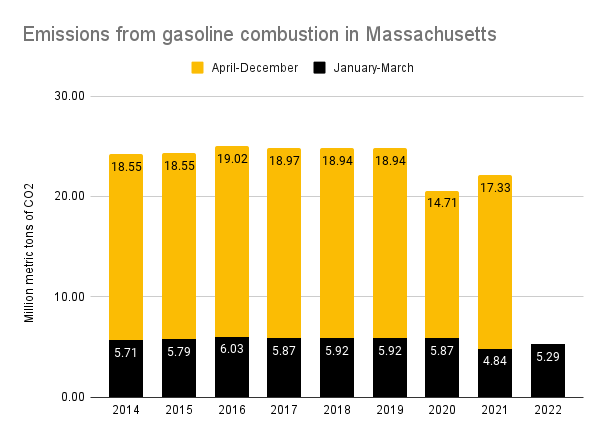
If gasoline consumption trends for the year to date hold steady, Massachusetts drivers will generate about 17 million metric tons of climate-heating pollution this year by burning through roughly 2 billion gallons of gasoline.
But the actual impact is likely to be worse: gasoline consumption over the winter was likely depressed from the effects of the omicron Covid-19 variant, but more recent traffic data from MassDOT suggests that drivers are spending more time in their cars this spring.
And these figures don’t include the climate impacts from diesel trucks and buses, which typically generate another 10 million metric tons of climate pollution each year.
According to the commonwealth’s most recent inventory, Massachusetts generated between 72 and 76 million metric tons of climate pollution every year from all sectors of its economy, including electric power plants, buildings, and other sources, in the years between 2012 and 2018.
While the electric power and building sectors have made significant progress in reducing pollution since the 1990s, pollution from motor vehicles has remained fairly steady in that same period.
Motor vehicles have generally become more fuel efficient during that period, but longer commutes and increasingly car-dependent lifestyles have essentially erased any impact of those technological gains. Even with the modest reductions in driving from the pandemic, the commonwealth’s streets and highways still emit more than twice as much climate-heating pollution than all of its power plants combined.

Read More:
Streetsblog has migrated to a new comment system. New commenters can register directly in the comments section of any article. Returning commenters: your previous comments and display name have been preserved, but you'll need to reclaim your account by clicking "Forgot your password?" on the sign-in form, entering your email, and following the verification link to set a new password — this is required because passwords could not be carried over during the migration. For questions, contact tips@streetsblog.org.