Board Votes for One More Year of Zero-Fare Buses in Worcester
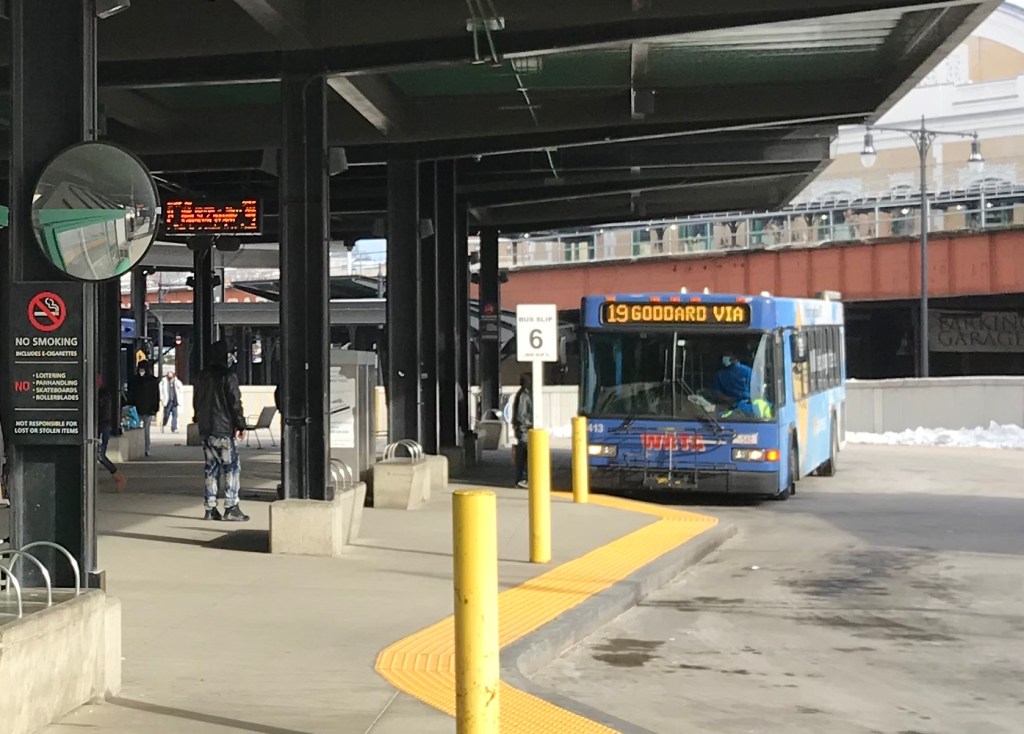
The Advisory Board of the Worcester Regional Transit Authority has voted to use federal pandemic relief funding to extend the Worcester region’s zero-fare policy for one more year, through the end of 2022.
WRTA staff and board members acknowledged that the region’s pioneering fare-free policy, which has let riders take WRTA buses for free since the spring of 2020, has helped the system recover ridership more quickly than peer agencies.
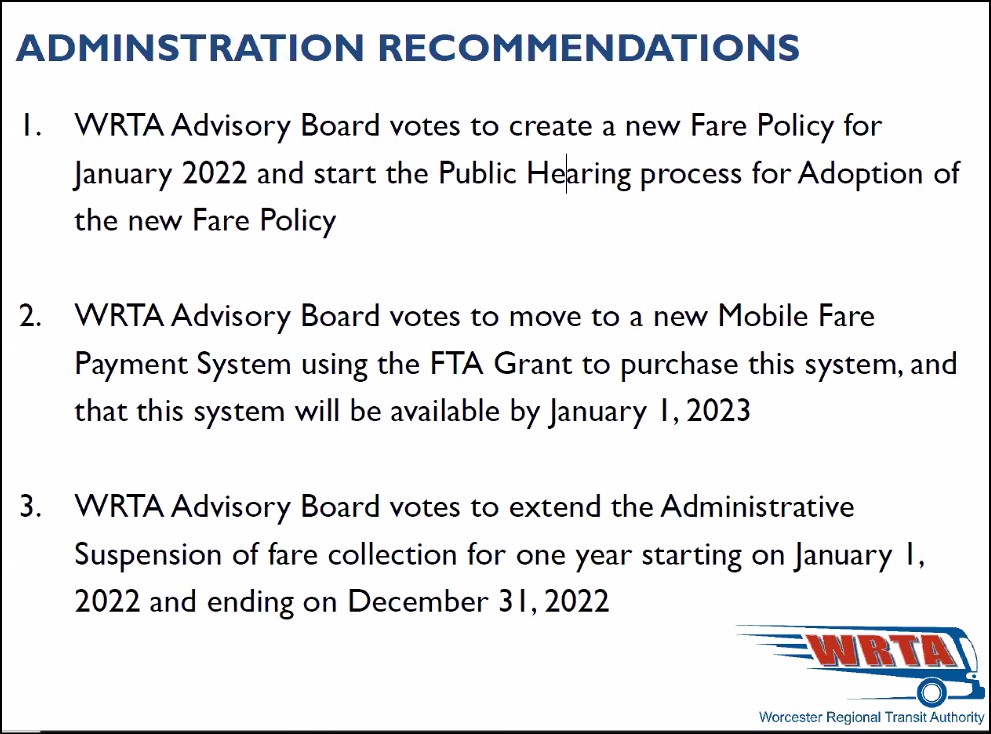
The vote followed a recommendation from WRTA administrator Dennis Lipka.
“I would not like to go back to the old fare structure,” Lipka told the board. “The current fare collection system is inefficient, outdated and difficult to operate.”
Lipka told the Advisory Board that he would like to take the next year to hold public hearings to develop a more sustainable fare policy for the longer term, and prepare for a time when federal relief funding is no longer available. He also reminded the board that the WRTA already has a federal grant in hand to procure a new fare collection system.
Previously on StreetsblogMASS:
“If we ever do run out of money and have to go back to collecting fares, we have to have some kind of system in place to collect fares. If we don’t do (this), we would lose all the work we’ve put in to getting a new fare system in place… we would have it available by January of 2023.”
Several public commenters supported the extension of Worcester’s fare-free bus policy at Thursday morning’s board meeting, which was held by Zoom teleconference.
“Zero-fare has had a positive impact on the ridership for the WRTA, but has also had a positive economic impact for riders,” said Michael Baker, the coordinator of the Zero-Fare WRTA coalition.
While several advisory board members expressed concerns about the longer-term financial sustainability of the zero-fare policy, the motion to extend the zero-fare policy passed unanimously.
“I hear from elected officials, appointed officials, riders, the Chamber of Commerce, other agencies; so many people. And I heard negative things (about the zero-fare policy) a couple years ago when we first started talking about it, but now it’s only positive,” said board chair Gary Rosen. “Mayor Wu in Boston is talking about Worcester; we’re getting national recognition.”

Streetsblog has migrated to a new comment system. New commenters can register directly in the comments section of any article. Returning commenters: your previous comments and display name have been preserved, but you'll need to reclaim your account by clicking "Forgot your password?" on the sign-in form, entering your email, and following the verification link to set a new password — this is required because passwords could not be carried over during the migration. For questions, contact tips@streetsblog.org.