Boston Pitches Major Transit-Focused Redesign For Blue Hill Ave.
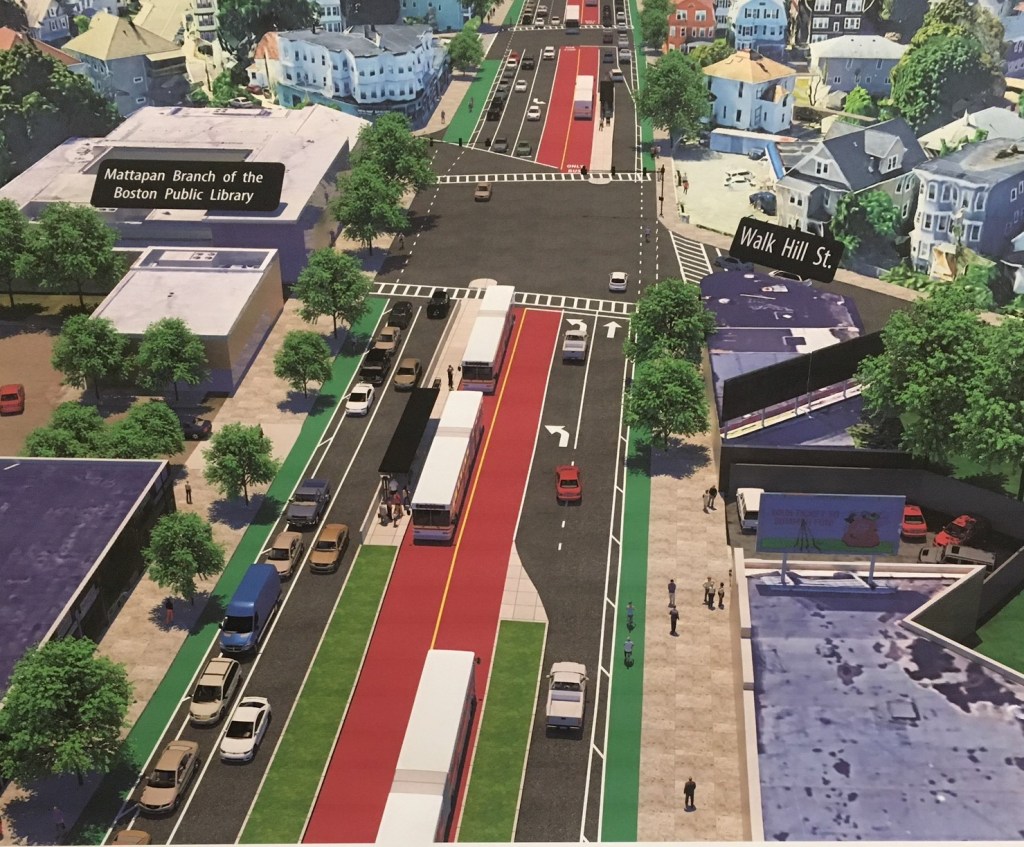
City of Boston transportation officials are advancing a major redesign for Blue Hill Avenue that would set aside dedicated bus lanes for the MBTA’s Route 28 – the state’s busiest bus route – plus continuous protected bike lanes between Grove Hall and Mattapan Square.
At a well-attended open house held in the Perkins Community Center in Dorchester Center Thursday night, dozens of neighbors chatted with planners from the City of Boston and the MBTA to learn about the major changes that the city is considering for a three-mile section of Blue Hill Avenue.
Under design guidelines that emphasized the preservation (or increase) of sidewalk space and the Avenue’s mature trees, and the desire to create bus lanes and high-quality bike facilities, the city has narrowed the design alternatives to two options.
One option would put a bus lane on the right side of the roadway in each direction, between a parking lane and a lane for general motor vehicle traffic – similar to the new Broadway bus lanes in Somerville.
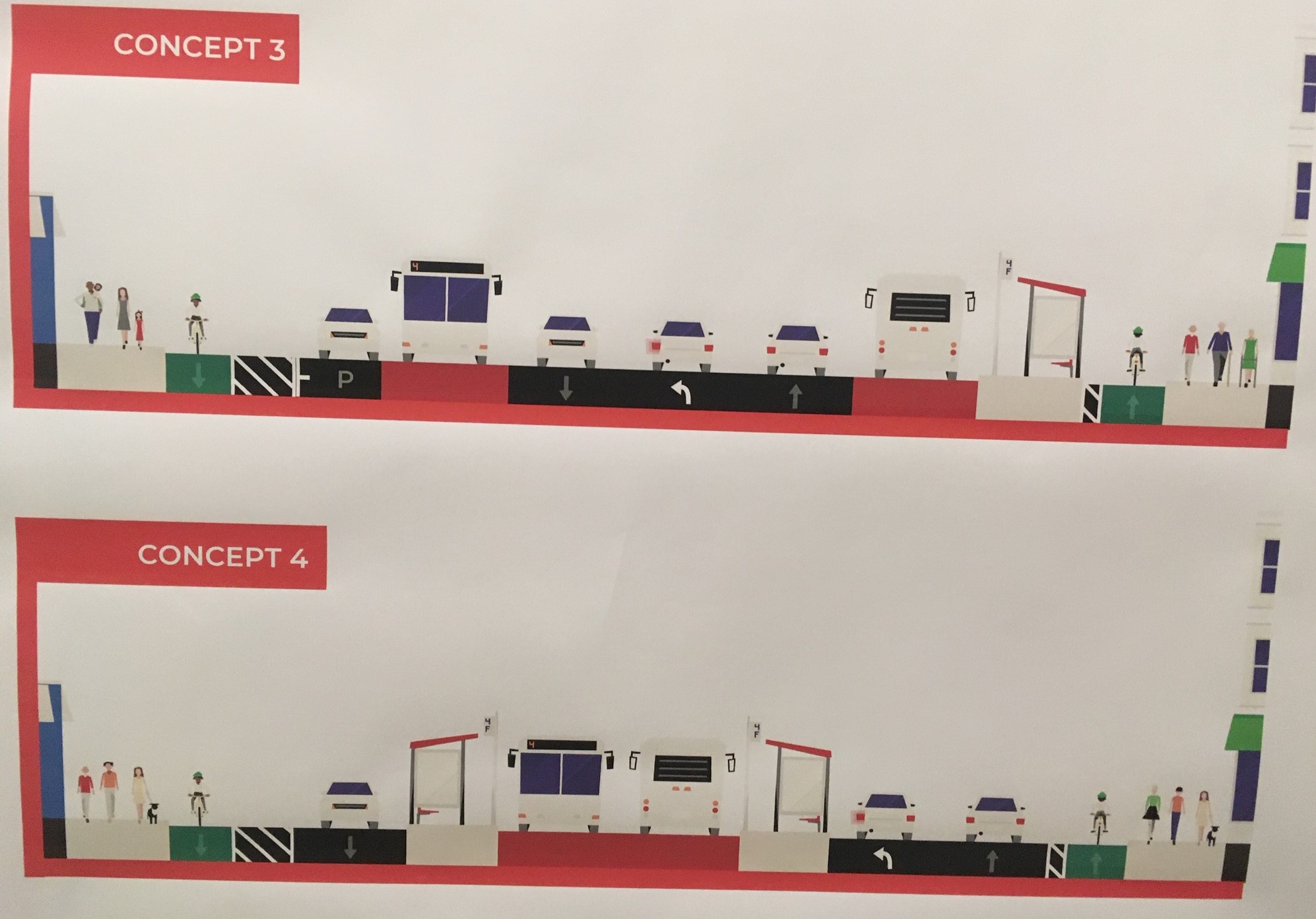
The second option would move the bus lanes and station into the center of the roadway, where they would avoid conflicts with double-parking or right-turning vehicles (and thus require less enforcement activity to keep the lane clear for bus riders).
Several attendees observed that double-parking is already an issue on Blue Hill Avenue, and that the center-running option would therefore be more effective. There was (predictably) some grousing over lost on-street parking, but because Blue Hill Avenue is so wide, both options have enough room to keep hundreds of on-street parking spots.
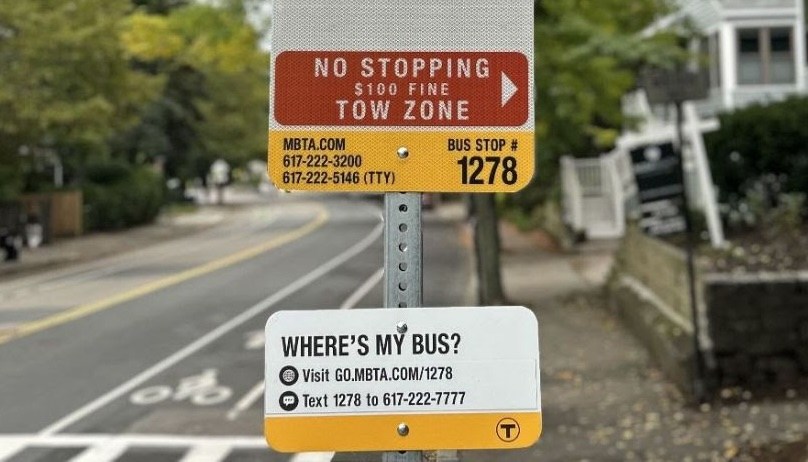
And either concept would be a boon for the 13,000 daily riders of the MBTA’s Route 28 bus, which runs along Blue Hill Ave. for most of its route.

In peak-hour traffic, that bus can take 40 to 55 minutes to traverse the 4.1 miles between Mattapan Square and Nubian Square. With dedicated bus lanes, planners estimate that that travel time could be cut in half, to a 25-minute trip. That could save regular riders two to three hours over the course of a week, and hundreds of hours over the course of a year.
LaDarrell Hagans, a Mattapan resident who stopped by the open house on Thursday evening, praised the city’s staff and Mayor Walsh for their work, and for the improvements the project aims to bring to his neighborhood.
“It’s well thought-out. Obviously they’ve engaged at the grassroots level with the community. There’s not one plan etched in stone, and both options will work, but I feel buses running in the center would be ideal.”
Because the vast majority of Blue Hill Avenue’s neighbors identify as people of color, the addition of high-quality bus lanes and stations could offer a major improvement to inequities in the city’s bus network, where black bus riders currently spend, on average, 64 more hours every year traveling than white bus riders.
At the end of the evening, Lindiwe Rennert and Matt Moran, who work together as the Boston Transportation Department’s “transit team” and have been collaborating on the Blue Hill Avenue project, characterized the public’s reaction as “overall very positive.”
“This is the first time people are seeing these two concepts, and obviously they’re big changes, but people seem very excited about the bike safety elements, the pedestrian improvements, the opportunity to have more greenspace on the street, and of course the more reliable bus trips,” said Moran.
The city plans to continue design work over the summer, and the project could be implemented in the spring of 2021.
For more information:

Read More:
Streetsblog has migrated to a new comment system. New commenters can register directly in the comments section of any article. Returning commenters: your previous comments and display name have been preserved, but you'll need to reclaim your account by clicking "Forgot your password?" on the sign-in form, entering your email, and following the verification link to set a new password — this is required because passwords could not be carried over during the migration. For questions, contact tips@streetsblog.org.