Study: Most of the Commonwealth’s EV Rebates Had No Effect on Buyers’ Choices

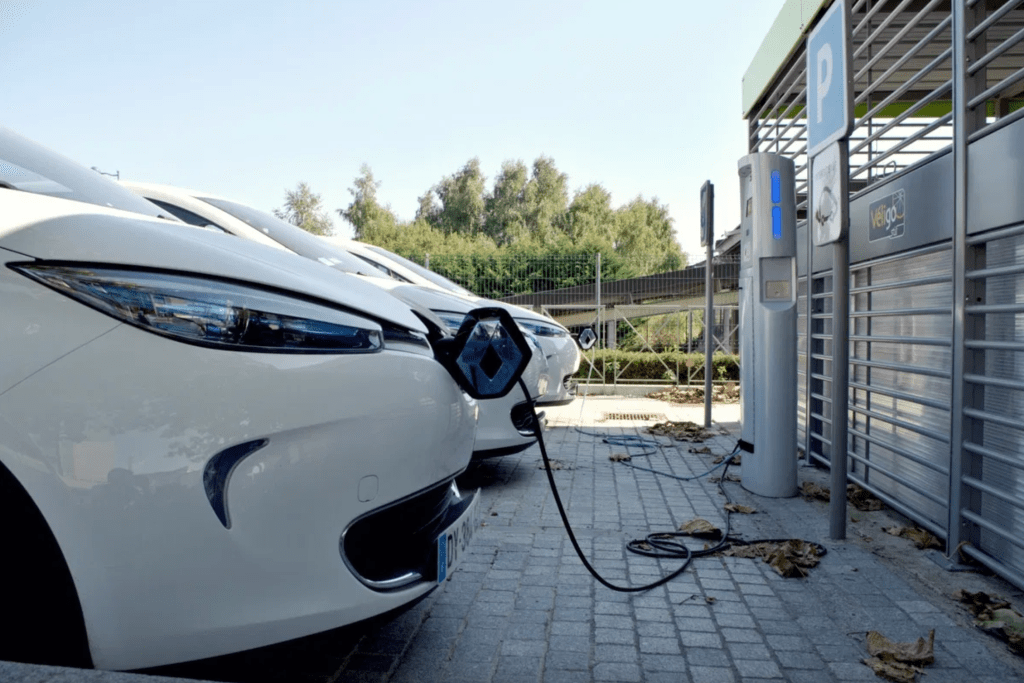
Most of the money that Massachusetts is spending in hopes of spurring electric car sales has had no effect on the beneficiaries’ choices and, by extension, no influence on actually reducing pollution in Massachusetts, according to a new state-sponsored analysis of the state’s electric car rebate programs.
Since 2014, the state’s MOR-EV program has paid rebates of up to $2,500 to residents who purchase new electric vehicles, with nearly $50 million paid out as of March 2022.
The program’s chief goal is to reduce pollution by encouraging people who would otherwise have bought gasoline-powered automobiles to purchase electric cars instead.
But when asked “would you have purchased or leased your EV without the MOR–EV rebate?” 57 percent of MOR-EV beneficiaries answered “yes,” according to an independent study of the MOR-EV program’s cost-effectiveness published by Synapse Energy Economics for the Massachusetts Department of Energy Resources.
The problem of “free riders” – rebate recipients who didn’t really need the state’s cash to buy their electric cars, but took the money anyhow – considerably diminishes the program’s cost-effectiveness.
As reported here previously, the vast majority of the MOR-EV program’s rebates have gone to subsidize car ownership in communities where the median income exceeds the statewide average. Some of the biggest beneficiaries, on a per-capita basis, have been wealthy, transit-accessible suburbs like Waban, Concord, Weston, and Lexington.
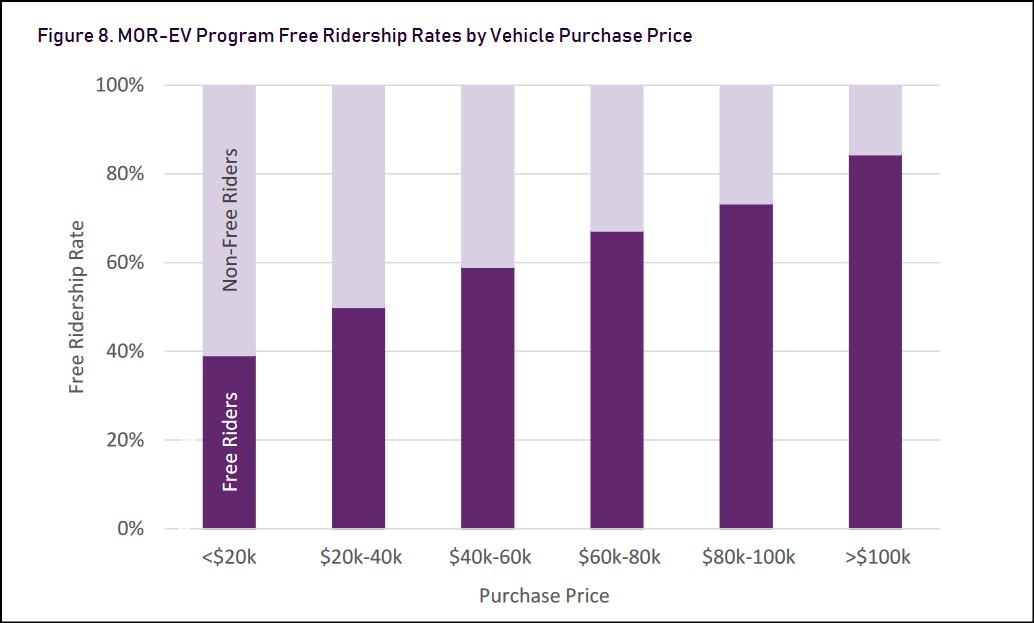
Perhaps unsurprisingly, the study also found that free riders were more likely to be buyers of higher-cost luxury vehicles (see chart below).
“Many EVs were luxury vehicles with purchase prices of more than $50,000. Those who could afford to purchase a new, higher priced EV and chose to make that new vehicle purchase did not necessarily need the MOR–EV rebate to make that purchase,” wrote the authors of the state’s report.
The Baker administration is now considering reforms to its MOR-EV programs to address some of these issues.
In 2019, administrators stopped paying rebates for cars that cost more than $50,000. The state is now proposing to reduce the price cap for eligible vehicles to $47,500 later this year, and is considering further phased reductions until the cap reaches $42,500 (for context, the current suggested retail price for a new Nissan Leaf electric car is $27,400, and the base price for a Tesla Model 3 is $46,990).
The state is also considering offering higher rebates for qualified low- and moderate-income buyers, and letting those households claim rebates when they buy used electric cars.
And, as reported here earlier this week, the Baker administration is also designing a new rebate program to help households buy e-bikes, which are considerably cheaper and are outselling electric cars across the country.

Read More:
Streetsblog has migrated to a new comment system. New commenters can register directly in the comments section of any article. Returning commenters: your previous comments and display name have been preserved, but you'll need to reclaim your account by clicking "Forgot your password?" on the sign-in form, entering your email, and following the verification link to set a new password — this is required because passwords could not be carried over during the migration. For questions, contact tips@streetsblog.org.