Increased State Funding Yields New Bus Routes Across the Commonwealth
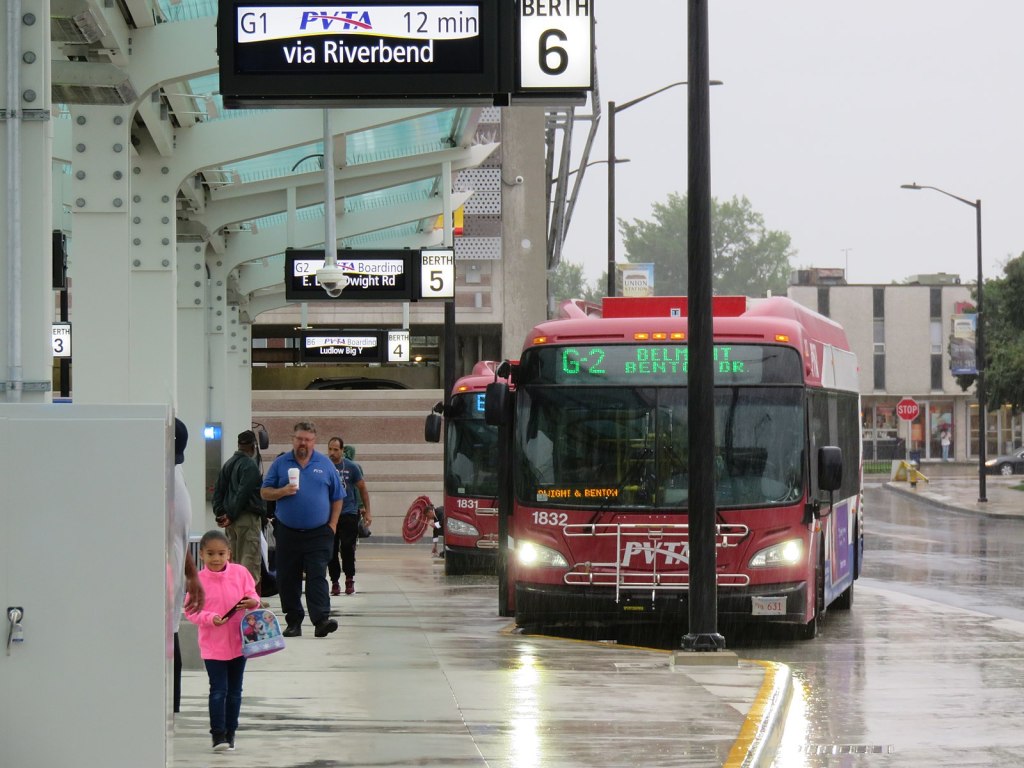
Expanded state funding for regional transit authorities (RTAs) will finance several inter-regional bus routes later this year thanks to expanded funding from the Fair Share Amendment.
Earlier this month, MassDOT pledged $15 million for 18 projects across the Commonwealth from a new “regional transit innovation grant” program, part of a major expansion in RTA funding in the fiscal year 2024 state budget.
The budget law specified that the funding should support initiatives like electrification, capital investments, expanded service hours, and connectivity improvements between RTA service areas.
The largest grants will fund new bus routes in the Merrimack Valley, western Massachusetts, and the south coast. Here are the highlights:
New connections across the Berkshires
In western Massachusetts, the Berkshire Regional Transit Authority (BRTA), in conjunction with the neighboring Franklin RTA and Pioneer Valley Transit Authority (PVTA), won $4.5 million for two new bus routes that will connect Pittsfield to Northampton and North Adams to Greenfield.
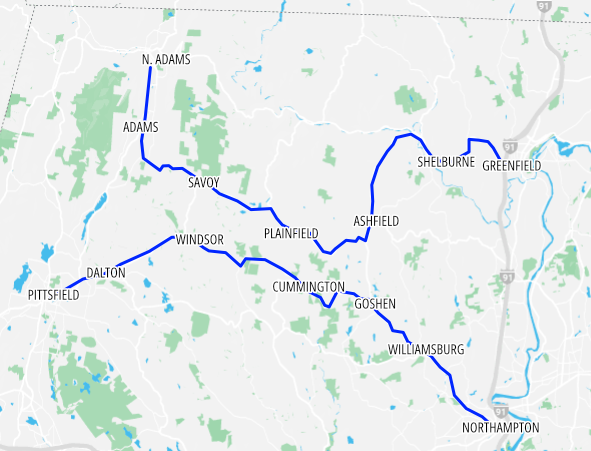
The new routes will introduce public transit services to numerous rural communities in Berkshire and Franklin counties.
These new routes will also make it theoretically possible – with lots of transfers – to ride from Cape Cod to Williamstown using only public transportation.
Under a draft schedule, the two bus routes would each run four daily round trips, with two in the morning, and two more in the late afternoon.
The service will start running after the agencies obtain vehicles to serve these routes.
“This grant is utilizing vehicles owned by MassDOT that have not been in service for some time, they will need to be overhauled prior to being placed back in service. At this time, this is the greatest unknown,” wrote BRTA administrator Robert Malnati in an email to StreetsblogMASS.
New routes to connect Lawrence, Haverhill, and Newburyport
At the other end of the state, MeVa, the transit agency that serves the Merrimack River valley cities of Lawrence, Haverhill, and Newburyport, also won a $1.9 million grant for expanded service on an existing route, and a brand-new bus route to Newburyport.
MeVa plans to extend its Haverhill-based Route 14, which was expanded a few months ago to serve a new Amazon warehouse in North Andover, further south into downtown North Andover and Lawrence.
“A trip between Lawrence and Amazon, which currently takes 1 hour and 20 and requires a transfer in downtown Haverhill, will take only 15 minutes on the new 14,” MeVa administrator Noah Berger told StreetsblogMASS.
MeVa will also implement an all-new bus route, the the 11, which will provide direct service between the three largest communities in its service area, Lawrence, Haverhill, and Newburyport. Currently, a bus trip between Lawrence and Newburyport takes over 2 hours and requires two transfers in Haverhill and in Amesbury. The same trip will take less than an hour on the new 11.
Agencies need long-term operating support for new routes to remain
In addition to the routes described above, MassDOT is also funding new microtransit pilot programs in Rockport, New Bedford, Revere, and Chelsea, plus a pilot Brockton-Taunton-Fall River bus route, run by the Greater Attleboro and Taunton RTA.
These grants will support the start-up capital and operating costs for these new services. But keeping them running in the longer term will depend on whether the Legislature and the Governor will maintain their support for RTAs in future state budgets.
The $15 million grant program that will finance these new routes had been slated for elimination in the Governor’s proposed budget earlier this year.
However, newer budget proposals from the House and Senate both proposed to either maintain or increase state funding for the RTAs.
Noah Berger, MeVa’s administrator, says he’s optimistic that lawmakers will ultimately support his agency’s efforts to improve bus service.
“From my conversations with our delegation, (I) know that our leaders get the important role regional transit plays in the communities we serve. I am confident that those values will be reflected in the final budget,” Berger told StreetsblogMASS.

Read More:
Streetsblog has migrated to a new comment system. New commenters can register directly in the comments section of any article. Returning commenters: your previous comments and display name have been preserved, but you'll need to reclaim your account by clicking "Forgot your password?" on the sign-in form, entering your email, and following the verification link to set a new password — this is required because passwords could not be carried over during the migration. For questions, contact tips@streetsblog.org.