Skip to content

Eyes On the Street: Casting On Congress
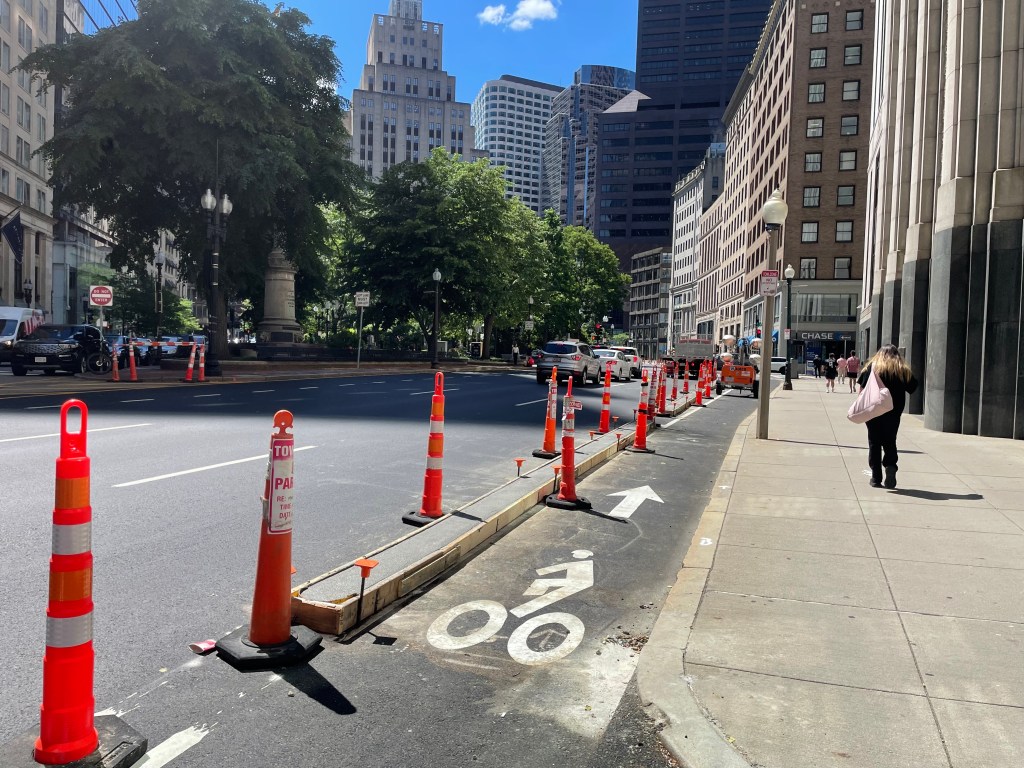
Congress Street is the first installation site for "cast in place" concrete barriers that could ultimately replace many of the city's broken plastic bollards.
A photo of a bike lane under construction on a newly paved city street surrounded by high rise buildings. The bike lane is lined with new concrete curbs that are surrounded by orange construction cones.
New cast-in-place concrete curbs line the bike lane on Congress Street in downtown Boston on Tuesday morning, June 16, 2026.

The City of Boston’s plans to replace plastic flexible-post bollards with more durable materials along the city’s bike lanes is taking concrete form this week along Congress Street in downtown Boston.

Congress Street along Post Office Square is the home to one of the city’s oldest protected bike lanes. It’s only three blocks long, from Water Street in the north to High Street in the south.

Mayor Marty Walsh’s administration first installed plastic bollards along this bike lane in 2016, but in recent years, many of those bollards had been destroyed without replacement, and the “bike lane” had devolved into an illicit parking zone.
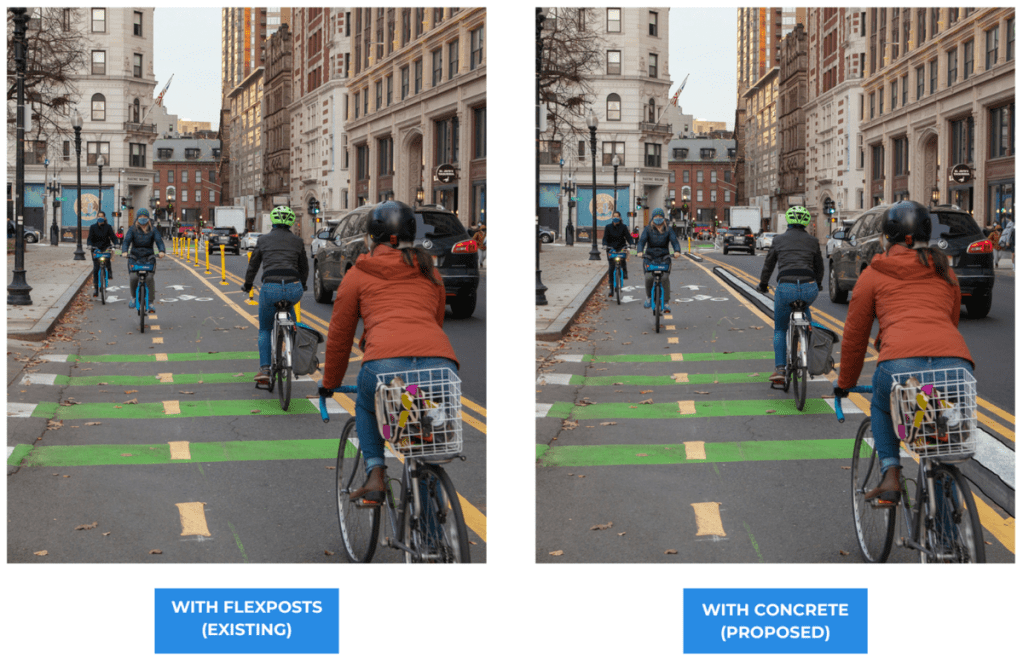
A side-by-side diptych showing two versions of the same streetscape, featuring a two-way bike lane with a dotted yellow line down the middle and several people on bikes, with some cars to the right of the bikeway, and tall buildings surrounding the street. The left version of the image shows yellow plastic bollards dividing the bikeway from the car lanes. The right version shows low concrete curbs in the buffer zone between the cars and the bikeway.
The Boylston Street bikeway in downtown Boston, looking towards Tremont Street. The current bikeway (left) is separated from traffic by flimsy plastic bollards. The city proposes to replace those plastic posts with more durable concrete curbs (right). Courtesy of the City of Boston.

On Monday night, though, City of Boston work crews began installing more durable barriers between the bike lane and the adjacent motor vehicle lanes.

The city calls these “cast-in-place” barriers. City officials told StreetsblogMASS last September that these barriers would soon start replacing plastic bollards on several of the city’s protected bike lanes, including Boylston Street near the Boston Common (see rendering at right).

On Congress Street on Tuesday morning, the various stages of their installation process were on display.

Near Franklin Street, the bike lane was lined with wooden frames surrounding short rebar dowels that had been drilled into the asphalt:
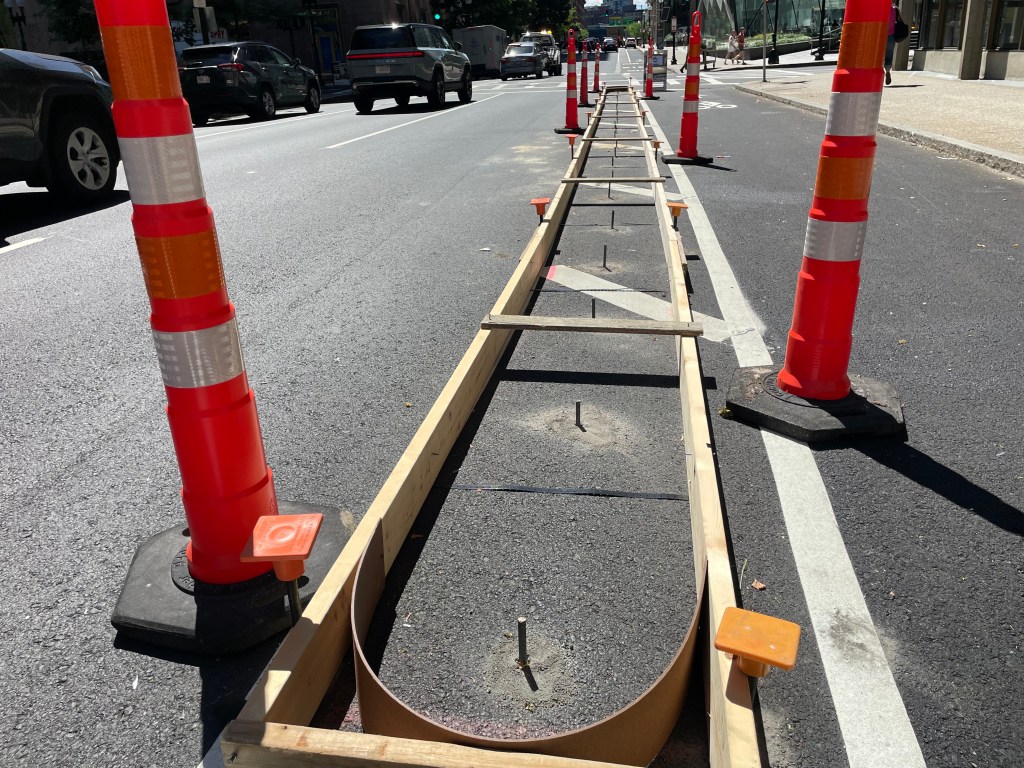
A photo of wooden concrete forms on top of a newly paved city street surrounded by orange construction cones.
Wooden forms along the Congress Street bike lane await a concrete pour.
Photographed on June 16, 2026.

One block further north, several of those wooden frames had been filled with concrete to form the new curbs:
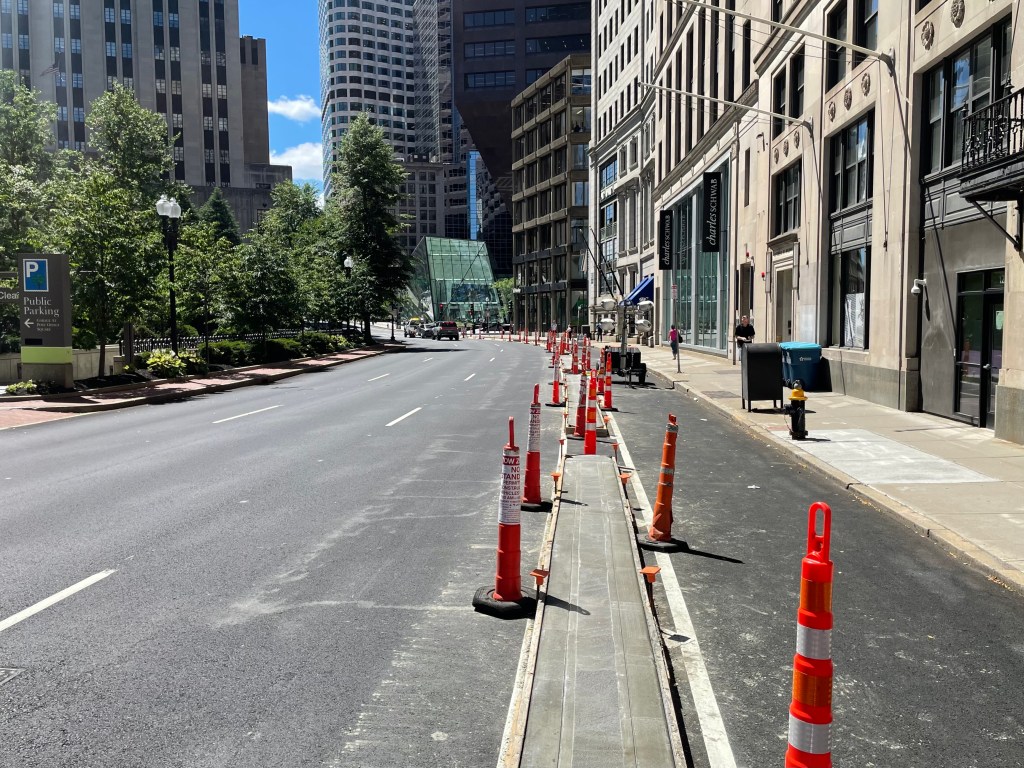
A photo of a bike lane under construction on a newly paved city street surrounded by high rise buildings. The bike lane is lined with new concrete curbs that are surrounded by orange construction cones.
New cast-in-place concrete curbs line the bike lane on Congress Street next to Post Office Square on Tuesday morning, June 16, 2026.

At the southern end of the bike lane, near High Street, spray-painted markings in the buffer between the bike lane and the rest of the roadway indicate future locations for additional cast-in-place curbs:
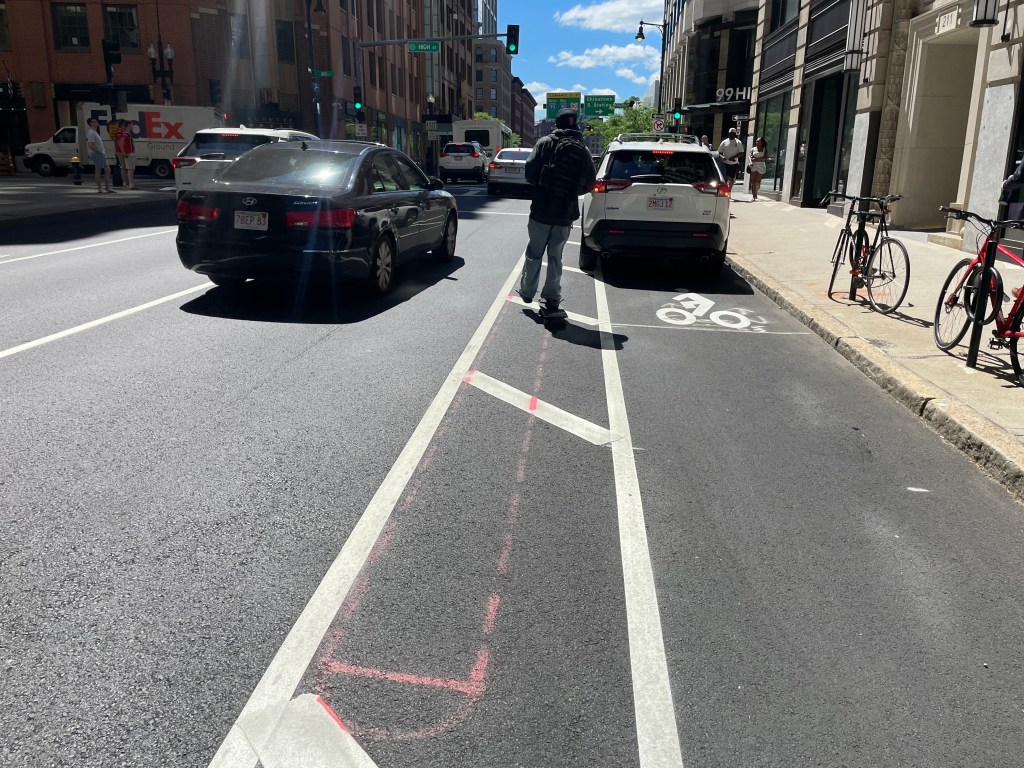
A photo of a bike lane blocked by a parked car on a newly paved city street. Spray-painted orange outlines between the bike lane and the car lane indicate the location of planned new concrete curbs. A skateboarder is merging into the car lane to get around the illegally parked vehicle.
A skateboarder dodges an illegally parked car in the bike lane on Congress Street near High Street. In the foreground, spray-painted markings indicate the location of future cast-in-place concrete curbs designed to protect the bike lane from illegal parking.

Unfortunately, the new barriers still won’t actually connect the Congress Street bike lane to other parts of Boston’s protected bike lane network.

On the northern end, the bike lane begins at Water Street – leaving a one-block gap between this bikeway and the protected bike lane on State Street.

The southern end of this bike lane (pictured in the last photo above) ends one block away from the Rose Kennedy Greenway, and people on bikes who intend to proceed across the Greenway and into the Seaport must merge into four lanes of traffic with aggressive drivers who are jockeying to get onto Interstate 93.

Photo of Christian MilNeil
Christian has edited StreetsblogMASS since its founding in spring 2019. Before that, he was a data reporter for the Portland Press Herald in Maine. Got tips? Send them to me via Signal, the encrypted messaging app, at 207-310-0728.

Streetsblog has migrated to a new comment system. New commenters can register directly in the comments section of any article. Returning commenters: your previous comments and display name have been preserved, but you'll need to reclaim your account by clicking "Forgot your password?" on the sign-in form, entering your email, and following the verification link to set a new password — this is required because passwords could not be carried over during the migration. For questions, contact tips@streetsblog.org.
More from Streetsblog Massachusetts

Mayor Wu Vetoes City Council’s Proposed Transportation Department Layoffs

June 17, 2026

Globe/Suffolk Poll Confirms That Fewer Drivers Would Clog City’s Roadways If Boston Had Congestion Pricing

June 17, 2026

Massachusetts Drivers Committed At Least 354 Homicides In 2025

June 17, 2026

Wednesday’s Headlines Are Truckin’

June 17, 2026

Councilor FitzGerald Used Misleading Math In Pitch for Transportation Dept. Budget Cuts

June 16, 2026
See all posts