Mayor Wu Outlines a New Street Safety Agenda in the Wake of Louisa Gag’s Killing
On Friday morning, Mayor Wu issued a detailed 6-page letter to residents in which she outlined her administration’s plan to improve the safety of the city’s streets, and address mounting criticism of her administration’s streets cabinet.
As we’ve reported extensively over the past year, Mayor Wu’s second-term streets cabinet has struggled with a near-total absence of communication regarding the status major transportation projects, the deterioration of employee morale, the abrupt removal of several MBTA dedicated bus lanes with no public notice, and the loss of several large federal infrastructure grants.
In Friday’s letter, the mayor said that she would work with her advisers to “assess” the Streets Cabinet’s organizational structure.
The mayor is reassigning two senior staffers, Chris Osgood and Tali Robbins, “to improve and accelerate the delivery of safer streets and critical services.”
Osgood was the Chief of Streets under Mayor Walsh’s administration, and briefly served as Chief of Staff to Mayor Janey. Tali Robbins has been the mayor’s Deputy Chief of Policy since she was first elected at the end of 2021.
Later in the letter, Wu also acknowledged some of the limitations of her election-year “30-day review.”
“That review was a point-in-time snapshot and was not meant to document the full range of residents’ perspective,” she wrote.
Improving project delivery
The mayor also says that her streets cabinet has a new plan to improve project delivery after a long hiatus in progress and communication for dozens of infrastructure projects across the city.
But she also tempers expectations: “we developed a pipeline of more planned, designed projects than the City budget currently has the capacity to deliver or maintain,” the mayor wrote.
The mayor said that the Streets Cabinet has been working to “redesign the capital project delivery process by establishing clear checkpoints for projects to move from conception to planning, design, and construction, with defined responsibilities and decision points at each step.”
“This internal reset has taken longer than anticipated but, thanks to the hard work of our teams, it has produced a stronger process,” she wrote.
The city’s website now has a new project dashboard that contains information about its portfolio of active projects and a high-level overview of their current status.
‘Immediate response’ to Louisa Gag’s killing
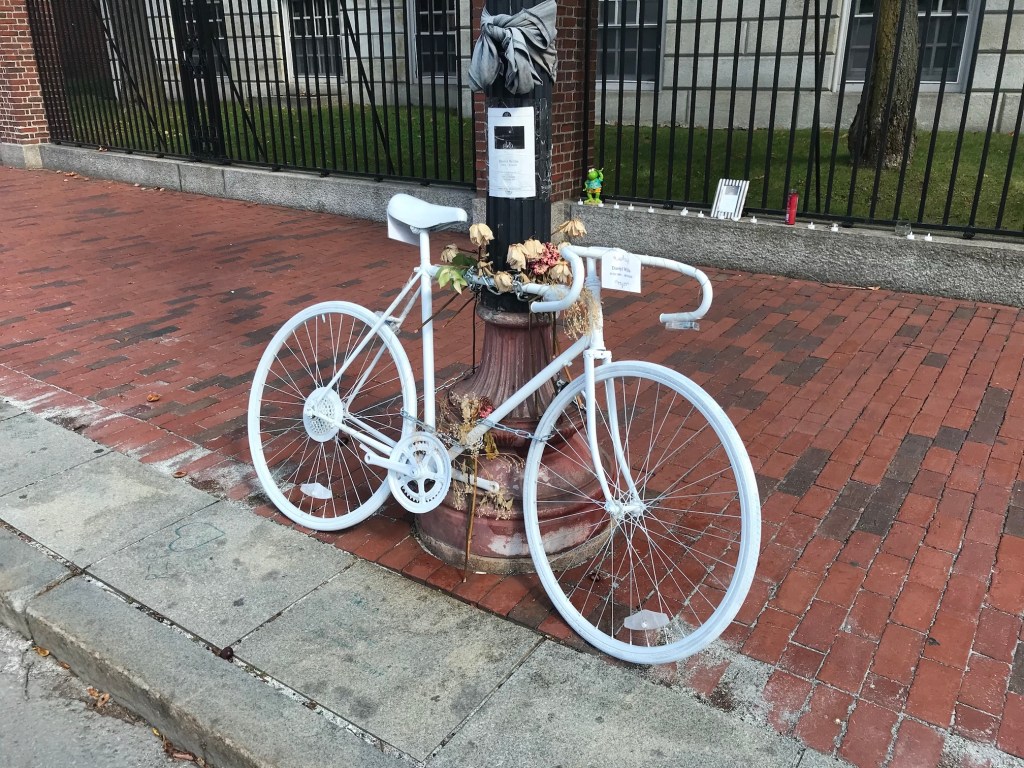
The mayor also elaborated on several other initiatives that she first mentioned at last week’s City Hall vigil for Louisa Gag.
She reiterated a promise to conduct “a comprehensive safety and urban design evaluation” of the Mission Hill streets at the scene of the homicide, in addition to the police investigation.
And she promised to seek “more comprehensive truck safety legislation” and a review of commercial trucking routes to better protect residents from some of the most dangerous vehicles on the city’s streets.
Re-protecting Boston’s bike lanes
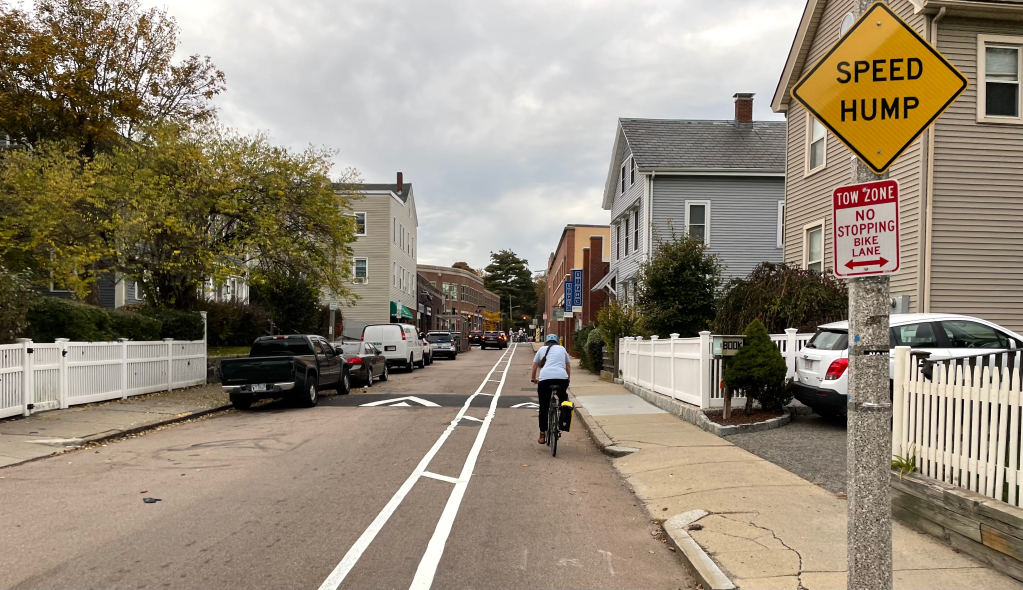
Mayor Wu also said that her administration would finally re-install protective barriers along the city’s bike lanes, nearly a year and a half after they started disappearing during her winter 2025 “review” of street safety projects.
“We will expand the use of more durable protective barriers wherever feasible, including by coordinating upcoming resurfacing with installations later this year. And we are installing quick-build barriers in priority locations where more permanent construction is not possible this year, such as the cycle tracks around the Boston Common and the Public Garden, and along Western Avenue.”
The mayor also said that her administration would prioritize fixing “critical gaps” in the existing bike network, rather than building out longer corridors. Those gaps – like the single-block gap between the Beacon Street bike lane and the Public Garden protected bike lanes near the Fiedler Footbridge in Back Bay – create “unacceptable risks for bike commuters and (discourage) others from choosing to ride at all,” the mayor wrote. “Closing critical gaps will deliver exponential benefits for the entire network.”
School zones, speed humps, and enforcement
The mayor’s letter promises to “double down on safety improvements in school zones,” but did not offer specific locations or benchmarks for implementation.
The mayor’s letter boasts that the city had “constructed 6,448 (ADA) curb ramps and 1,435 speed humps” over the past four years.
Most of that work occurred during the mayor’s first term, under the administration of Deputy Chief of Streets Julia Campbell, one of the experienced project managers who resigned last winter.
The mayor also announced some interesting innovations to improve its traffic enforcement efforts to reduce illegal parking.
“We are developing an improved mobile app to report traffic and parking violations to the City, so that enforcement officers can act on reports in real time,” she wrote. “Parking enforcement officers will also use bikes to patrol streets more efficiently and respond more quickly, and we will publish data on tickets issued so the public can understand where enforcement is happening.”

Read More:
Streetsblog has migrated to a new comment system. New commenters can register directly in the comments section of any article. Returning commenters: your previous comments and display name have been preserved, but you'll need to reclaim your account by clicking "Forgot your password?" on the sign-in form, entering your email, and following the verification link to set a new password — this is required because passwords could not be carried over during the migration. For questions, contact tips@streetsblog.org.