Closing the Gaps: New State Funding Allows for New Transit, Bikesharing Connections Across Massachusetts

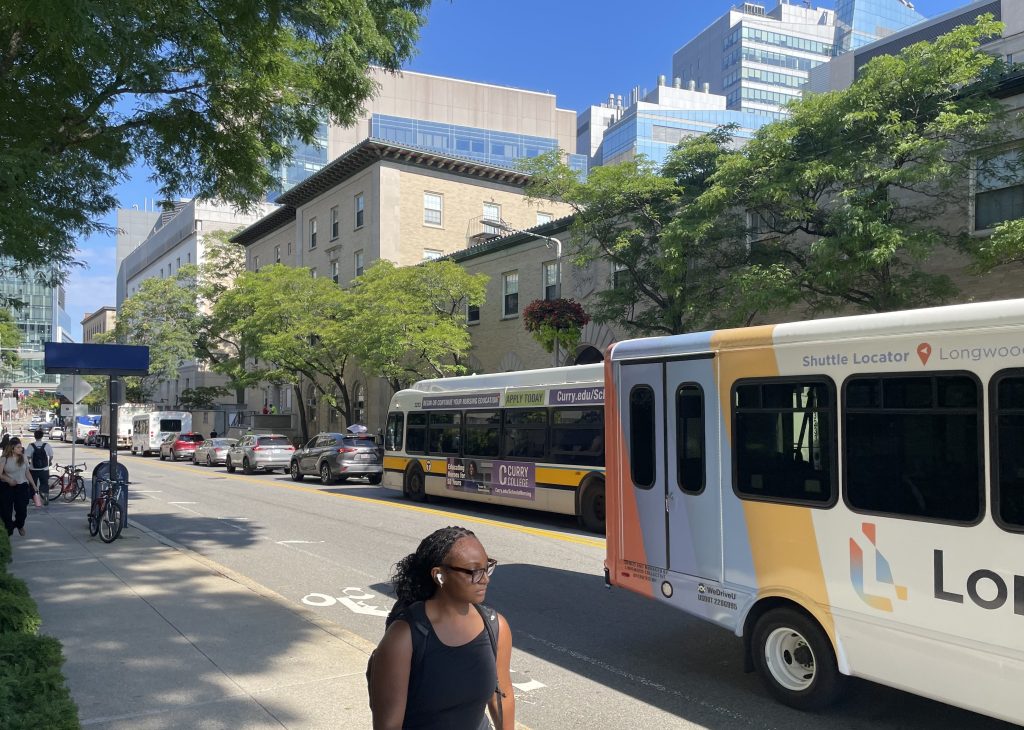
Earlier this year, the state announced $10 million in grant funding is to be awarded to nine municipalities, regional transit authorities, and planning organizations to fill in gaps in transit services across the state.
MassDOT’s new “Microtransit & Last Mile Transit Grant Program”, funded with the state’s new Fair Share income tax surcharge on high-income households, awarded $10 million in funding to various local and regional governments earlier this spring.
The awards will largely go toward microtransit and bikeshare programs to address the last-mile problem, where riders face a gap between the service that exists and their destination.
In the selection process, MassDOT screened for particular commitments to transportation equity, including improving and expanding mobility options for rural, disabled, veteran, elderly, and low-income riders.
Filling gaps in Boston’s northern suburbs
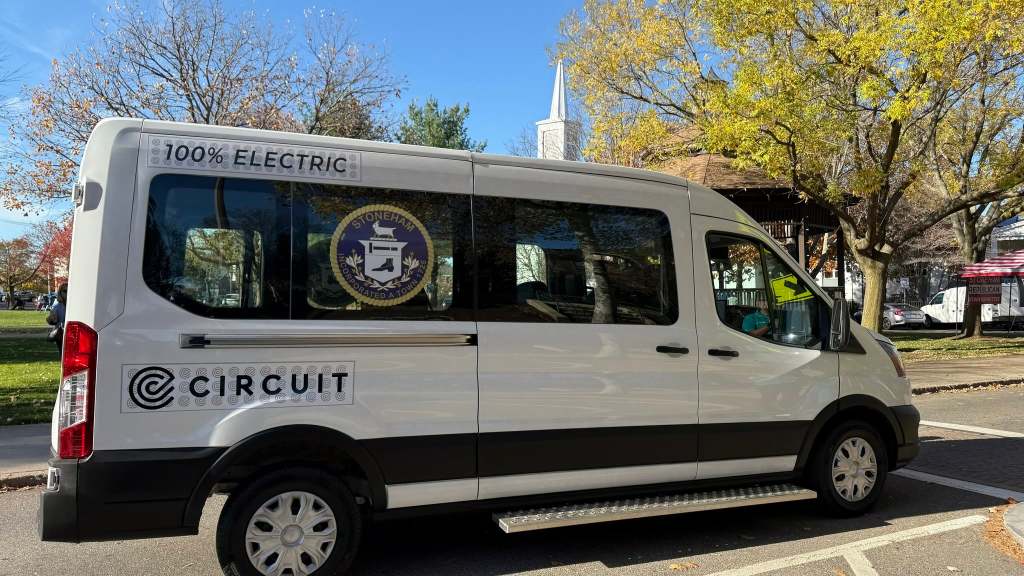
The Town of Stoneham received $800,000 to continue their Stoneham Shuttle microtransit service. The pilot launched in November 2024 with Boston Metropolitan Planning Organization funding as a virtual on-demand bus stop model.
The Shuttle has since evolved, with community feedback and rider data, into a door-to-door, fully on-demand service that Stoneham Director of Planning & Community Development Erin Wortman says “took off and has been steadily increasing ever since.”
“I receive weekly data snapshots on the service (to track new users, number of rides, percentage of shared rides, and median distance per trip). Additionally, I am able to sign into the app and see live data of where the vehicles are and what the numbers look like for any period of time,” Wortman told StreetsblogMASS.
These metrics have informed service adjustments that continue to improve upon the offerings of the shuttle.
Stoneham, a northern suburb with a population of 23,244, only has two MBTA bus routes – the 132, which runs through the heart of the town and connects to the Orange Line at Malden Center, and the 99, which connects to Malden and Everett, but ends its route in the Fells Reservation at the town’s southern boundary.
The Stoneham Shuttle provides a transportation option that integrates with those MBTA services and connects riders to the rest of the town, including the Greenwood Commuter Rail station in neighboring Wakefield.
The town has seen residential growth and revitalization, namely in their downtown and I-93 corridors, and the shuttle has become a lifeline of access to those areas, and the opportunities within them.
“It is so valuable for groups who need it the most — those without other transportation options,” Wortman shared.
According to her data, the top three most popular rider destinations are Stop & Shop – which is also the only grocery store in town – the Stoneham Senior Center, and the Housing Authority, allowing people to reach government services and spaces that meet their specific needs, from food, to housing, to community.
Beyond specifically serving marginalized people, the all-electric service facilitates mobility for all that makes shared trips, less driving, and reduced congestion possible, all while improving public health via cleaner air and less carbon emissions.
As for future plans and expansion, Wortman named the ability to “expand branding as well as add translation services to support the Shuttle,” continuing to tap into different ways of extending the reach of the program.
Just west of Stoneham, the City of Woburn also received a $1 million grant from MassDOT to launch a brand-new collaborative microtransit service in collaboration with Burlington, Wakefield, and Reading.
And the City of Salem received a $1 million grant to sustain its Salem Skipper microtransit shuttle.
Microtransit for central Mass.
In central Massachusetts, the Montachusett Regional Transit Authority (MART) also received $300,000 to launch a new microtransit service, North Central Mass Connect.
Specifically, Montachusett will pilot a microtransit service that expands flexible transportation options across designated service zones like community college campuses and healthcare and employment centers. “This initiative responds to identified transportation needs across North Central Massachusetts,” said MART Transit Planner Michael Yeboah.
Beginning at the end of July, MART will pilot this same-day, zone-based microtransit service that riders will be able to access through the MART app, MART Connects, connecting various community partners including Mount Wachusett Community College campuses, Heywood Hospital, and local municipalities from Leominster to Gardner.
Collaboration with stakeholders was integral to the work, engaging stakeholders across the Fitchburg, Leominster, and Gardner areas, Mount Wachusett Community College’s Gardner and Leominster campuses, Montachusett Regional Vocational Technical School, various regional healthcare and planning partners, North Central TMA, CHNA 9, UMass Memorial Health, Heywood Healthcare, and the Montachusett Regional Planning Commission.
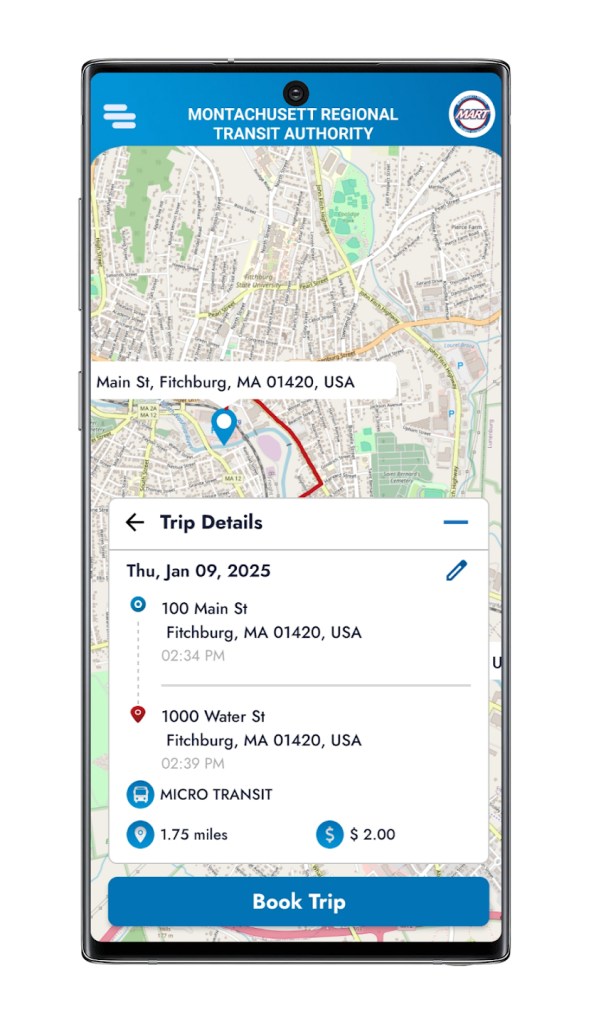
While MART is still in active consultation with stakeholders to finalize the service plan, operational zones, and hours of operation, Yeboah told StreetsblogMASS that the vision to “develop a same-day microtransit service focused on improving connections to education, shopping, healthcare, and employment centers,” particularly for underserved populations and riders with limited transportation access” will be made possible with funding from the Last-Mile Microtransit Grant Program, as it will support a one-year implementation.
Yeboah believes the grant is an opportunity to improve regional mobility for residents across North Central Massachusetts.
“This grant will help improve access for MWCC students traveling between campuses, workers commuting to regional employers, patients accessing Heywood Healthcare and other medical facilities, residents in rural communities, older adults, individuals with disabilities, veterans, low-income households, and working families… an important step toward expanding equitable, on-demand transportation options and improving regional mobility throughout the MART service area.”
Bikesharing expands
The Microtransit and Last Mile grant program also supported three regional bikesharing programs.
Planning agency Metropolitan Area Planning Council (MAPC) received $1.3 million to bolster the Bluebikes bikesharing system with new stations near transit stops.
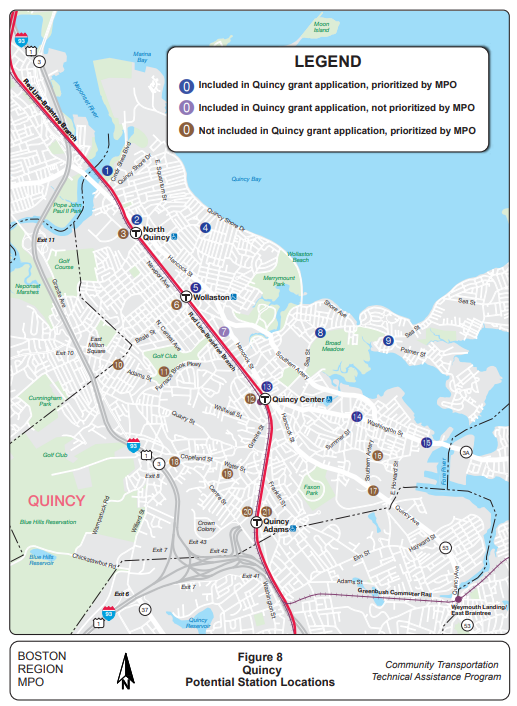
The City of Quincy also received a $250,000 Last Mile grant to expand the Bluebikes network south of the Neponset River (see map at right of potential station locations).
And, as we reported previously, the ValleyBike system in the Connecticut River Valley is receiving $1.5 million to support operating expenses and acquire new equipment.
Bluebikes has been prioritizing the rollout of new e-bikes, which get more usage than the classic unpowered pedal bikes.
With a plan to make at least 33 percent of the overall fleet e-bikes in the next few years, MAPC aims to install over 200 new charging docks that are intentionally placed at high-ridership stations for e-bike accessibility and availability.
Placing more docks near transit stops allows riders to get quick access to a transit line that can connect them across the MBTA service area as needed (you can suggest a new Bluebikes station with this tool).
Streetsblog has migrated to a new comment system. New commenters can register directly in the comments section of any article. Returning commenters: your previous comments and display name have been preserved, but you'll need to reclaim your account by clicking "Forgot your password?" on the sign-in form, entering your email, and following the verification link to set a new password — this is required because passwords could not be carried over during the migration. For questions, contact tips@streetsblog.org.