Happy Birthday to America’s Oldest Subway
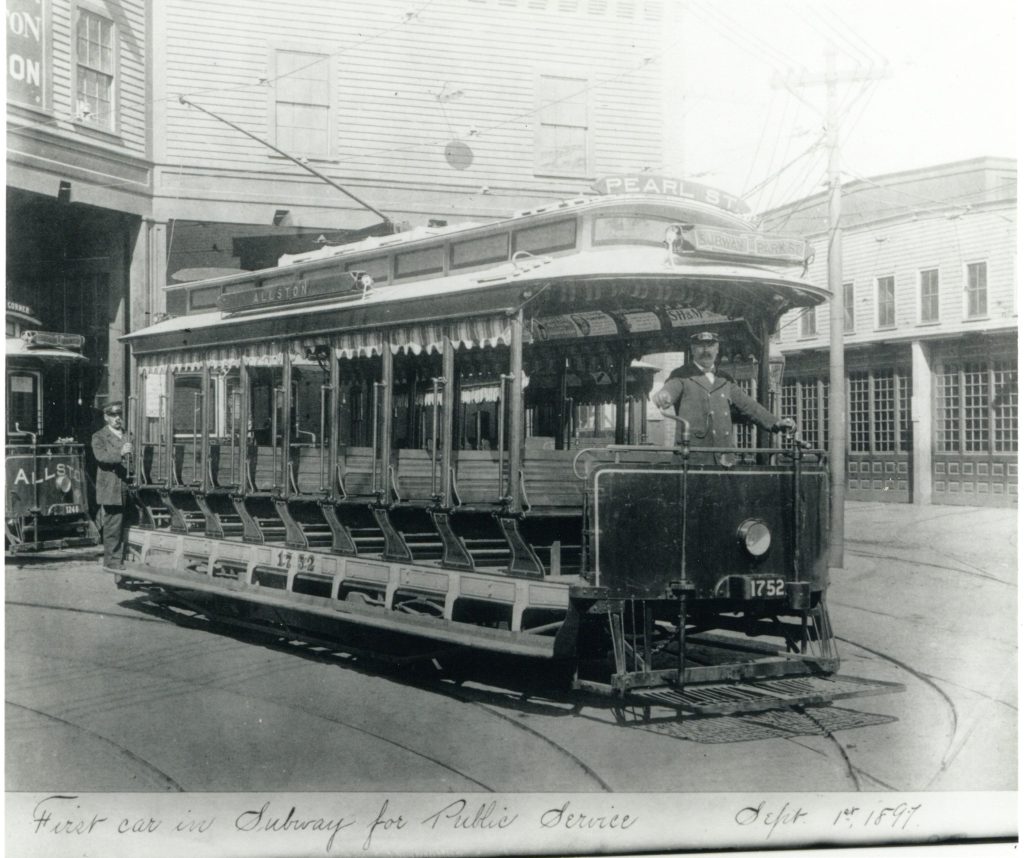
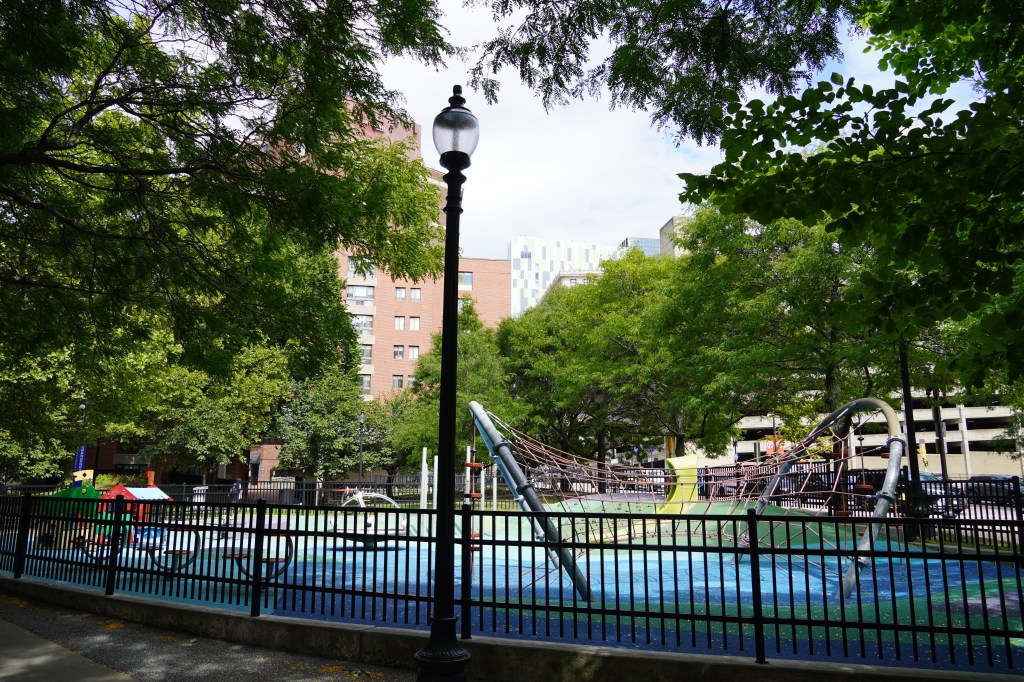
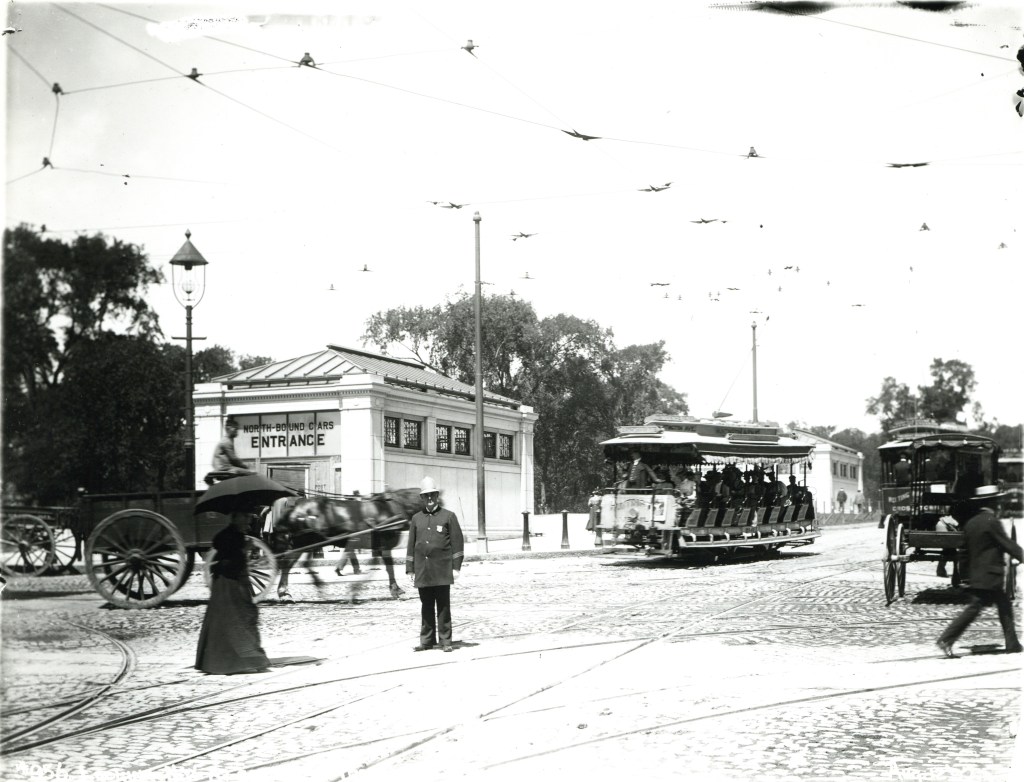
On this day 129 years ago, at around 6 a.m., trolley 1752 plunged into a gaping hole in Boston’s Public Garden and became the nation’s first subway car.
More than a hundred passengers crammed onto the Park Street-bound streetcar, a vehicle outfitted to seat only several dozen, according to contemporary reports. Throngs of onlookers cheered the tram along.
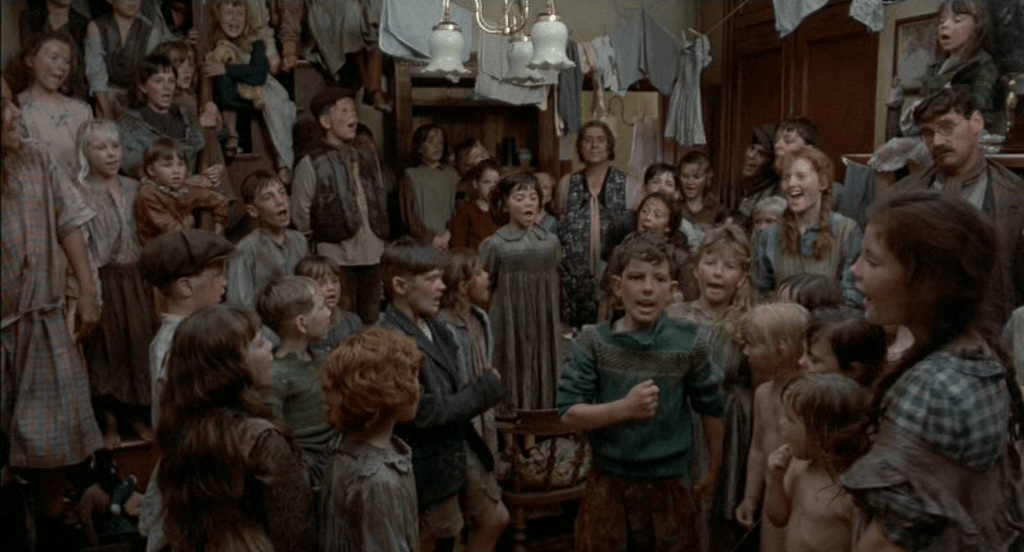
“Far down the street the entrance to the great tunnel was marked by a canal of humanity,” the Boston Daily Globe reported. “The passengers aboard the car packed themselves in like sardines, and the black mass, yelling like a jungle of wild animals, dipped down the incline for the underground run to Park St.”
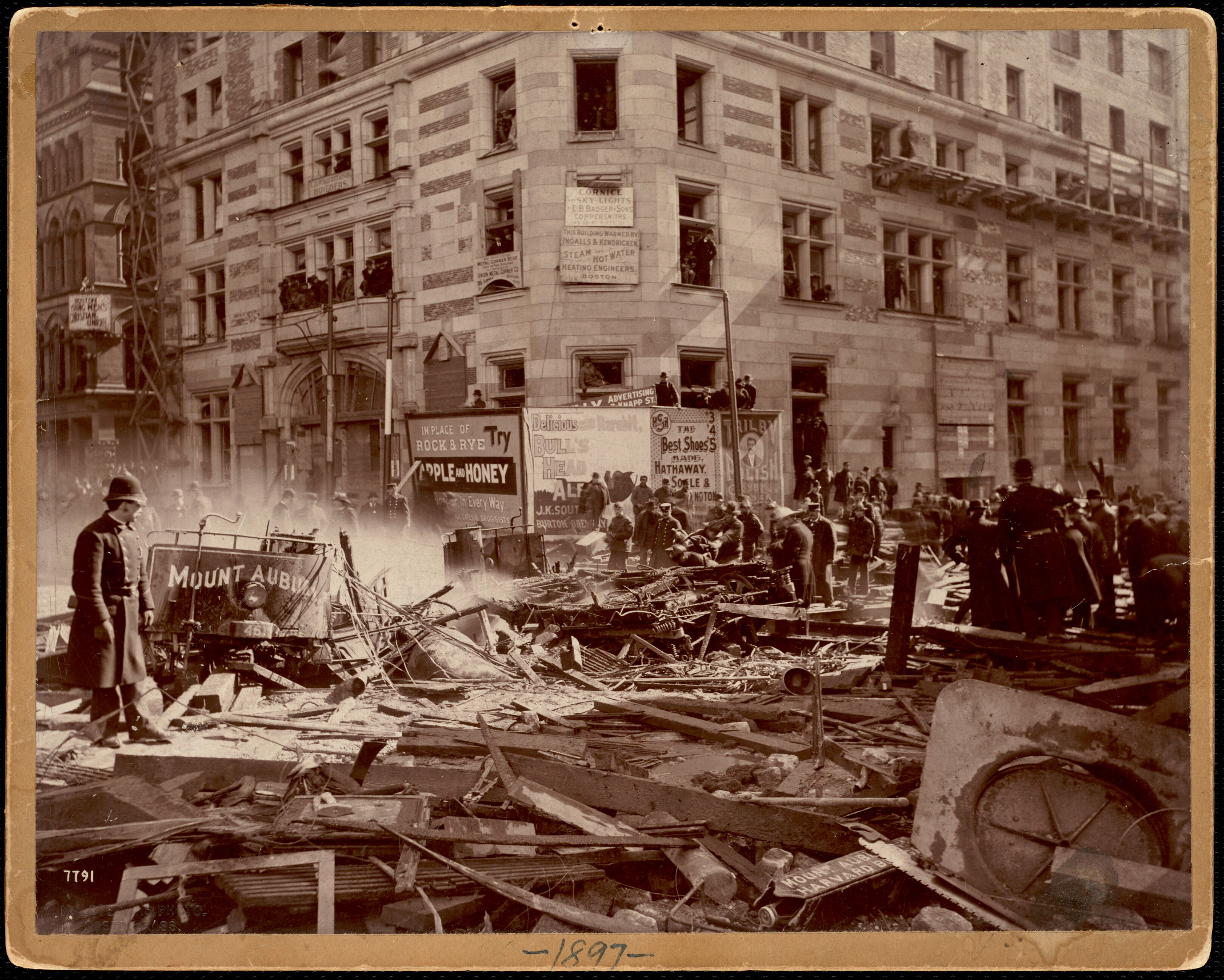
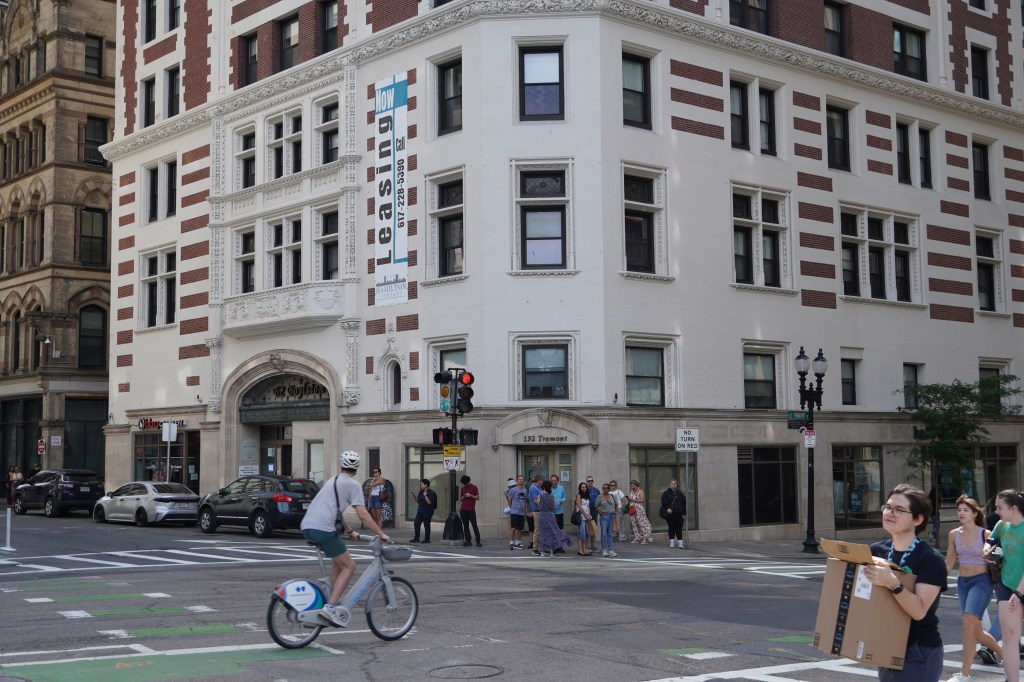
An audacious undertaking, dogged by doubts, touched by tragedy, had proven a stunning success. Even the New York Times remarked (in what reads as a backhanded compliment): “That so conservative an American town should happen to be the pioneer in adopting this is viewed as remarkable.”
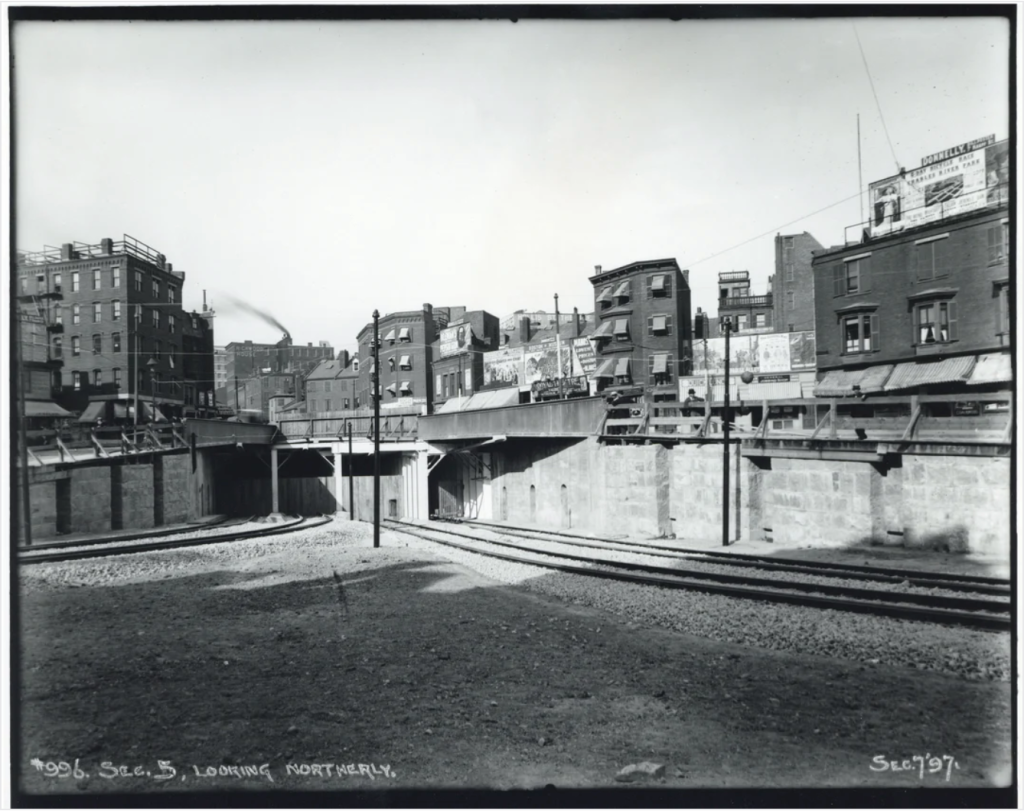
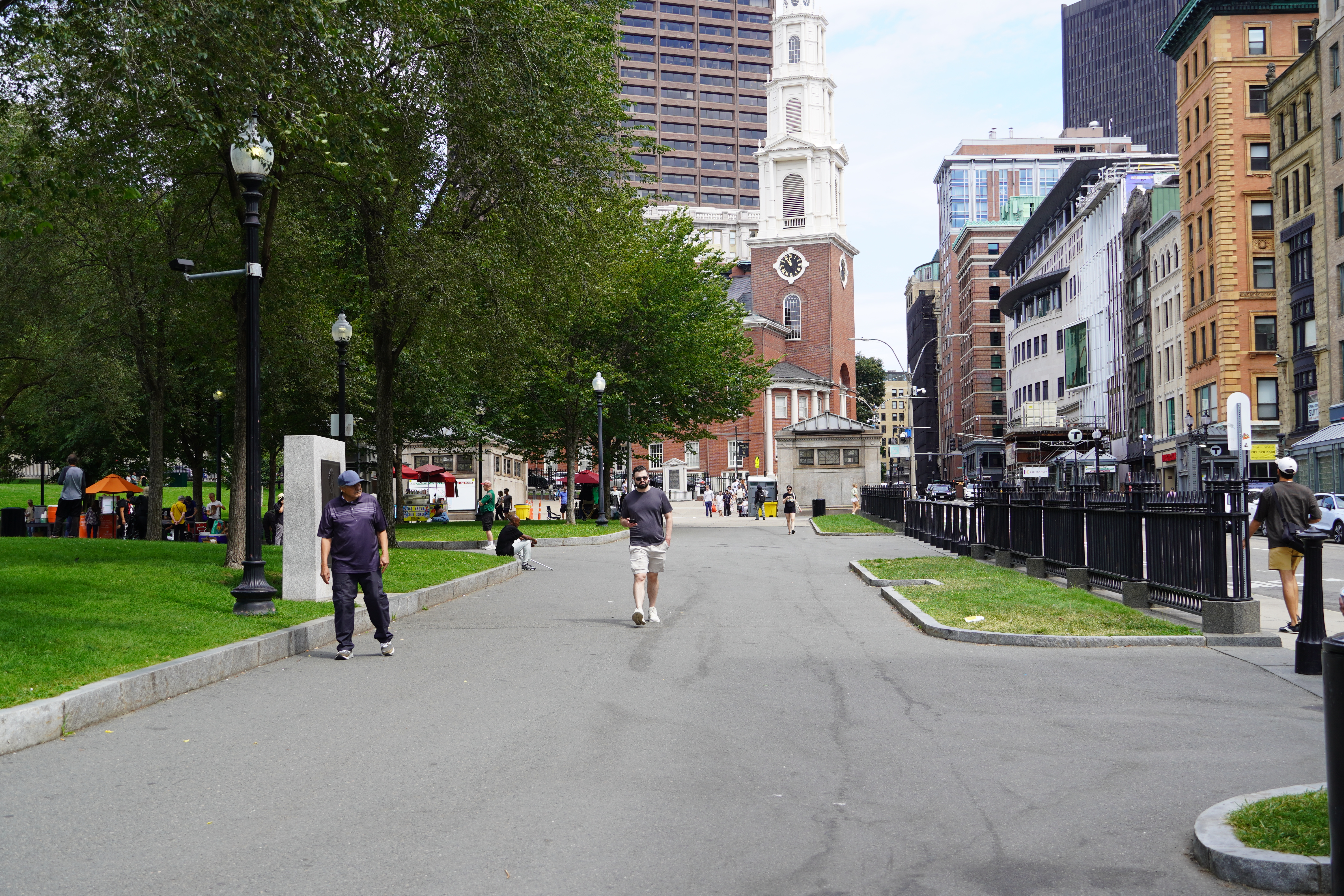
The Tremont Street Subway, as it was then known, spanned a little over one mile. The segment that opened for service on Sept. 1, 1897, linked an incline in the Public Garden to Park Street station. Another portal at Pleasant Street opened a few weeks later. The final segment, stretching from Park Street through Haymarket, opened the following year.
As with many great innovations, the subway was born of necessity.
A sprawling network of electric streetcars served Greater Boston in the late 19th century. But congestion in the cramped, awkward thoroughfares of the city center stifled service.
“The extraordinary congestion of the main business streets of Boston makes the electric tramway somewhat of an absurdity in the centre of the city,” Karl Baedeker, a German tour guide author, wrote in an 1893 book.
Government officials weighed a menu of solutions: threading trolleys through alleyways, lifting them into the sky on viaducts, tunneling them underground.
For the core of the city, where standstills reigned, they decided on a subway, a transit method with only a handful of precedents across the world.
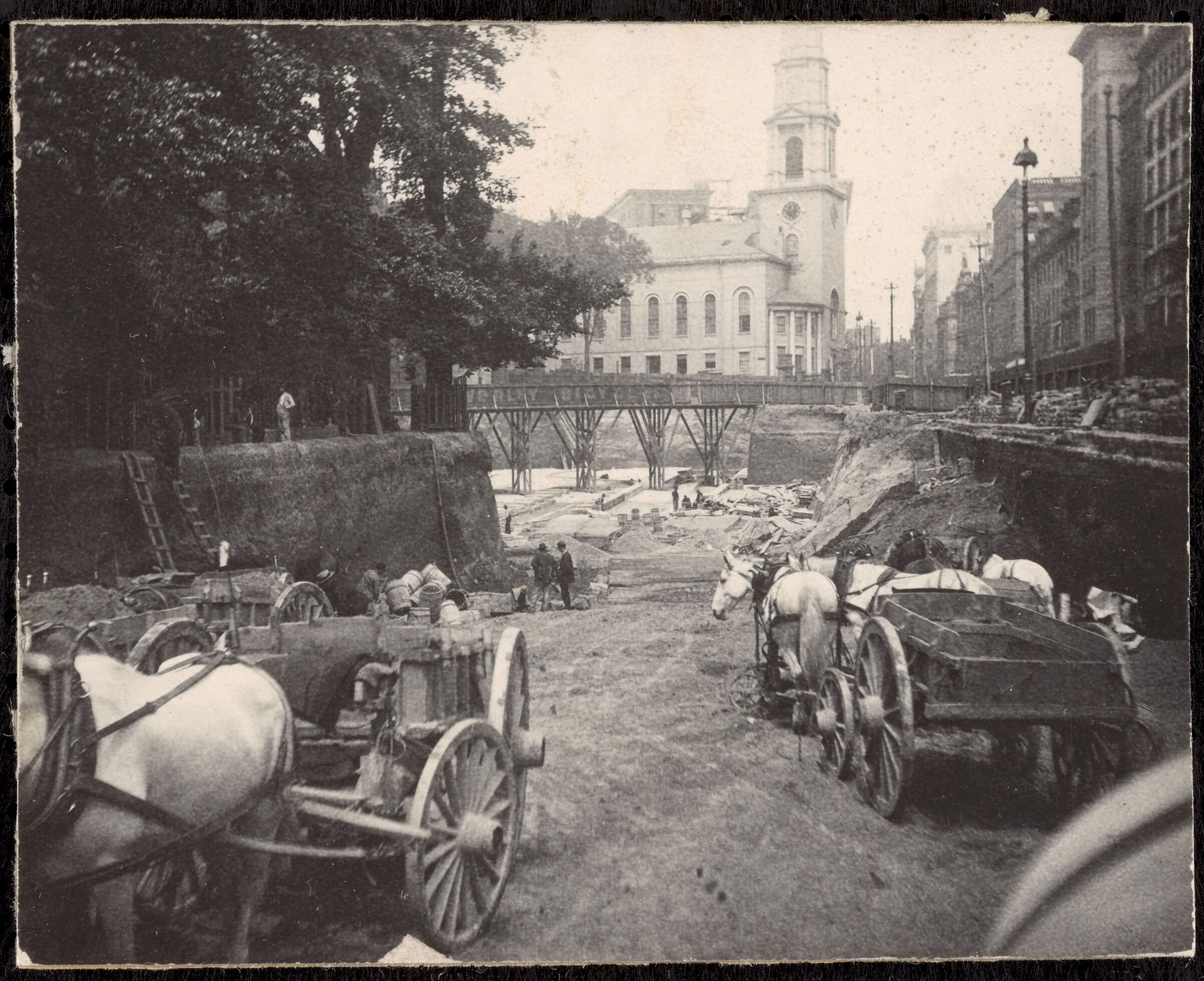
The project broke ground in late March 1895. According to one source, laborers hauled about 370,000 cubic yards of earth, poured at least 75,000 cubic yards of concrete, and laid around 11,000 cubic yards of brick. (An Olympic swimming pool can hold about 3,270 cubic yards.)
Sources peg the project’s final bill between around $4 and $5 million — under budget!
The subway’s impacts were swift and sweeping. Traffic on the streets eased. Tens of thousands of riders surged through the system. By 1903, according to one historical analysis, Park Street station handled more than 100,000 riders on a given day.
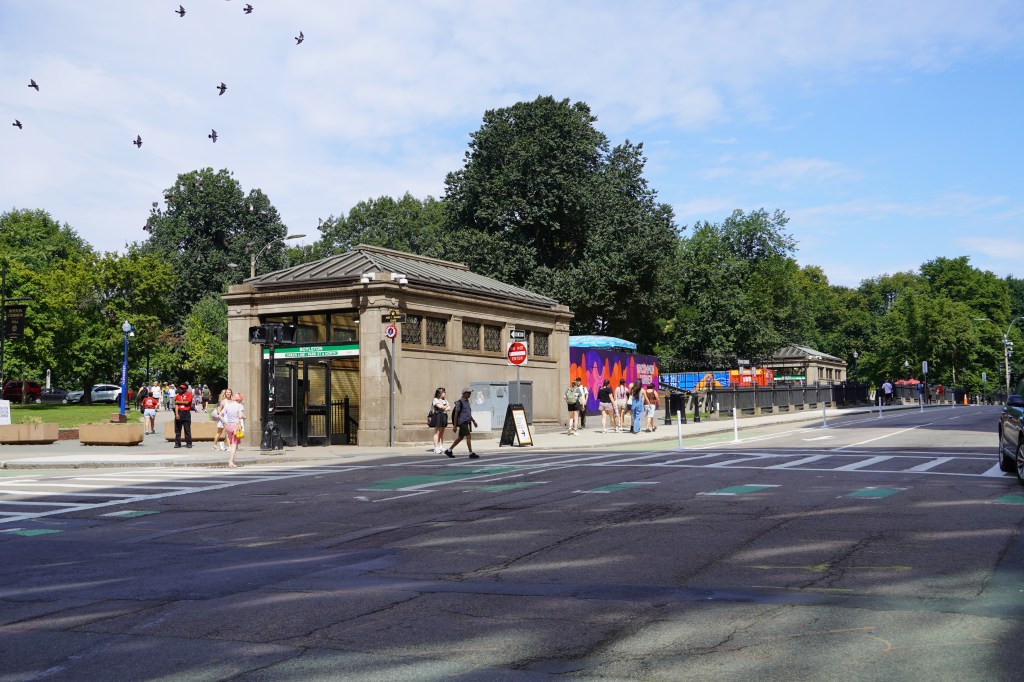
A note on sources: StreetsblogMASS largely sourced the quotes, facts, and figures mentioned above from the following books:
- Tremont Street Subway: A Century of Public Service by Bradley H. Clarke; O.R. Cummings (1997)
- Change at Park Street Under: The Story of Boston’s Subways by Brian J. Cudahy (1972)
- The Race Underground: Boston, New York, and the Incredible Rivalry That Built America’s First Subway by Doug Most (2014)
- Boston in Transit: Mapping the History of Public Transportation in The Hub (2023)

Streetsblog has migrated to a new comment system. New commenters can register directly in the comments section of any article. Returning commenters: your previous comments and display name have been preserved, but you'll need to reclaim your account by clicking "Forgot your password?" on the sign-in form, entering your email, and following the verification link to set a new password — this is required because passwords could not be carried over during the migration. For questions, contact tips@streetsblog.org.