After Four Years, FTA Steps Back From Its Oversight of MBTA Safety Issues
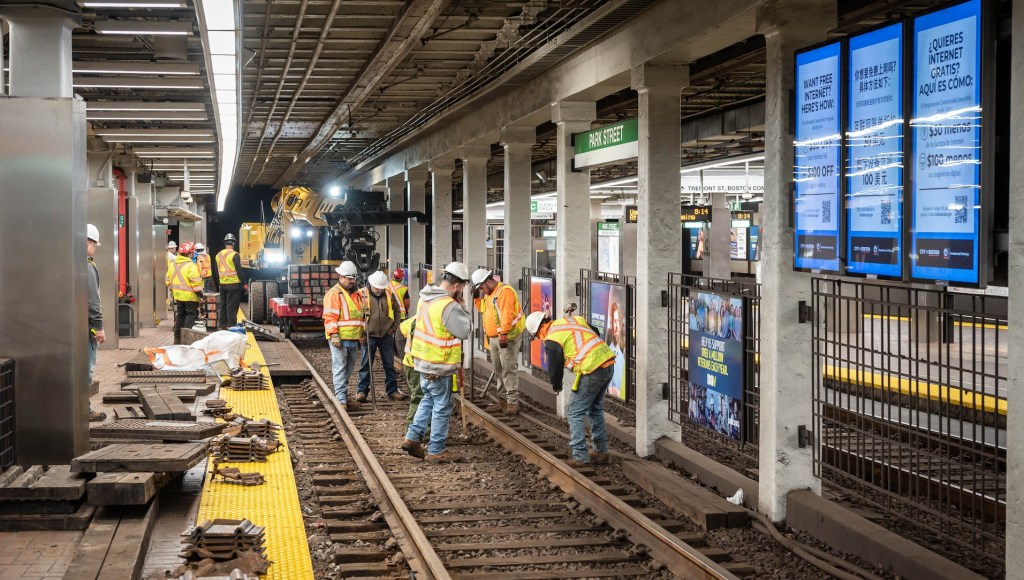
This week, the Federal Transit Administration and Governor Healey’s administration announced a major milestone in the MBTA’s safety improvement initiatives, as the feds formally closed their safety investigations into the Commonwealth’s Department of Public Utilities, and transferred supervision of the MBTA’s safety programs and management back to Governor Healey’s Department of Public Utilities.
“When I took office, the T was in a dire state,” said Governor Maura Healey in a Friday press release. “After years of underinvestment, workers and passengers alike didn’t feel safe on the rails. Today, the T is safer, more reliable, and more affordable… That’s in large part thanks to the investments we have made in the T and the DPU, as well as strong leadership of Phil Eng, DPU’s (Rail Safety Division Director) Robert Hanson, and their teams.”
The Department of Public Utilities (DPU) has historically been responsible for overseeing safety at the MBTA through its Rail Transit Safety Division.
But in the spring of 2022, the Biden administration put the T and the DPU on notice that federal transit officials were “extremely concerned” with safety issues at the MBTA after a pattern of runaway trains, derailments, and crashes that plagued the agency during the administration of former Governor Charlie Baker.
The Federal Transit Administration (FTA) subsequently ordered the state to complete a list of several hundred tasks to improve safety for MBTA riders and employees.
Those orders – and new leadership under Governor Maura Healey, who took office in January 2023 – led to increased funding to help the T rebuild its maintenance and safety workforce, a major capital investment program to eliminate track hazards on the subway system, and improved training and certification programs for MBTA employees.
A state regulator is back on the job
The FTA’s safety inspection also found serious fault with DPU regulators for turning a blind eye to rampant safety issues at the T.
“DPU has not used its authority to ensure the identification and resolution of safety issues at the MBTA,” wrote the FTA’s safety auditors in 2022. “DPU has the authority to require MBTA to take expedited action to implement its (safety management programs) and address other safety concerns, (but) the agency rarely invokes its authority to compel such action.”
In the four years since then, the DPU added 13 full-time staff to bulk up its Rail Transit Safety Division, and implemented new training plans and inspection routines.
In a Sept. 11 letter, FTA Acting Director Jamie D. Pfister credited the DPU for bulking up its safety oversight competencies, and informed state officials that the feds were formally closing their safety investigation of their agency.
The feds’ work here is done
The MBTA still has a small handful of “corrective actions” to address out of the hundreds that the FTA demanded in its 2022 inspection.
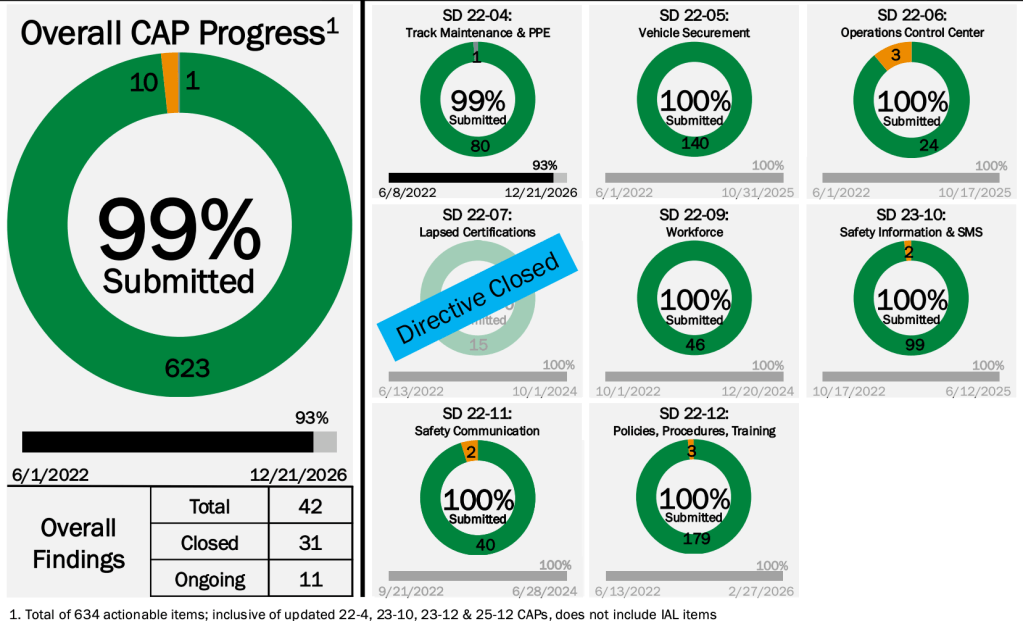
However, by closing their inspection of the state DPU, federal safety regulators also expressed confidence that state regulators could take over their oversight of the T’s remaining tasks.
“DPU will assume direct responsibility for overseeing MBTA’s progress” on the remaining corrective action requirements, wrote Pfister in her Sept. 11 letter.
“With the FTA’s role overseeing special directives concluded, we have officially closed the book on the serious safety issues we saw four years ago,” said DPU Commissioner Staci Rubin, who oversees the DPU’s transportation divisions, in a Friday press release from Governor Healey’s office. “We made a commitment to invest in the Rail Transit Safety Division, strengthen technical expertise, and build more rigorous oversight processes—and we delivered.”

Read More:
Streetsblog has migrated to a new comment system. New commenters can register directly in the comments section of any article. Returning commenters: your previous comments and display name have been preserved, but you'll need to reclaim your account by clicking "Forgot your password?" on the sign-in form, entering your email, and following the verification link to set a new password — this is required because passwords could not be carried over during the migration. For questions, contact tips@streetsblog.org.