Trump Admin. Proposal Jeopardizes Billions For MBTA Projects
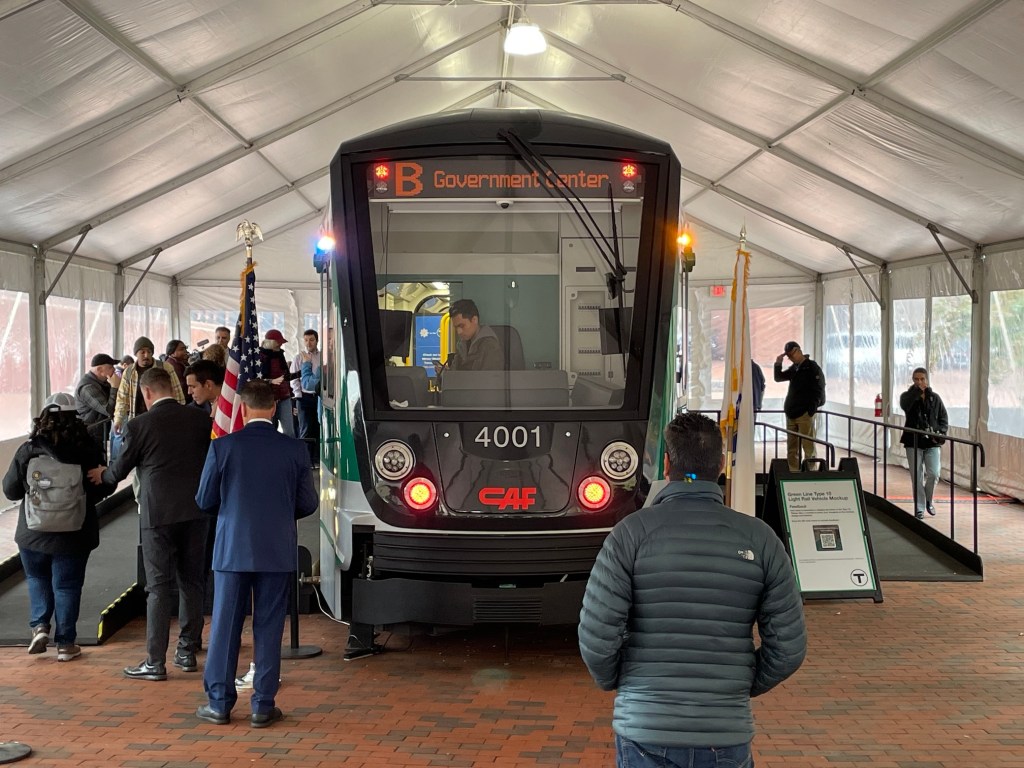
Transit advocates and the MBTA are raising alarms that new guidelines from the Trump administration could jeopardize federal funding for transit expansions in the Boston region and in other big cities across the country.
In October, the Trump administration published a proposal for new rules to govern the federal Capital Investment Grants (CIG) program, the Federal Transit Administration’s main funding mechanism for major transit infrastructure projects, including new light rail lines, bus rapid transit projects, and comprehensive renovations of older subway systems.
The CIG program contributed about $1 billion towards the construction of the MBTA’s Green Line Extension through Somerville earlier this decade.
For several years now, the T has been in line to receive two more major grants through the CIG program: the Blue Hill Avenue dedicated busway, tentatively slated to receive $80 million, and a $2 billion grant for the “Green Line core capacity” project, which encompasses a large suite of modernization projects, some of which are already underway.
Trump’s weddings gift
The Trump administration’s proposed new rules would re-write the program’s “project justification” scoring criteria, which the Federal Transit Administration (FTA) uses to rank and prioritize the projects that receive funding.
The Trump administration wants to add new criteria that would award more funding to projects in areas with higher marriage and birth rates. That would put applications from Massachusetts and many other more urbanized states at a disadvantage (in 2024, the Commonwealth had 5.4 marriages per 1,000 people, compared to 6.1 marriages per 1,000 people nationwide).
The proposed changes would also change criteria for a project’s “cost effectiveness,” in ways that advocates warn could penalize higher-cost rail projects.
The American Public Transportation Association (APTA), a trade group, this week issued formal comments objecting to the proposed rules, arguing that the proposal is “contrary to law, exceeds FTA’s authority, and would bring new costs, delays, and uncertainty to communities building public transit projects.”
Moving the goalposts
Perhaps most controversially, the new scoring criteria would be applied retroactively to projects that are already in the FTA’s pipeline to receive CIG funding, which means that some of them could lose their funding.
That’s of particular concern to agencies like the MBTA, which have been working for years on the permitting and engineering due diligence that the federal government requires for CIG grants.
The T originally entered the “project development” process for its $2 billion Green Line core capacity grant application in 2022.
“Communities have spent years and millions of local dollars meeting FTA’s rules under the CIG program,” APTA CEO Paul Skoutelas said in a press release issued Tuesday morning. “This new proposal moves the goalposts on them.”
In its own comments about the proposal, submitted on Monday, the MBTA warned that “projects that have moved successfully through the CIG program over the course of several years will be significantly disadvantaged by the immediate implementation of this policy guidance.”
The T also expressed concerns that the new rules could be “disqualifying” for projects that had not yet received their full funding grant agreement.
“These projects are near the finish line, and to change the rules on them is very bad for project uncertainty, and costs, and getting things done,” said Chris Friend, interim executive director for TransitMatters, in a phone call with StreetsblogMASS on Tuesday afternoon.