‘The Olympics of Train Drivers’: Inside Warsaw’s Tram EM Competition

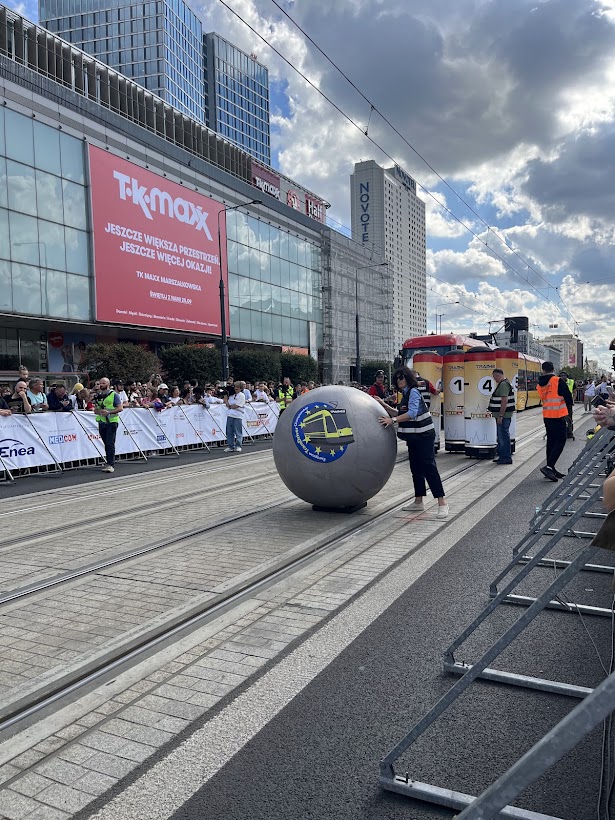
The sound of a train taking off. The rumbling of the ground under your feet. A three-car PESA Jazz train barreling down the street at a high speed, the hiss of the operator hitting a quick brake, and the train smashing a giant grey bouncy ball into a gaggle of inflatable orange and white pins. The crowd around you erupts.
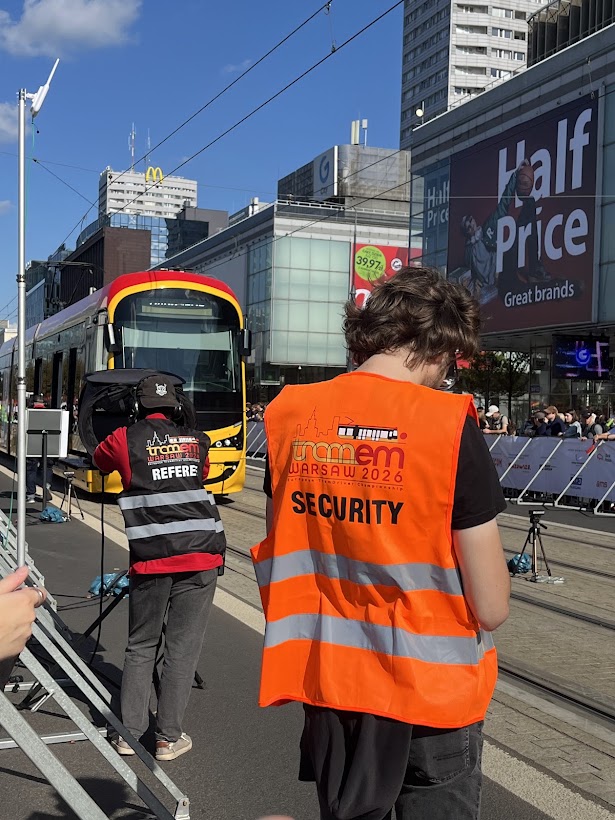
This might not be an average sight on your regular train commute, but it was a scene straight from the 12th European Tram Driver Championship (Tram EM) in Warsaw this past September, where Streetsblog was on the scene.
Warsaw’s transit history
Affectionately nicknamed the “Paris of the North”, Warsaw boasts a robust transit system, with heavy rail, light rail, and buses that come with such high frequency and predictability that it made my head spin.
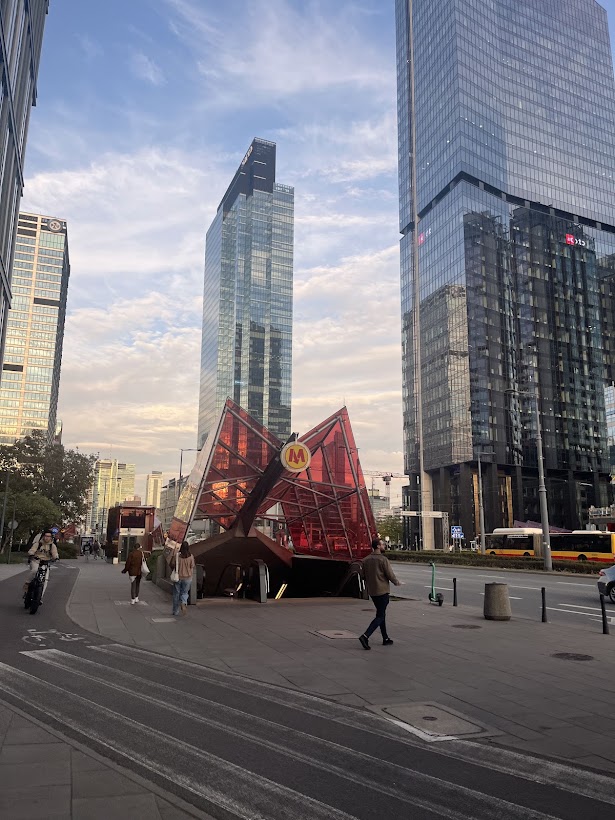
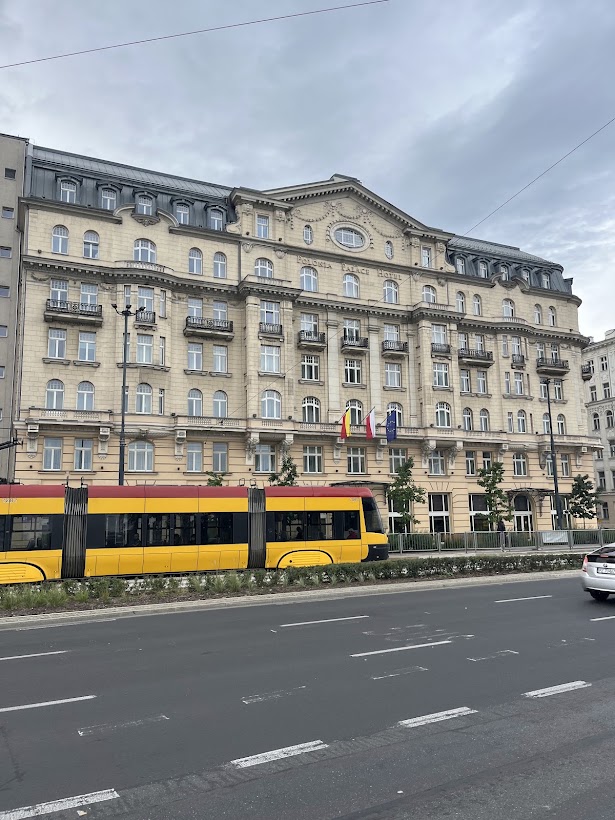
For anyone familiar with the Green Line getting stuck behind double-parked delivery vans on Huntington Ave., or waiting for red lights going down Commonwealth, Warsaw felt like a look into the future – though born out of a deeply resilient past.
Warsaw was developing a seven-line metro in the late 1930s, but World War II halted the work. During the 1944 Warsaw Uprising, the city’s tram cars were still in operation and being used as barricades to block advancing German forces. Only about 200 out of 710 tram cars survived the war, and the system was virtually destroyed. But through the perseverance of the Polish people, the city and tram network were rebuilt and transformed. A few streets downtown still memorialize pre-war tram tracks.
Today, Warsaw’s tram network is one of the largest, fastest-growing light rail networks in Europe. The city-owned Tramwaje Warszawskie spans over 180 miles of track across 25 lines, carrying nearly 250 million riders a year.
With priority signaling, minimal vehicle delay, and grass-covered rails that absorb noise and rainwater, trams moved through the city corridors past gridlocked cars with ease. Even someone with almost zero Polish comprehension (like me) could find the system easy to navigate and convenient to get around (minus a missed bus or two from waiting at the wrong stop).
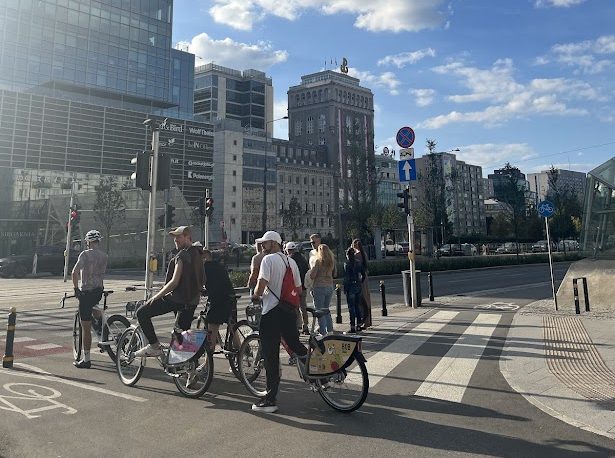
But that seamlessness doesn’t end with the transit system. Warsaw’s protected, wide bike lanes carry across the city alongside its main transit corridors, and are open to personal wheels or an e-scooter from Lime, or an e-bike from Vetrulio, the city’s bike-share network.
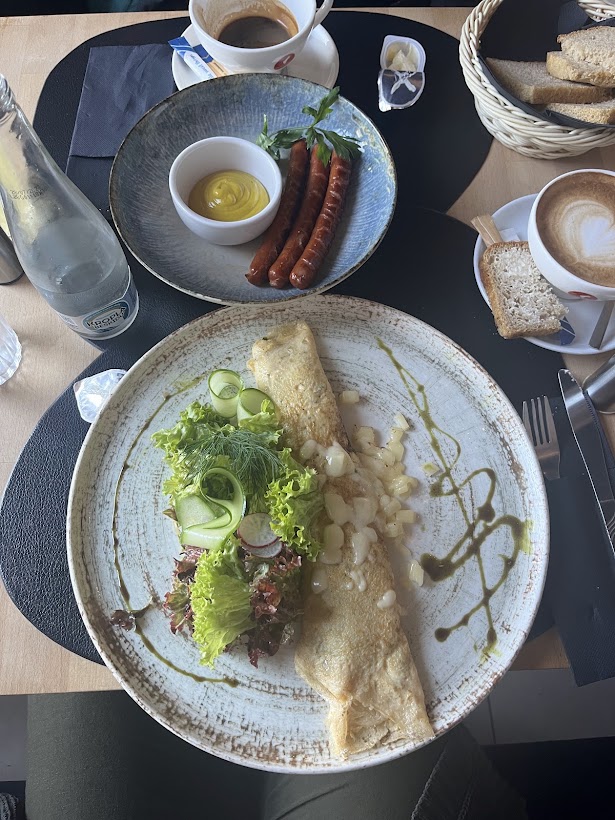
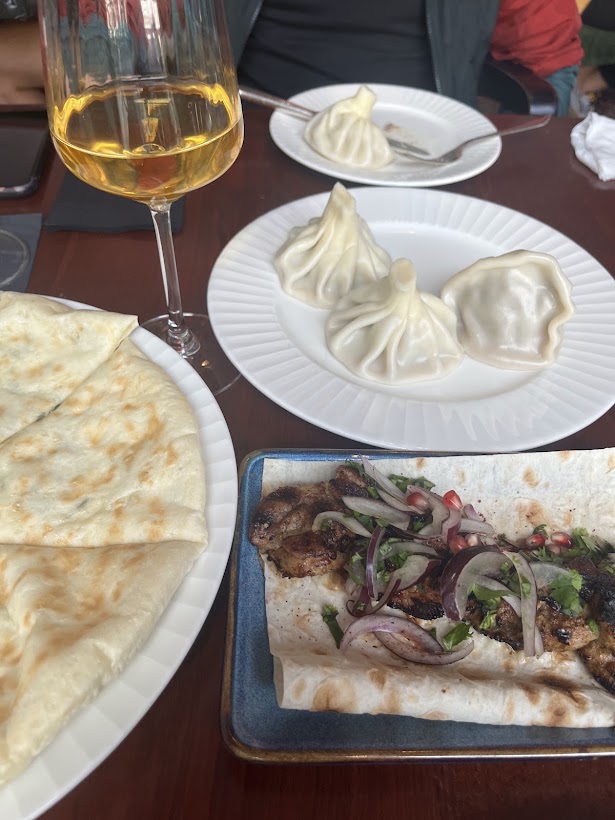
I got involved with pierogi fillings I had never heard of before, and explored the other ethnic enclaves local to the area, Vietnamese (Viet Street Food Bistro) and Georgian (Rusiko). I went into restaurant after restaurant, asking, “What’s the most [insert cuisine here] thing I could order?” And the locals’ recommendations never disappointed.

The main event
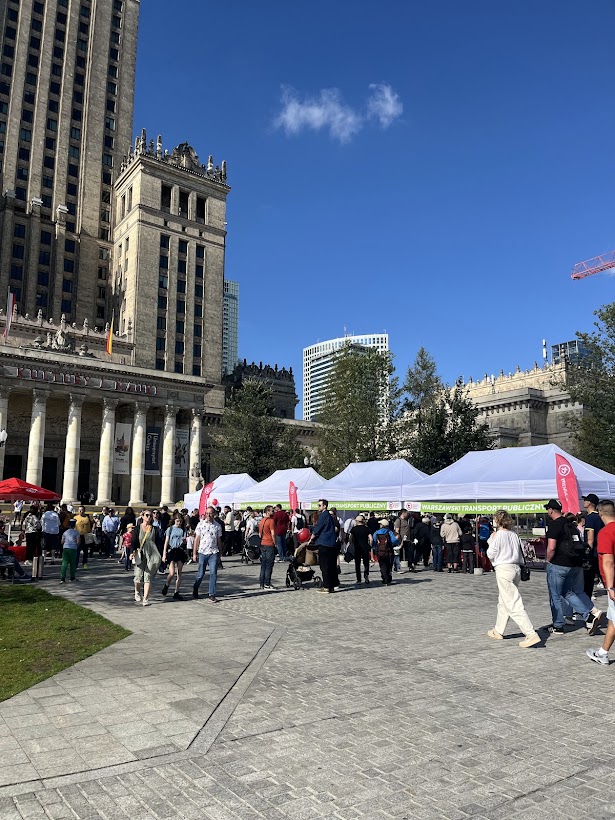
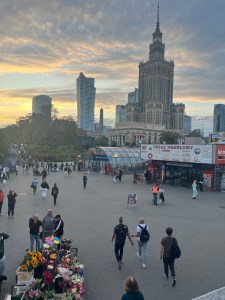
The atmosphere in the plaza of the Pałac Kultury i Nauki, or Palace of Culture and Science, on the morning of Tram EM was overcast, temperate, and significant.
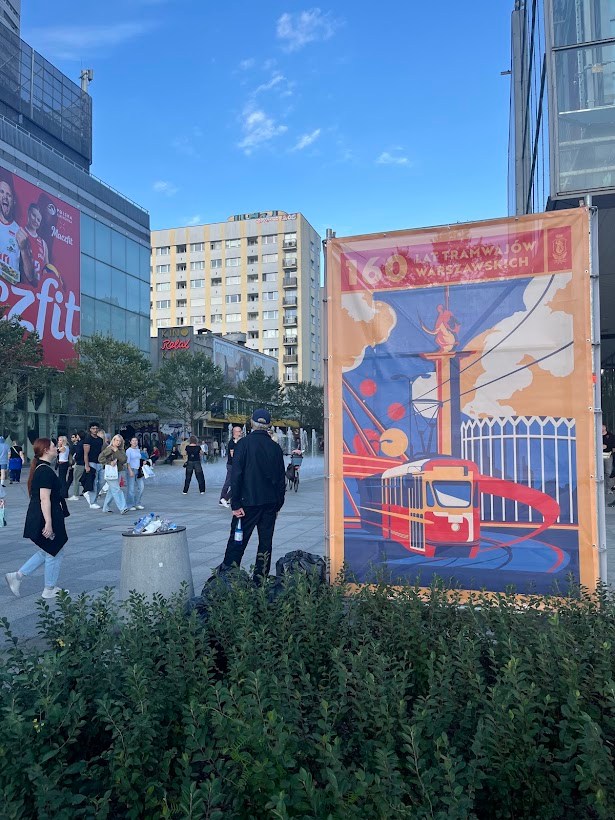
Not only was it the day of the competition, it was also European Mobility Week celebrating mobility for all with a focus on intergenerational equity, and Warsaw’s annual Dni Transportu Publicznego (Public Transport Days) festival, celebrating the 160th anniversary of the public transportation network in Poland.
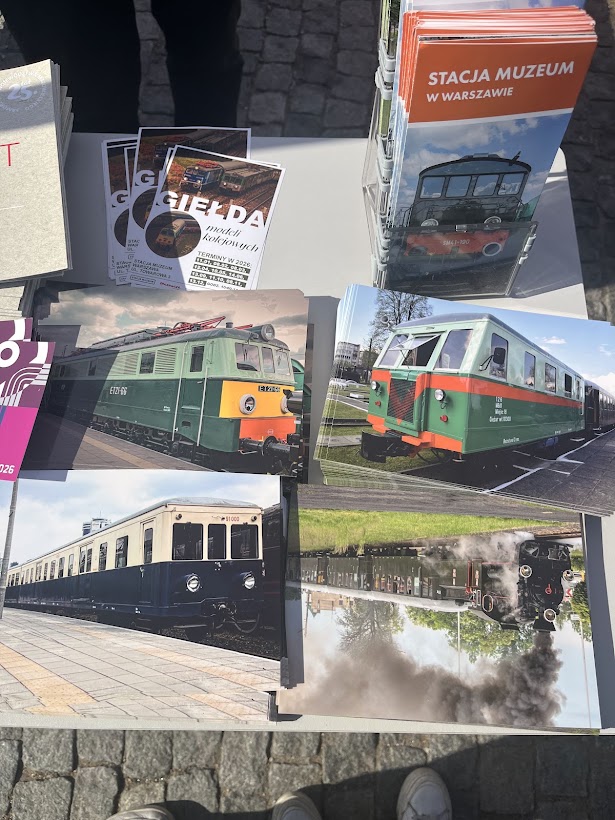
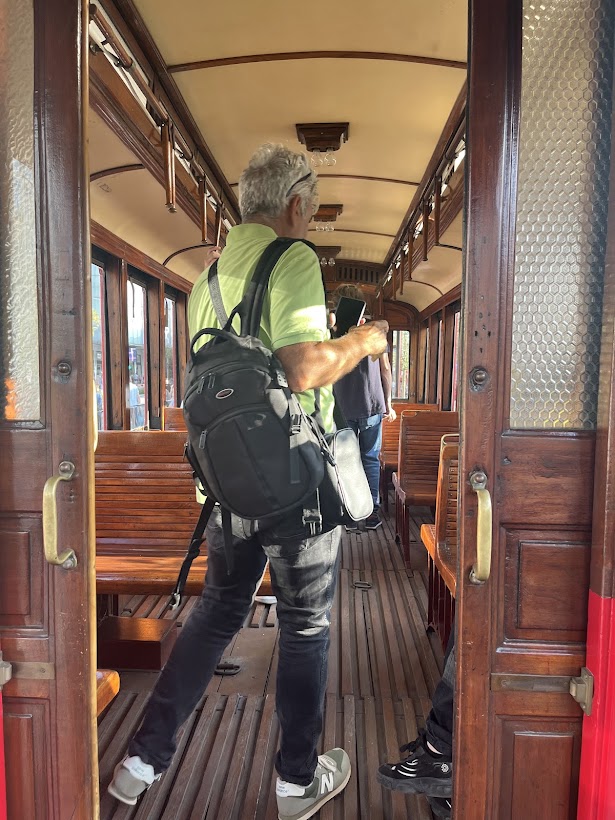
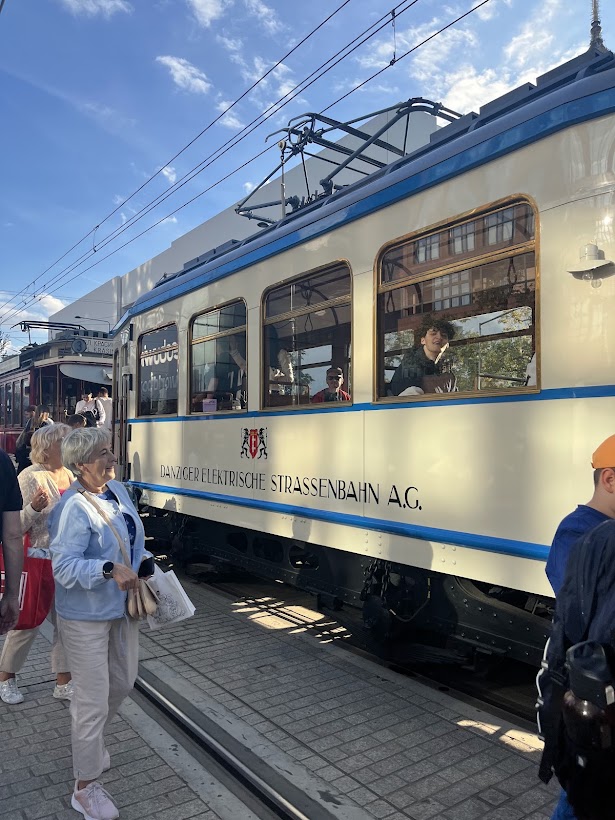
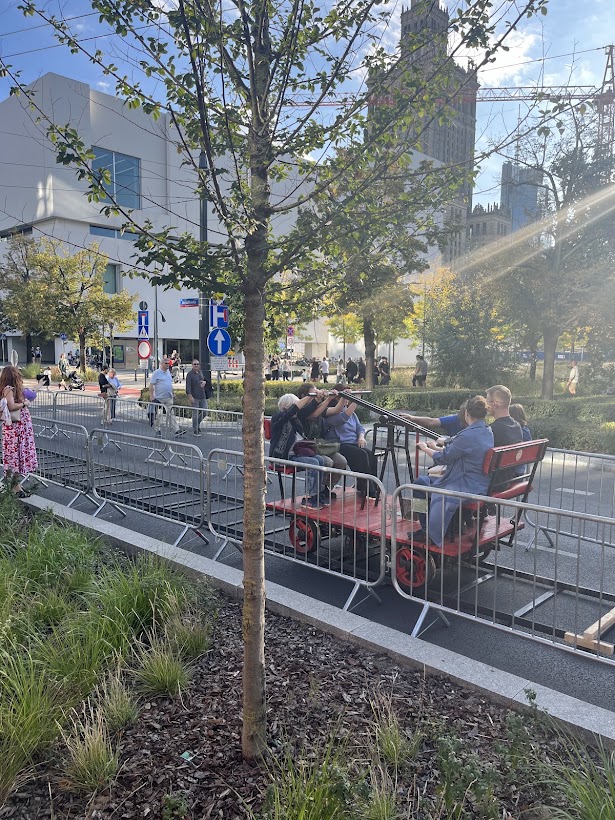
The festival featured vintage trains and buses, a train driving simulator, activities for children, pierogi food trucks, and interactive exhibits and booths where passersby could win prizes. Following the sounds of the announcer introducing the event led you out to Marszałkowska (Marshal) Street, where the main event was taking place.
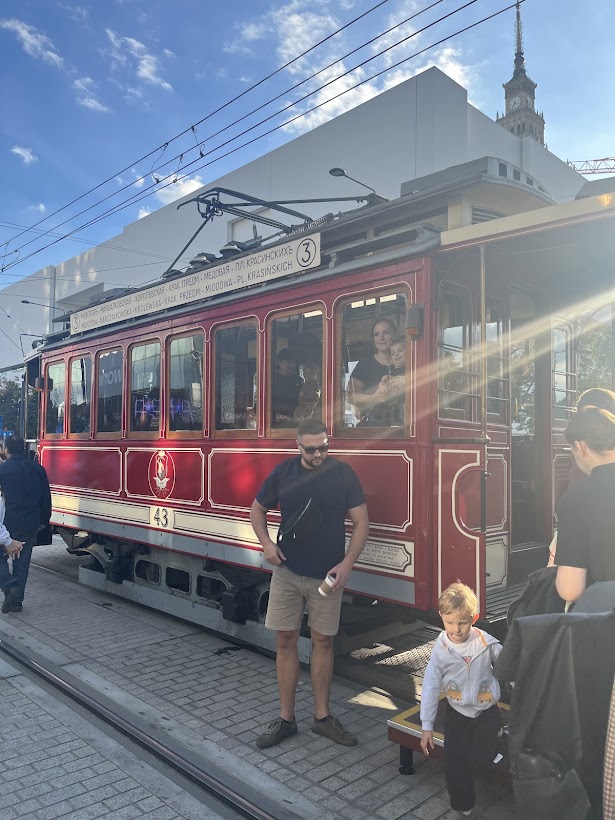

The tram line was shut down, with two cars on the east end acting as a barrier, flashing the words “Tram EM 2026” in place of a destination, and a giant ball and inflatable pins on the west end. One train car occupied each of the two parallel tracks, with people flanking any open spot by the barricade perimeter of the event.
Some folks sat on the street around screens capturing all the action, and some were in the multi-story TK Maxx across the street watching from the window – though I’m not positive if they were just curious shoppers in the right place at the right time or experienced spectators with an elaborate game plan.
Twenty-five teams from cities across 24 countries from Europe and Australia, pairings of male and female tram drivers from each municipality, one goal: to win the Tram EM.
Teams from Barcelona, Bratislava, Edinburgh, Gorzów (Poland), Gothenburg, Istanbul, Kyiv, Luxembourg, Lyon, Milan, Oradea (Romania), Oslo, Prague, Riga, Rotterdam, Tampere (Finland), Zagreb, and Zurich competed in this year’s contest.
London, Odense (Denmark), Melbourne, and Sofia were new to the stage, while defending champion Budapest, host city Warsaw, and world champion Vienna went into the day as ones to watch.
The stage was set. But first, I have to explain the stage itself.
How Tram EM works
I originally understood the contest to be a number of different events throughout the day, but it was actually a number of different events in one beautifully absurd obstacle course, where drivers compete on the same train under identical conditions to make the contest a pure test of skill.
The first contest, the “Stop and Go”, requires competitors to advance and stop with precision in three target areas with a glass bowl of water on its back; the less water spilled, the more points gained.
Then, once the bowl is removed, operators move to “Speed and target braking”, kicking the train to 25 km/h without a speedometer, then attempting to try to stop quickly and accurately on a target area on the ground.
Following this, the drivers play a round of “Tram Bowling”, which is exactly how it sounds – the tram has to hit a very large grey ball into the pins, but no points are awarded if the tram itself hits a pin.
Lateral distance
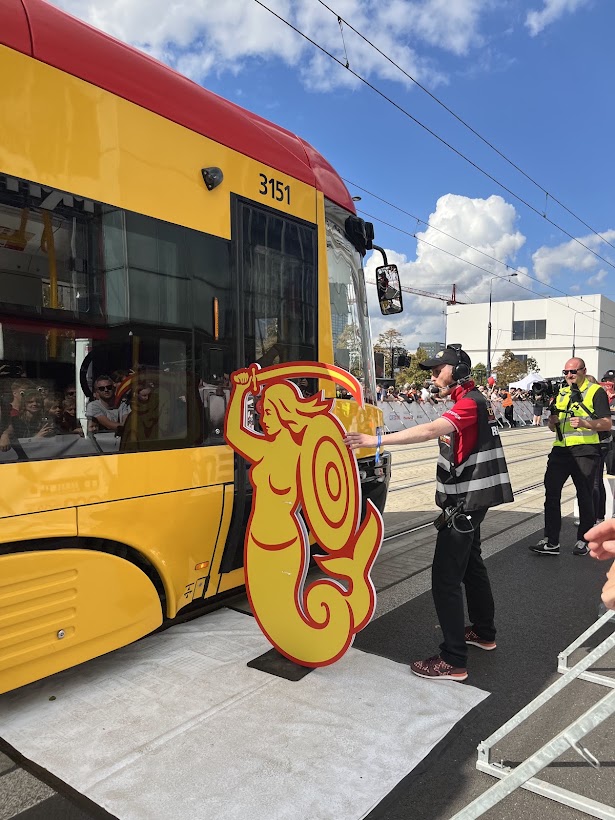
The doors of the train open, and the driver team comes sprinting out to switch trams. One driver stays on the street, lining up a cardboard cutout just so that their partner driving the tram forward gets as close as possible without side swiping it during the “Lateral Distance” challenge. From there, the driver leans out of the passenger window, trying to score 5 basketballs into a nearby hoop about an arm’s length away, in what is so aptly named “Tram Basketball”.
In the last stretch of the course, the driver advances forward for another “Exact Stop” stop test, trying to brake the train to open the second door as close to the middle of a target area on the ground, and to bring it on home in “Precision Reversing”, where one team member directs the driver by whistle as they back up into the target area just before a striped gate.
And did I mention that this is all timed?
Drivers had to move with accuracy and speed, with keen-eyed judges around the track measuring distance down to the millimeter, and penalties for spilled water and missed targets.
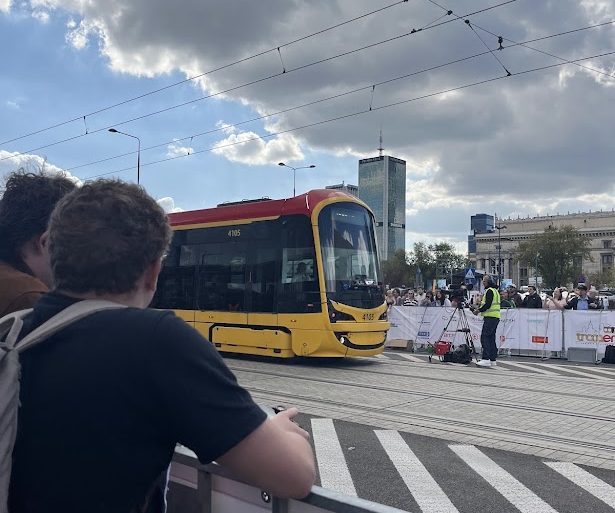
Stop and Go
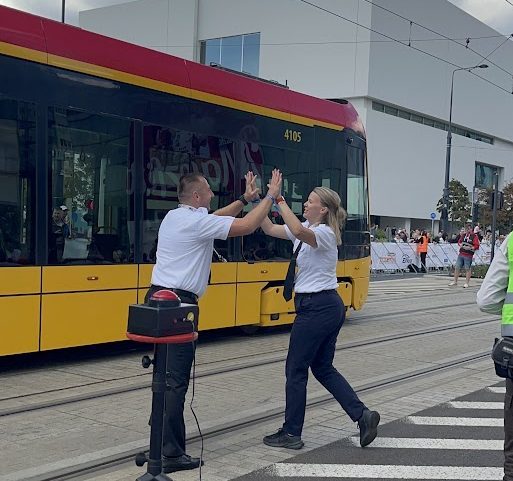
Scenes from the competition
Some teams like Sofia, Kyiv, and Prague stood out in executing dominating runs that shot each of them to the top slots of the leaderboard.
Others stood out for all the wrong reasons, like the first-timer London team who sent the glass bowl flying to the ground right out the gate, or Lyon’s team, where both drivers ran to the second car forgetting to get the cardboard cutout set up for the Lateral Distance event.
The audience, much like Poland’s transit fleet, was electric – and at times, backseat drivers, if you will.
“That’s not good,” a woman with a British accent pointed out to me as we watched one contestant set up the cardboard cutout. “We’ve been standing here all day so we know at this point what’s going to work and what’s not.”
“Move it closer!” another man from America yelled.
Every time someone made a basket, the fans, almost in a cult-like fashion, all would cheer a short and polite “Woo!’ in unison after each basket was made.
Friends from three separate countries met up to attend Tram EM, giggling about their trip.
Once all the teams went, the program took a lunch break before going again. The competitors ran the course a second time to try to learn from their mistakes or hold onto their lead.
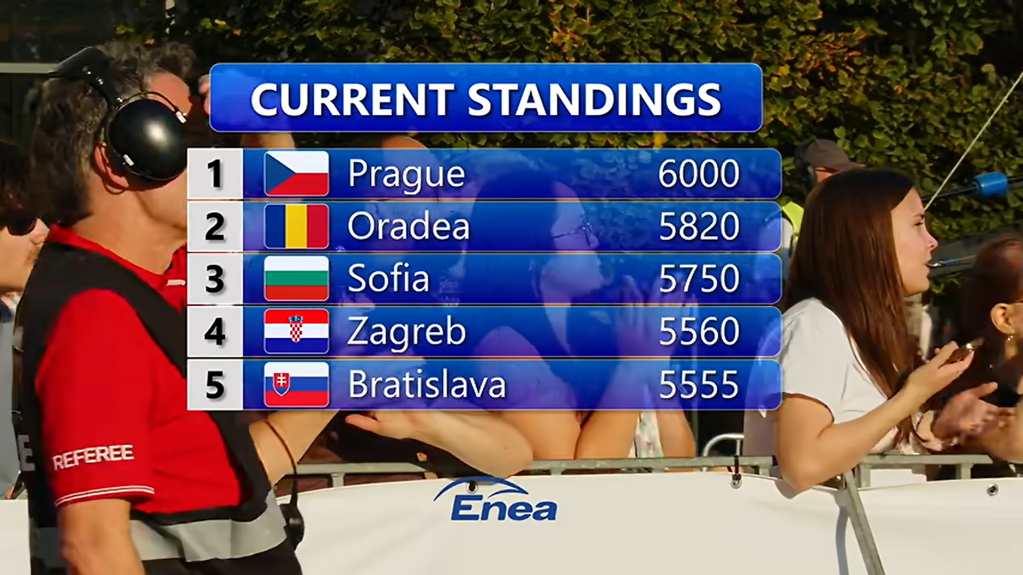
52 competition runs later, the final score (a combination of both point totals), revealed how teams ended their competition day. Prague rose to the top while London remained at the bottom of the list, and host city Warsaw finished right in the middle at 13th.
Participants and spectators alike flocked back to the plaza for the subsequent awards ceremony, where the announcer presented prizes to the top three best Female Drivers, Male Drivers, and the Overall Teams.
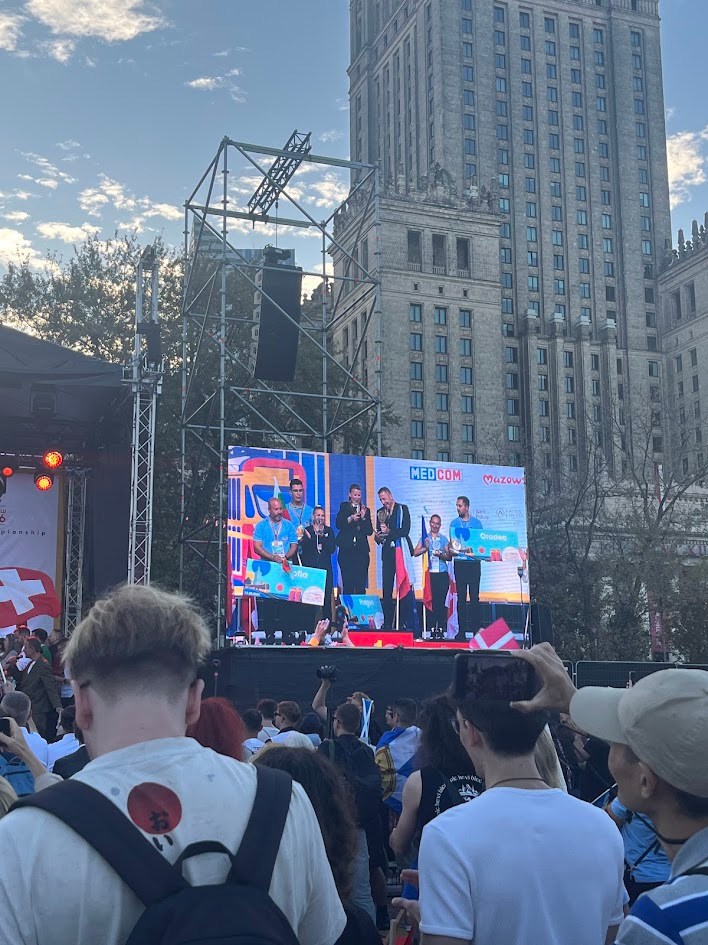
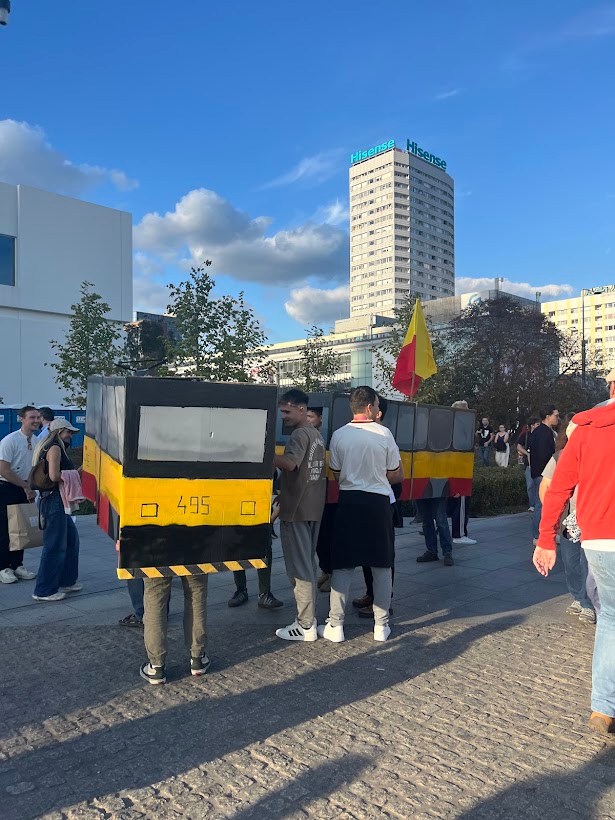
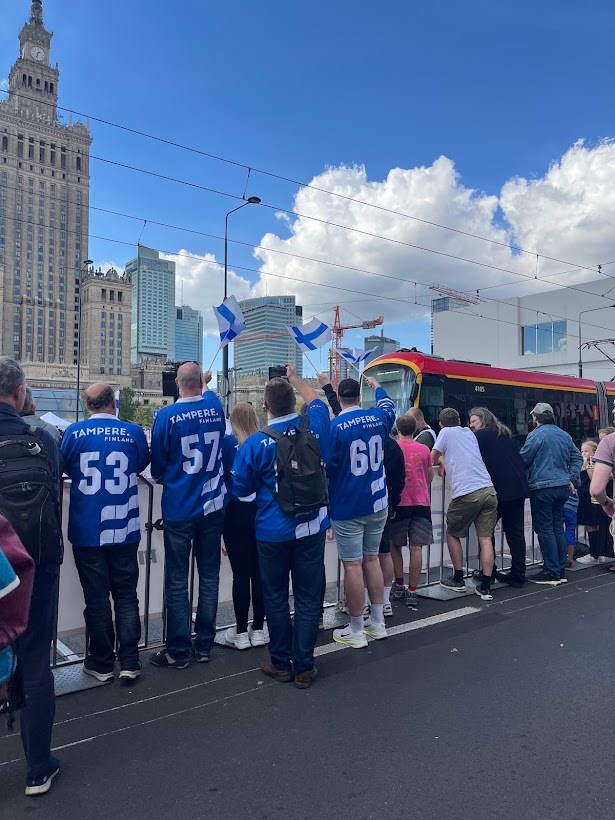
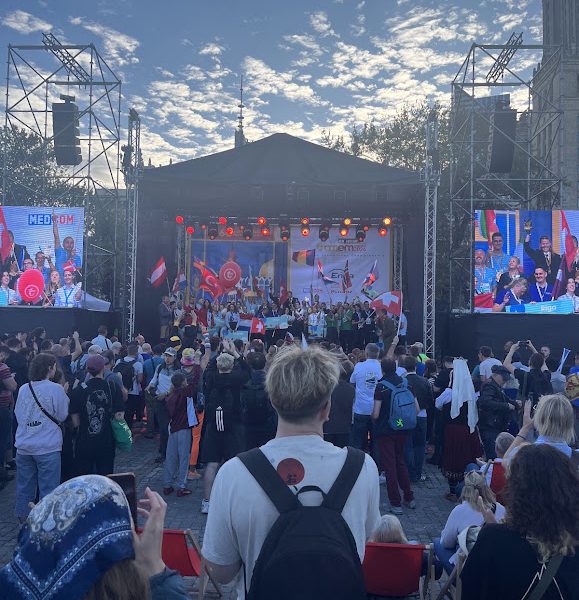
The crowd was colored with spectators and participating teams waving their respective flags, holding signs repping their cities, and even a couple people dressed up as a train. Cheering on their operators like not only the elite athletes they are, but the vital public sector professionals that literally keep the city moving.
But amid all the whimsy were some key takeaways – the joy and liberation that public transit facilitates, and the intergovernmental partnership needed to promote it. It is not lost on me that a governmental body such as the EU has such a robust network of transit that moves travelers within cities, across countries, and throughout much of the continent, creating civic culture that connects and infects the entire continent.
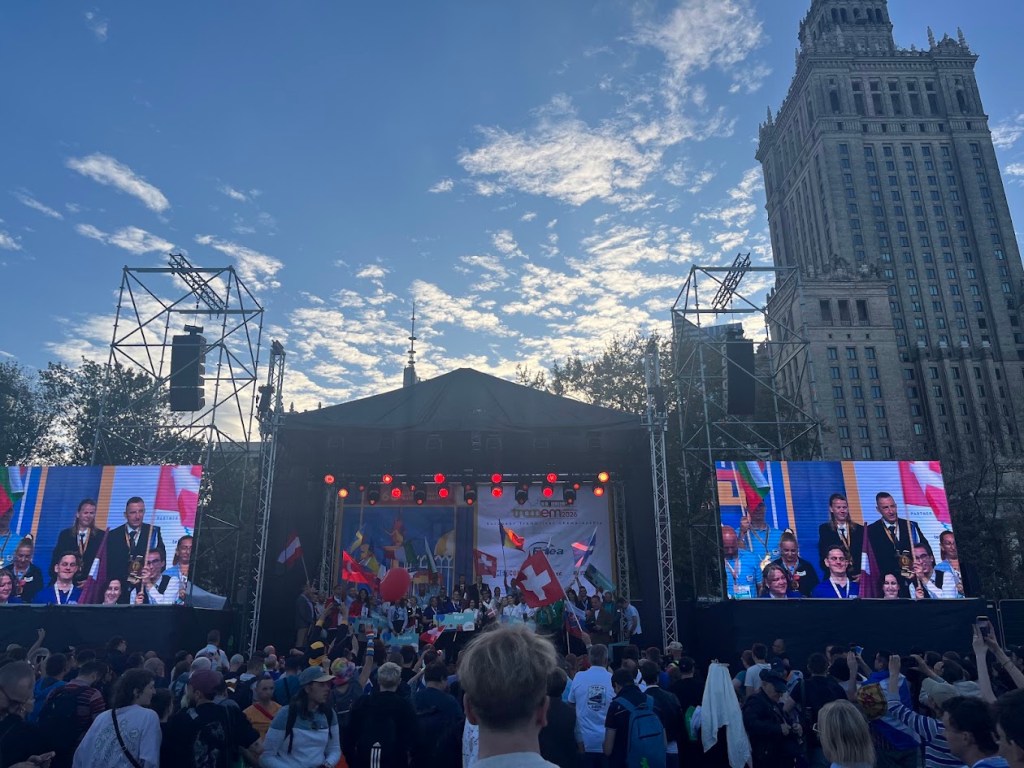
To witness such international unity felt regrettably unfamiliar these days, but also so light and inspiring. To see people from different countries celebrating their own home countries with painted faces and jerseys, but also celebrating each other, cheering for one another, commiserating together, and dancing.
You can relive all the action of the second run of the course (and maybe see me bobbing and weaving around the course to get good shots) here.
A case for transit unity
The tradition is poised to continue, as next year’s host city, Luxembourg, premiered their video to announce their contest, featuring two old women talking about Luxembourg’s culture, food, and – what elicited the most cheers – free public transit.
Luxembourg will take on hosting duties next year, and Melbourne takes the reins in 2028, opening up the contest to a worldwide group, similar to 2025’s contest in Vienna.
One big question that continues to be top of mind for me following the experience is: what’s it going to take to get one of these going in North America?
San Diego represented America in the 2025 World Competition in Vienna, and the American Public Transportation Association and the T host events for bus drivers like APTA’s International Bus Roadeo or the T’s own Bus Rodeo, which took place just a few weeks ago.
But North America currently lacks a public, festival-scale spectacle for rail operators. We saw how some of those networks rose to the occasion during this summer’s World Cup surge, and there’s no reason we can’t highlight them here.
While Tram EM focuses on street-running light rail, a North American offering could have operators across light and heavy rail in similar speed and accuracy challenges. Imagine bringing drivers and riders together from across the continent to compete for glory, display driver skill, and look back on how far transit has gone in North America, and celebrate where our cities have delivered – a true cross-continental showcase of driver talent and civic pride.
Imagine vital services new and old, sprawling and small, from urban cores to small cities, going head-to-head. Legacy networks like the T here at home, the Chicago “L”, New Orleans’ historic St. Charles Streetcar Line, Mexico City’s STC Metro, and Toronto’s TTC streetcars sharing the track with modern systems like Charlotte’s LYNX Blue Line, Dallas’s DART Light Rail, Phoenix’s Valley Metro Rail and Calgary’s CTrain. Taking on the course, representing transit across the continent, showcasing their drivers, and sharing their civic pride.
A rotating host city across North America would bring fans together to explore local culture and cuisine, inspire ridership and hometown pride, and spotlight ongoing expansion – whether that’s efforts within city limits like expanding the Metro in LA, new light rail corridors in Canada, or efforts to restore and expand regional Amtrak routes.
I might be biased, but if the T’s operators can survive Boston winters, a whole track replacement, aging infrastructure, and a couple fires, I think they could easily take home the gold.
Who can I call to get this going? Until then, I’ll just keep watching my footage and start planning my trip to Luxembourg for the next one.