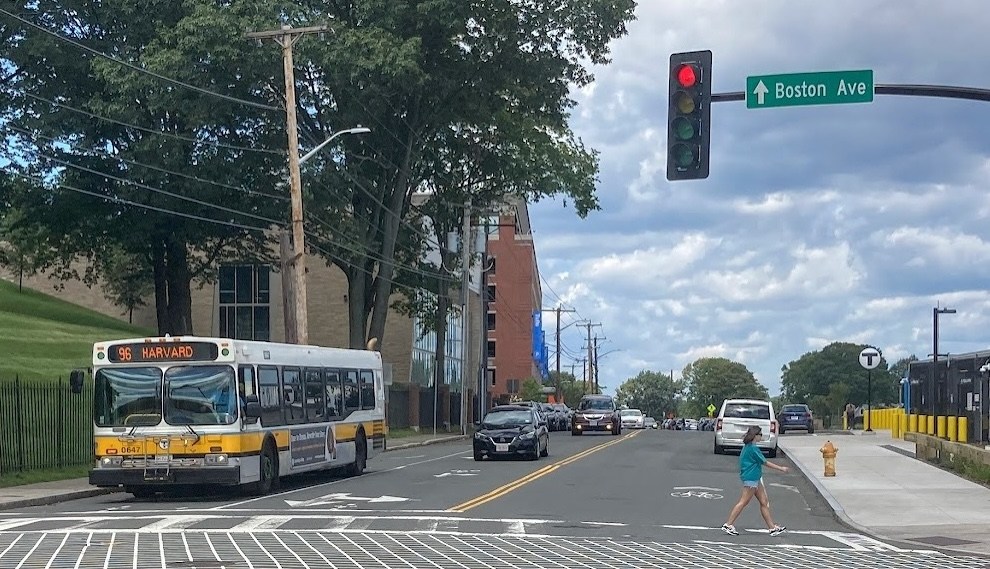
Batteries, Or Overhead Wires? The Debate Over Zero-Emission Bus Technology

The MBTA this week celebrated the addition of its first purely battery-powered buses to its fleet, with five new Silver Line vehicles.
But some transit advocates were less impressed, saying that instead of relying on unproven battery technology, the MBTA should expand its fleet of electric trolleybuses, which draw their power from overhead wires and have been operating for decades with a high degree of reliability.
The new Silver Line buses will replace vehicles that already ran on electric power for the portion of their route in the Seaport tunnel (most existing Silver Line buses have dual-mode engines that run on diesel fuel on surface streets, then switch to electric power drawn from overhead wires inside the tunnel).
Unlike the former buses, though, the battery-electric buses won’t use any diesel fuel, and instead of drawing power from the Silver Line tunnel’s existing overhead wires, they’ll be expected to run all day and charge overnight in the Southampton bus garage.
State and MTBA officials stressed that the new buses would be an experiment: “We look forward to seeing how these buses perform, gathering data on power consumption, and testing their range during extreme weather as we continue to seek ways to reduce greenhouse gases and improve service for our customers,” said MBTA General Manager Steve Poftak in a press release.
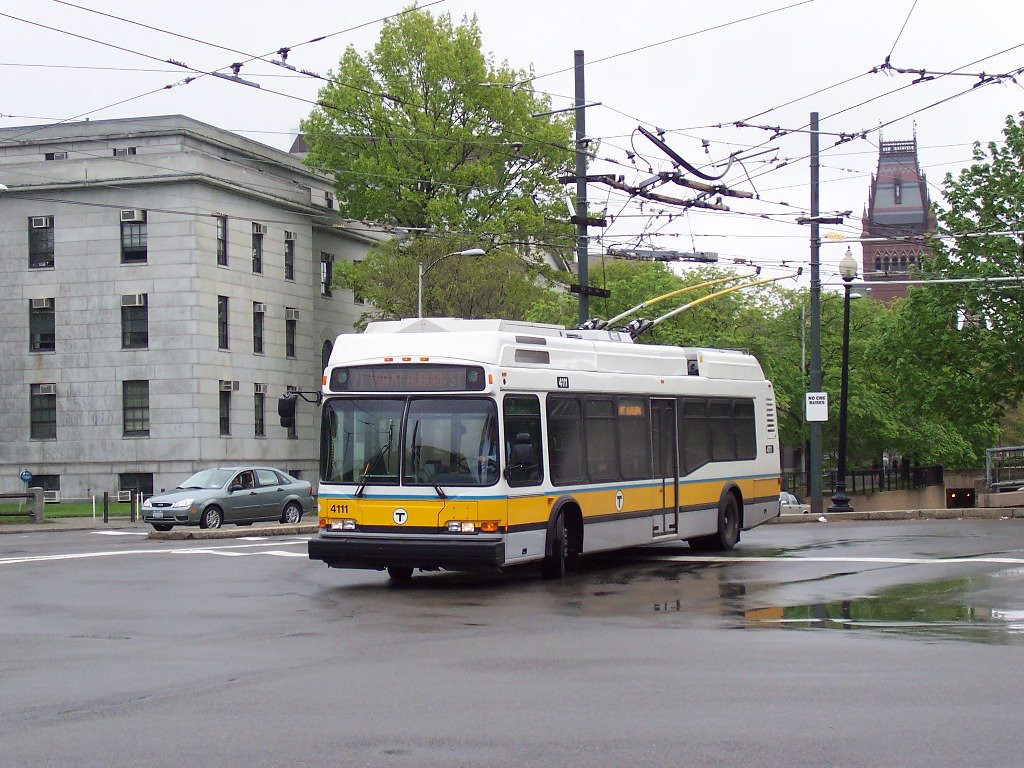
Outside the Silver Line tunnel, the MBTA has been running “trackless trolley” electric buses for decades on several routes with overhead wires (including the 71, pictured above) in North Cambridge, Watertown and Belmont.
In a May opinion piece in Commonwealth Magazine, advocates from TransitMatters noted that the MBTA’s trolleybuses have a proven track record of lower maintenance costs than their diesel counterparts, and argued that overhead wire infrastructure should be expanded to allow in-motion charging on more bus routes.
“A trolley bus system is significantly cheaper to run even factoring in the maintenance of overhead wires,” wrote Alon Levy, Josh Fairchild and Jim Aloisi.
That assertion has backing from a 2011 audit commissioned by Seattle’s King County Metro, one of the nation’s largest trolleybus operators. That audit concluded that trolleybuses offered significant life-cycle cost savings compared to a hybrid diesel bus.
Based on those findings, King County bought 174 new electric trolleybuses, delivered in 2015, equipped with on-board batteries that allow them to travel up to 3 miles off-wire.
Today, the Seattle transit agency is relying on both technologies to electrify its fleet. While it expects to buy hundreds of new battery-powered buses in the coming years, King County Metro is also installing new overhead wires on more streets in order to convert additional bus routes from diesel power to wired electric power.
Jarred Johnson, the Chief Operating Officer at TransitMatters, notes that “Seattle is eating our lunch in terms of ridership and service expansion,” and thinks that the MBTA should follow their example.
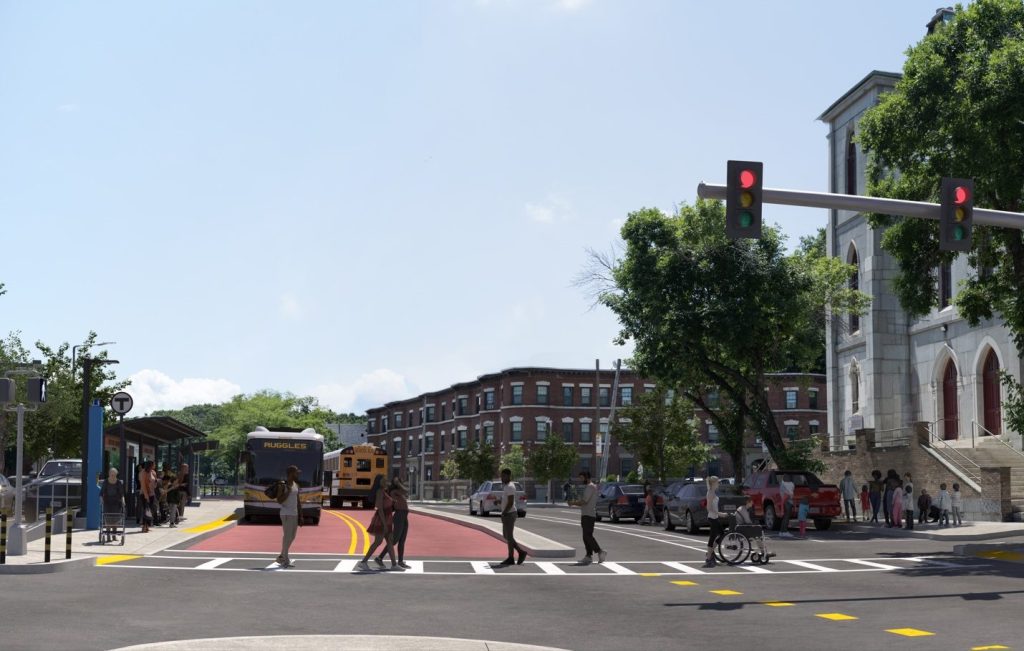
Johnson suggests that the city should install new overhead wires on trunk routes like Warren Street in Roxbury and Blue Hill Avenue in Dorchester, where multiple routes converge, so that new battery-equipped trolleybuses could charge in motion when they approach Dudley or Mattapan Square, then run on battery power when they branch off the wired trunk routes to other destinations.
He points out that this strategy would also benefit some of the city’s neighborhoods that suffer with the region’s highest concentrations of traffic-related air pollution.
The MBTA, for now, seems uninterested in that possibility. Unlike Seattle, the MBTA has “no immediate plans to construct new overhead wires,” confirmed MBTA spokesperson Lisa Battinson in a Friday email message.
Indeed, the agency has intimated an interest in doing away with its overhead wire infrastructure altogether.
Last September, in an announcement of a new Silver Line hybrid diesel bus that runs on battery power while operating in the Seaport tunnel, the MBTA wrote that “eliminating the need for the complex catenary wire infrastructure within the Tunnel has the potential to substantially reduce infrastructure maintenance costs.”
“We’ve heard that the next round of battery-powered buses may go to the North Cambridge garage to replace the trolleybuses,” says Johnson. “Replacing electric trolleybuses with zero-emission battery buses won’t have any impact in terms of greenhouse gases, and Cambridge, Belmont and Watertown aren’t environmental justice communities (which would benefit most from new zero-emission vehicles). At least for now, with the unproven battery technology, abandoning the trolleybuses is really shortsighted.”

Streetsblog has migrated to a new comment system. New commenters can register directly in the comments section of any article. Returning commenters: your previous comments and display name have been preserved, but you'll need to reclaim your account by clicking "Forgot your password?" on the sign-in form, entering your email, and following the verification link to set a new password — this is required because passwords could not be carried over during the migration. For questions, contact tips@streetsblog.org.