MBTA Board Endorses Ambitious Slate of Upgrades For Commuter Rail System
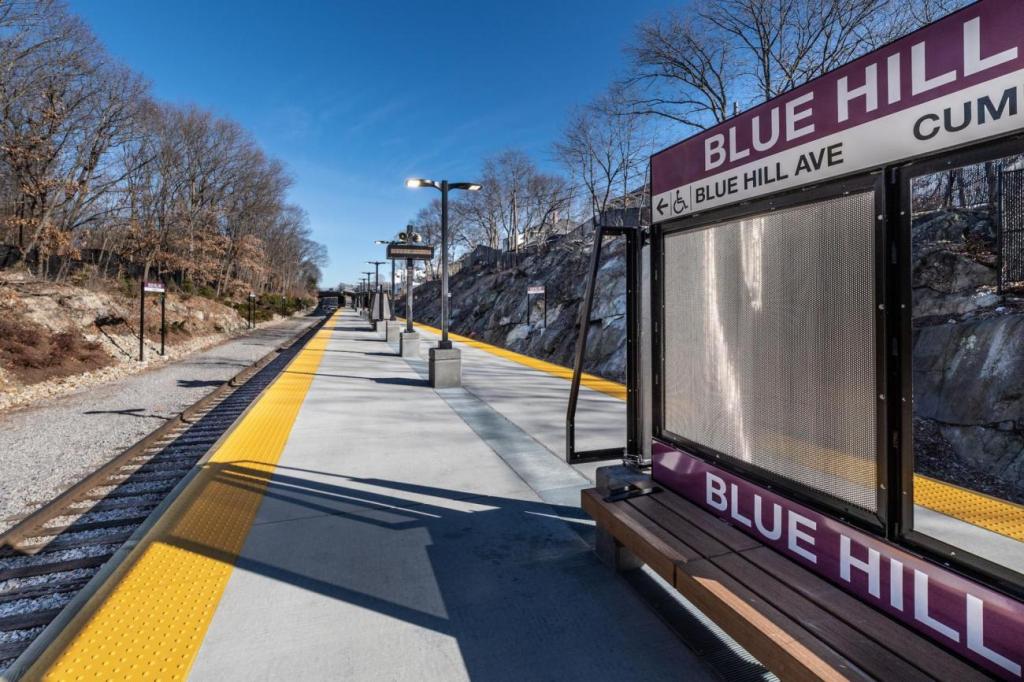
The MBTA Fiscal and Control Management Board has endorsed an aspirational vision to electrify the MBTA commuter rail network to provide all-day, rapid-transit-style service throughout eastern Massachusetts, with an initial phase focused on upgrading Boston’s Fairmount Line, the Boston-Providence line, and the Rockport line through Chelsea, Revere and Lynn.
The vote caps off a year-long effort to study upgrades to the commuter rail system in the the MBTA’s “Rail Vision” planning process, which evaluated six alternatives for upgrading the region’s commuter rail system.
As SteetsblogMASS reported previously, those six alternatives ranged widely in cost and ambition, from a $1.7 billion option that would add new some trains to the existing system, to a $29 billion “full transformation” option that would run new electric trains every 15 minutes all day and build a new regional rail tunnel to connect North and South Stations.
In its last meeting on Oct. 28, the 25-member advisory committee that has been meeting to guide the planning process broadly agreed that the “full transformation” option should be the preferred alternative.
At Monday’s board meeting, the City of Boston also endorsed that alternative during the public comment period.
Matt Moran, speaking on behalf of the City of Boston’s Transportation Department, asked the board to “commit to an ambitious vision” and to plan for implementing the full transformation concept with a specific timeline for short-term and long-term improvements.
Later, when the board took up the Rail Vision agenda item, Chair Joseph Aiello introduced four resolutions for the board to consider, rather than endorse a specific alternative from the Rail Vision study.
Aiello’s first resolution outlined general aspirations for the entire system “to be more similar to rapid transit,” with trains that run every 15 to 20 minutes all day on its most dense corridors, and running on “largely electrified” trains with ADA-accessible stations.
Board member Chrystal Kornegay submitted an adopted amendment to add that “the vision should ensure that equity is a foundational part of this transformation.”
The next three resolutions focused on how the agency would implement that vision: in the second resolution, Aiello outlined a “phase one” scope of work that would make rapid-transit upgrades to the Providence Line, which already has electric overhead wires for Amtrak trains, plus the Rockport Line as far as Lynn, and the Fairmount Line in the City of Boston, both of which serve environmental justice communities.
A third resolution proposed that the MBTA “immediately establish a regional rail/urban rail transformation office,” and a fourth resolution called on the State House to pass legislation to allow for the financing and construction of these projects.
A fifth resolution, proposed by board member Monica Tibetts-Nutt, called for similar attention to be focused on the region’s bus system.
“The bus system is failing,” said Tibetts-Nutt. “I propose that the general manager establish a bus transformation office immediately.”
All five resolutions passed.
After today’s vote, TransitMatters, the transit advocacy group that has been advocating for frequent, all-day electrified rail service since publishing its “Regional Rail for Metropolitan Boston” report in 2018, issued a press release to applaud the board’s decision.
“We believe that this is an important first step toward transforming our current antiquated Commuter Rail system,” said the statement. “We will continue to push hard for a new service delivery model based on frequent all day service, replacing today’s dirty diesel locomotives with more cost effective electric multiple units and providing better service with high level platforms at every station… We look forward to a close collaboration with the T and other stakeholders to keep this critical initiative on track.”

Streetsblog has migrated to a new comment system. New commenters can register directly in the comments section of any article. Returning commenters: your previous comments and display name have been preserved, but you'll need to reclaim your account by clicking "Forgot your password?" on the sign-in form, entering your email, and following the verification link to set a new password — this is required because passwords could not be carried over during the migration. For questions, contact tips@streetsblog.org.