Cap-And-Trade Program For Transportation Seeks States’ Support
The Transportation and Climate Initiative (TCI), a regional effort to reduce greenhouse gas emissions from the transportation sector, took a major step forward on Tuesday with the release of a draft “memorandum of understanding” for participating states to sign onto in order to set up a regional cap-and-trade market by 2022.
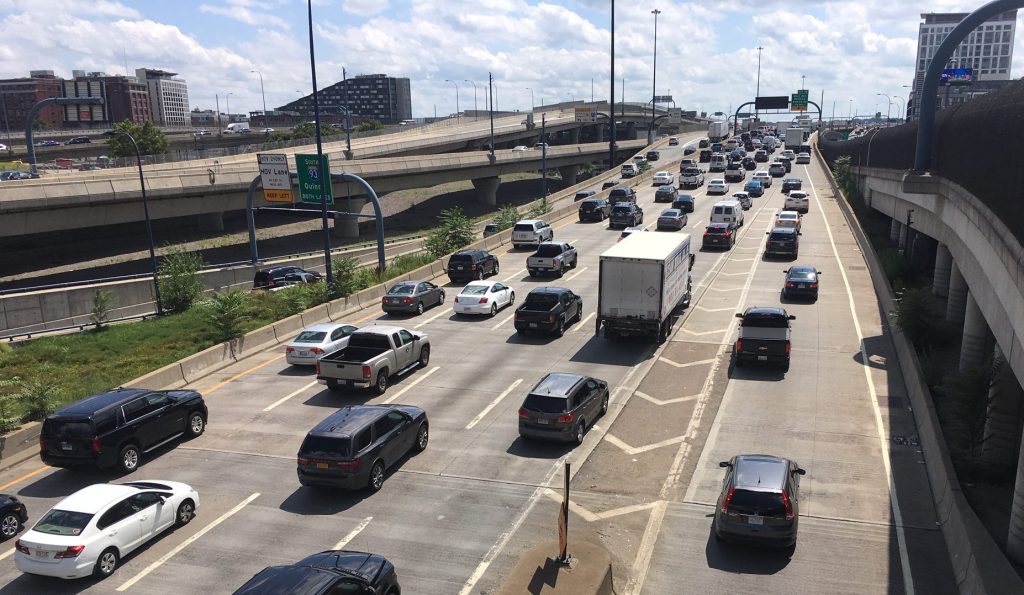
Twelve northeastern and mid-Atlantic states, plus the District of Columbia, have been collaborating in designing the TCI’s “cap and trade” program since early this year. The goal is to enact a program that will reduce pollutants from motor vehicle fuels, which generate 40 percent of the region’s climate-heating greenhouse gas emissions, by 2022.
The idea is roughly modeled on the Regional Greenhouse Gas Initiative (RGGI), which has been regulating emissions from the region’s electric power plants since 2008. By making fossil-fueled power plants pay for the emissions they generate, RGGI has encouraged utilities to shut down older coal-burning plants while also generating billions in new public revenue that states have used to fund energy efficiency programs and to lower residents’ electric bills.
TCI would force fuel suppliers to buy permits in proportion to their products’ greenhouse gas impacts, and the number of those permits would decline over time in line with the region’s climate goals. States would then be able to use the new revenue generated by those permit auctions to improve transit and increase the utilization of electric vehicles.
In 2016, Massachusetts motorists pumped about 32 million metric tons of climate-baking pollution into our skies. If TCI charges gasoline and diesel fuel suppliers $15 per ton of pollution – a price similar to what California’s most recent cap-and-trade auctions yielded – then Massachusetts would receive roughly $480 million in new revenue.
Today’s memorandum of understanding aims to win official commitments from states and the District of Columbia. A coordinated effort “will provide greater economic, social and public health benefits to residents and communities across the region than if each jurisdiction acted alone,” according to the document’s preamble.
The document also outlines next steps: participating states would agree on a “model rule” for the program by December 2020, and the program could take effect “as early as January 1, 2022.”
Support from Massachusetts seems likely: Governor Charlie Baker has repeatedly expressed his support for TCI and pegged it as a likely source of revenue to help fund the state’s backlog of transit projects. Members of his administration have also been deeply involved in the initiative: Kathleen Theoharides, Secretary of the Executive Office of Energy and Environmental Affairs, chairs TCI’s leadership team, and Marty Suuberg, Commissioner of the Massachusetts Department of Environmental Protection, co-chairs the TCI Executive Committee.
A poll released last week from the MassINC Polling Group found a wide margin of support for TCI in Massachusetts and in other northeastern states (editor’s note: this poll was funded by the Barr Foundation, which is also a major financial supporter of StreetsblogMASS).
“Support was broad, stretching across demographic and party lines and throughout the region,” said pollster Steve Koczela, president of The MassINC Polling Group, in a press release accompanying the results.

Read More:
Streetsblog has migrated to a new comment system. New commenters can register directly in the comments section of any article. Returning commenters: your previous comments and display name have been preserved, but you'll need to reclaim your account by clicking "Forgot your password?" on the sign-in form, entering your email, and following the verification link to set a new password — this is required because passwords could not be carried over during the migration. For questions, contact tips@streetsblog.org.