Wisconsin Car Attack is an Example of Our Failure to Prevent Cars Being Used as Weapons

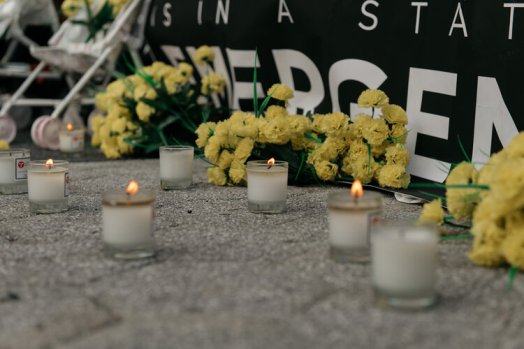
It was the deadliest automobile massacre in recent American memory, and it was entirely preventable — if law enforcement officials were more aggressive towards people who use automobiles as weapons.
Darrell Brooks, Jr., the 39-year-old driver who allegedly killed six in his attack on a holiday parade in a Milwaukee suburb on Sunday had only two weeks earlier been released and allowed to get back behind the wheel after being charged with punching the mother of his child and deliberately striking and injuring her with his car, leaving visible tire tracks on her pant leg.
If he ends up convicted of either crime, Brooks will be among a tiny handful of U.S. drivers who face legal consequences of any kind after being involved in a crash.
Charges against motorists who kill are rare enough that federal agencies don’t even track them in national-scale statistics; nor are there meaningful data on what percentage of drivers are convicted, or what penalties they face, or how those conviction rates differ between White drivers and people of color, who often face disproportionate rates of incarceration and extreme sentencing for both violent and non-violent crimes. (Brooks is Black.)
What that argument often willfully ignores, of course, is how policy, culture, and environment collaborate to create conditions that all too often permit massacres, whether they’re committed with a gun or an SUV — and by failing to address those conditions, advocates argue, we practically ensure that such atrocities will continue to happen.
It is not incidental, safe streets advocates say, that the car that the Waukesha killer drove — an unspecified red SUV — is in a vehicle class that many believe should not be allowed on U.S. roads, because they are two to three times more likely to be fatal to a pedestrian in the event of a crash.
And it’s important that several states across America have passed laws aimed at removing criminal liability for drivers who strike and even kill protesters with their cars, while increasing penalties for “rioters” who commit the non-capital crime of impeding the flow of traffic — a move which essentially designates specific spaces in which it is legally permissible for drivers to commit vehicle ramming attacks (like the hundreds committed against Black Lives Matter protests primarily attended by BIPOC and their allies, which were widely considered to be the impetus for the legislation) in contrast to spaces where it is not (like a Christmas parade in a predominantly White town.)
The Wisconsin legislature is considering a similar bill right now.
You know why Darrell Brooks killed five people with his SUV in Waukesha, WI? Because he got released on bail after trying to run the mother of his child over in the same SUV. His bail? $1000.
We ignore domestic violence at our peril.????????
— ??Ebony Edwards-Ellis?? (@Eedwardsellis) November 23, 2021
Of course, it must not be ignored that Brooks was credibly accused of committing several horrific acts of domestic violence — one of which involved a car — mere days before the massacre that claimed the lives and safety of so many.
Study after study after study has shown that as many as two-thirds of mass shooters have a criminal history of domestic violence, and that those who don’t have such a history kill significantly fewer people when they commit their ultimate crimes than those who do. There’s little data about whether a similar correlation exists among mass murderers who weaponize their cars to attack others, but advocates are already urging congress to reauthorize the Violence Against Women Act, which expired in 2018.
But even that essential legislation probably wouldn’t have prevented the Waukesha parade massacre. As lawmakers across the country fight to keep domestic abusers from accessing firearms (even if they’re still struggling to enact laws that successfully get abusers to surrender the guns they already have), almost no one’s arguing that violent men like Brooks should be stripped of their licenses to operate a motor vehicle that can just as easily be used to kill.
That’s in part because, in auto-dominated communities across the U.S., removing even a violent individual’s access to a car is often tantamount to cutting them off from basic participation in society. Even more than a gun, a car is seen, primarily, as a neutral, if all too easily weaponizable, tool — and when that tool is denied to us, it makes us vulnerable to dying under the wheels of the drivers we once traveled amongst.
Of course, that is in no way a persuasive argument for ever handing violent men like Brooks a set of keys. But it is a strong an argument for comprehensively reimagining U.S. streets, laws, and culture to save the lives of the roughly 110 people who die on U.S. roads every day, whether those crimes are committed out of malice or negligence.
If America does that, just maybe, next year’s World Day of Remembrance won’t be marked by such a terrible stain.

Streetsblog has migrated to a new comment system. New commenters can register directly in the comments section of any article. Returning commenters: your previous comments and display name have been preserved, but you'll need to reclaim your account by clicking "Forgot your password?" on the sign-in form, entering your email, and following the verification link to set a new password — this is required because passwords could not be carried over during the migration. For questions, contact tips@streetsblog.org.