Friday’s Headlines to Wrap Up the Week
A deep dive into the urban freeway demolition trend, plus more evidence that electric and autonomous vehicles aren't great for the climate.

By
Blake Aued
12:00 AM EST on February 18, 2022
- Cities are tearing down — or thinking about tearing down — urban freeways to undo the damage to neighborhoods. But the $1 billion in the federal infrastructure law for such endeavors isn’t even enough to demolish one freeway. (The B1M)
- McKinsey lays out how transit can become more inclusive for women, seniors and people with disabilities.
- Without renewable energy, emissions from generating power to charge electric vehicles will wipe out half the gains from switching to EVs. (Inverse)
- More evidence that autonomous vehicles won’t be good for the environment if they lead to more driving. (GreenBiz)
- Suspending gas taxes is a politically popular idea, but most drivers probably wouldn’t even notice a price drop at the pump. (Route Fifty)
- Developing nations have an opportunity to build transportation infrastructure for people, not cars. (The City Fix)
- California has big plans for sustainable, equitable transportation, but will it stick with them? (Transit Center)
- A San Francisco assemblyman reintroduced a bill to decriminalize jaywalking in California. (NBC Bay Area)
- A $400 million bond issue for San Francisco transit agency Muni will be on the ballot in June. (Railway Age)
- Utah legislators are considering bringing state-funded transit projects under control of the state DOT, which currently focuses almost exclusively on car infrastructure. (Salt Lake Weekly)
- A strike by concrete workers is delaying construction on Seattle transit projects. (KIRO)
- Eight new cameras in Seattle will automatically ticket drivers who block crosswalks and bus lanes. (Fox 13)
- The pedestrian-friendliness of downtown Minneapolis and St. Paul streets varies widely from block to block. (MSP Mag)
- Pennsylvania Avenue between the Capitol and the White House could become a complete street. (DCist)
- Montgomery County, Maryland, can improve access to transit by making stations more walkable. (Brookings)
- WVXU has a podcast on how Cincinnati’s bike infrastructure is progressing.
- A UK cycling group released a master plan for a nationwide biking and walking network, but at this rate it could take 150 years to complete. (The Guardian)

Streetsblog has migrated to a new comment system. New commenters can register directly in the comments section of any article. Returning commenters: your previous comments and display name have been preserved, but you'll need to reclaim your account by clicking "Forgot your password?" on the sign-in form, entering your email, and following the verification link to set a new password — this is required because passwords could not be carried over during the migration. For questions, contact tips@streetsblog.org.
More from Streetsblog Massachusetts
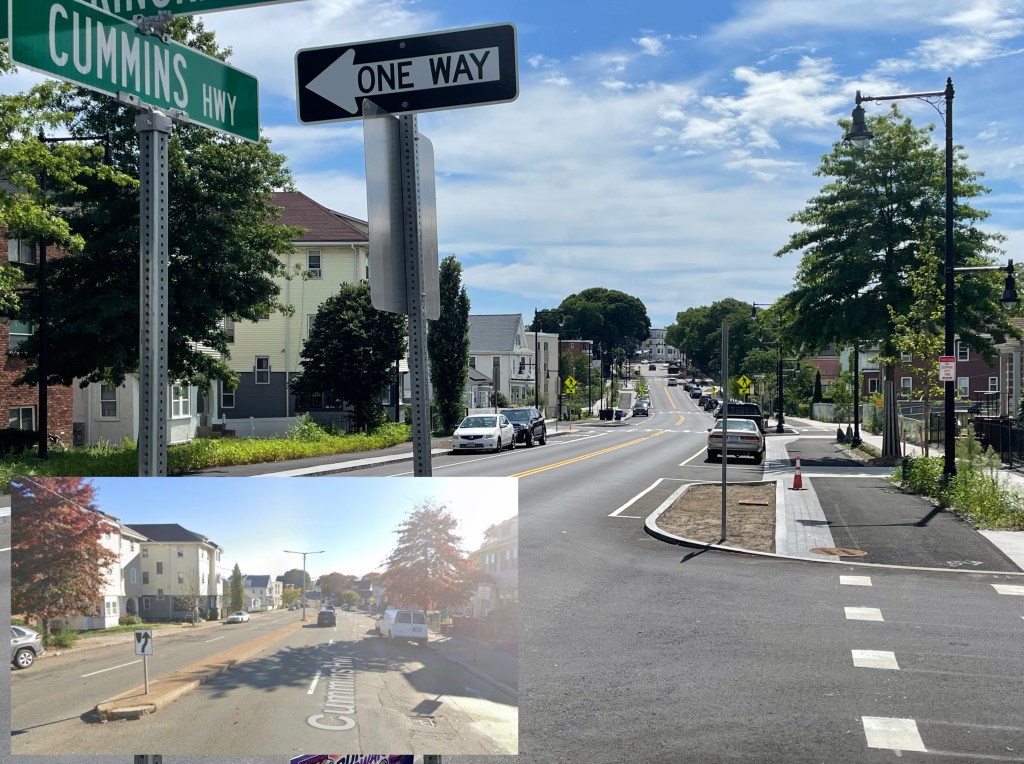
Eyes On the Street: A Greener, Calmer Cummins Highway
After two years of construction, work is nearly complete on a dramatic transformation of Cummins Highway in Mattapan.

July 27, 2026
Mayor Wu Outlines a New Street Safety Agenda in the Wake of Louisa Gag’s Killing
On Friday morning, Mayor Wu issued a detailed 6-page letter to residents in which she outlined her administration's plan to improve the safety of the city's streets, and address mounting criticism of her administration's streets cabinet.
July 24, 2026
Boston City Councilors File Legislation to Improve Transportation Department Accountability
Councilors also passed a hearing order to discuss a possible new bike network plan, and a resolution that urges "in the strongest terms that the (Wu) administration strengthen its approach to Vision Zero."
July 24, 2026

New State Road Funding Bill Includes $200 Million For DCR Parkways and Trail Projects
A new state funding bill for statewide road maintenance projects will include a new $200 million fund for trails and roadways under the control of the Massachusetts Department of Conservation and Recreation (DCR).
July 23, 2026