Coalition Rallies for Low-Income Fare Legislation
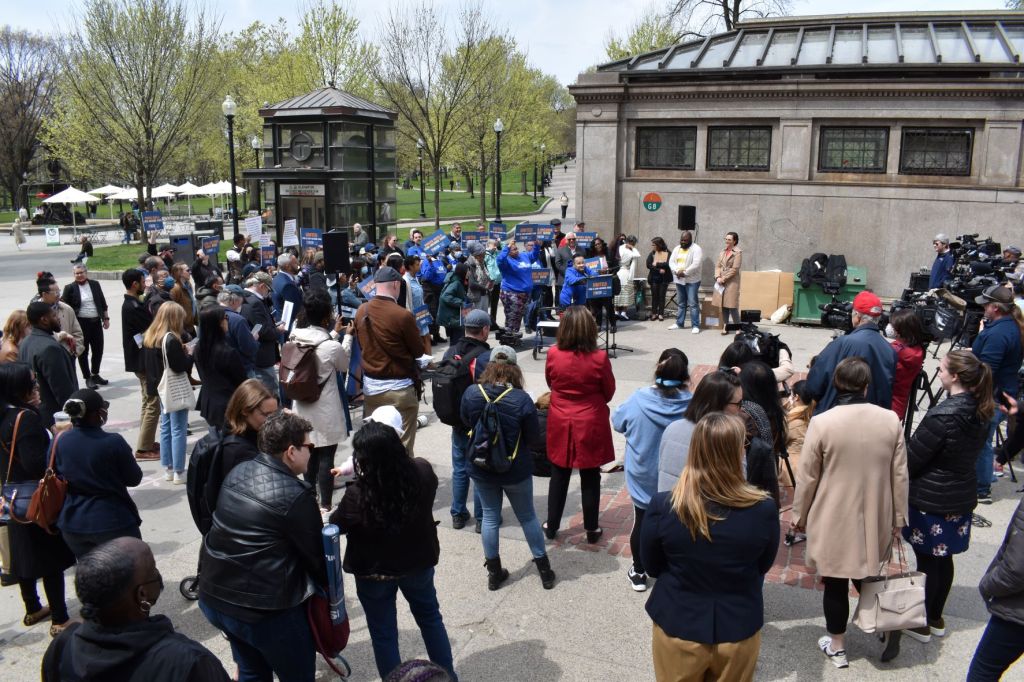
A coalition of labor, business, environmental, and community organizations gathered in the Boston Common Monday afternoon to pressure the Legislature to pass legislation that would set up a low-income fare program for MBTA riders.
The legislature had previously endorsed a low-income fare pilot program as part of 2021’s transportation bond bill, but Governor Baker used his line-item veto power to omit the program from the final law.
This year, lawmakers are trying again, with a a stand-alone bill, originally filed by Rep. Adrian Madaro of Boston, that would require the T and the state’s regional transit authorities to provide free or discounted transit fares to qualifying riders. That bill has been reported favorably out of the legislature’s Transportation Committee, and is now being considered by the House Ways and Means Committee.
In a 2019 study, researchers from MIT found that discounted fares encouraged lower-income riders to use transit more often. In an experiment, riders who received a specialized CharlieCard that offered a half-price discount on fares took, on average, about 30 percent more trips per week than a control group paying full price.
At Monday’s rally, Karen Maxwell, Assistant Secretary and Executive Board Member of the Boston Carmen’s Union Local 589 and a 30-year employee of the MBTA, described what it’s like to collect fares from people who are struggling to make ends meet.
“I’ve watched passengers get on my bus and struggle to put that fare together. Digging in their pockets, coming out with a quarter, saying, ‘Ma’am I’m so sorry. What am I gonna do, get off the bus?’” said Maxwell. “I am proud to work for the MBTA and help people get where they need to going. It’s just outrageous that the cost of riding the service can be so high. We say transit it public because it’s supposed to serve all of the people, not just those who can afford to pay without a second thought.”
The previous governing board of the MBTA, the Fiscal and Management Control Board, had also directed the T’s administration to design a 9-month pilot program that could offer discounted fares for low-income riders before the end of 2022.
The board adopted that resolution by a unanimous vote in their final meeting, in June 2021. But the successor board has shown little interest in following up, and MBTA staff appear to be ignoring the directive.
When asked for an update on that initiative on Monday morning, a T spokesperson would only say that “as the process of developing annual budgets for Fiscal Year 2023 and beyond moves forward, the MBTA anticipates a robust discussion of spending priorities.”
Though cities like Boston, Worcester, and Lawrence have successfully implemented popular fare-free bus services on specific routes, advocates say that the state needs a more comprehensive approach that doesn’t rely exclusively on municipalities’ limited resources.
“We need a systemwide approach, and we need to do it this session,” said LivableStreets Alliance Executive Director Stacy Thompson (disclosure: Thompson is also a member of the StreetsblogMASS board of directors).
Following Monday’s rally, dozens of advocates walked up the hill to the Massachusetts State House to lobby legislators in person.

Streetsblog has migrated to a new comment system. New commenters can register directly in the comments section of any article. Returning commenters: your previous comments and display name have been preserved, but you'll need to reclaim your account by clicking "Forgot your password?" on the sign-in form, entering your email, and following the verification link to set a new password — this is required because passwords could not be carried over during the migration. For questions, contact tips@streetsblog.org.