‘Copley Connect’ Expands a Signature Boston Public Space By Kicking Out the Cars

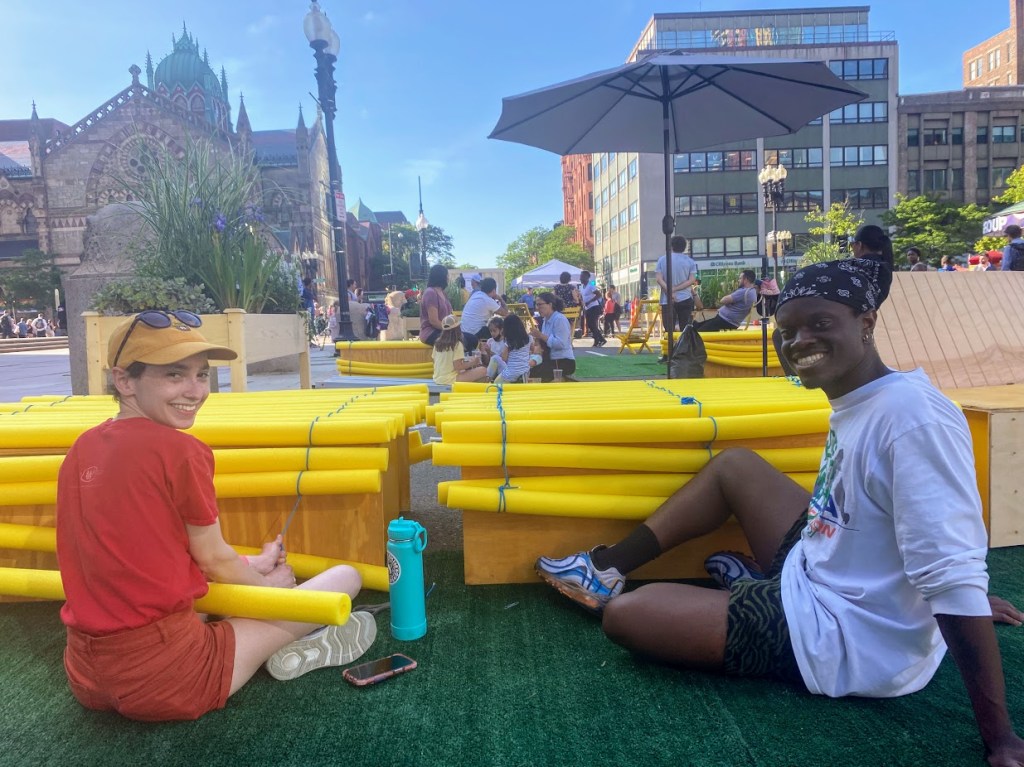
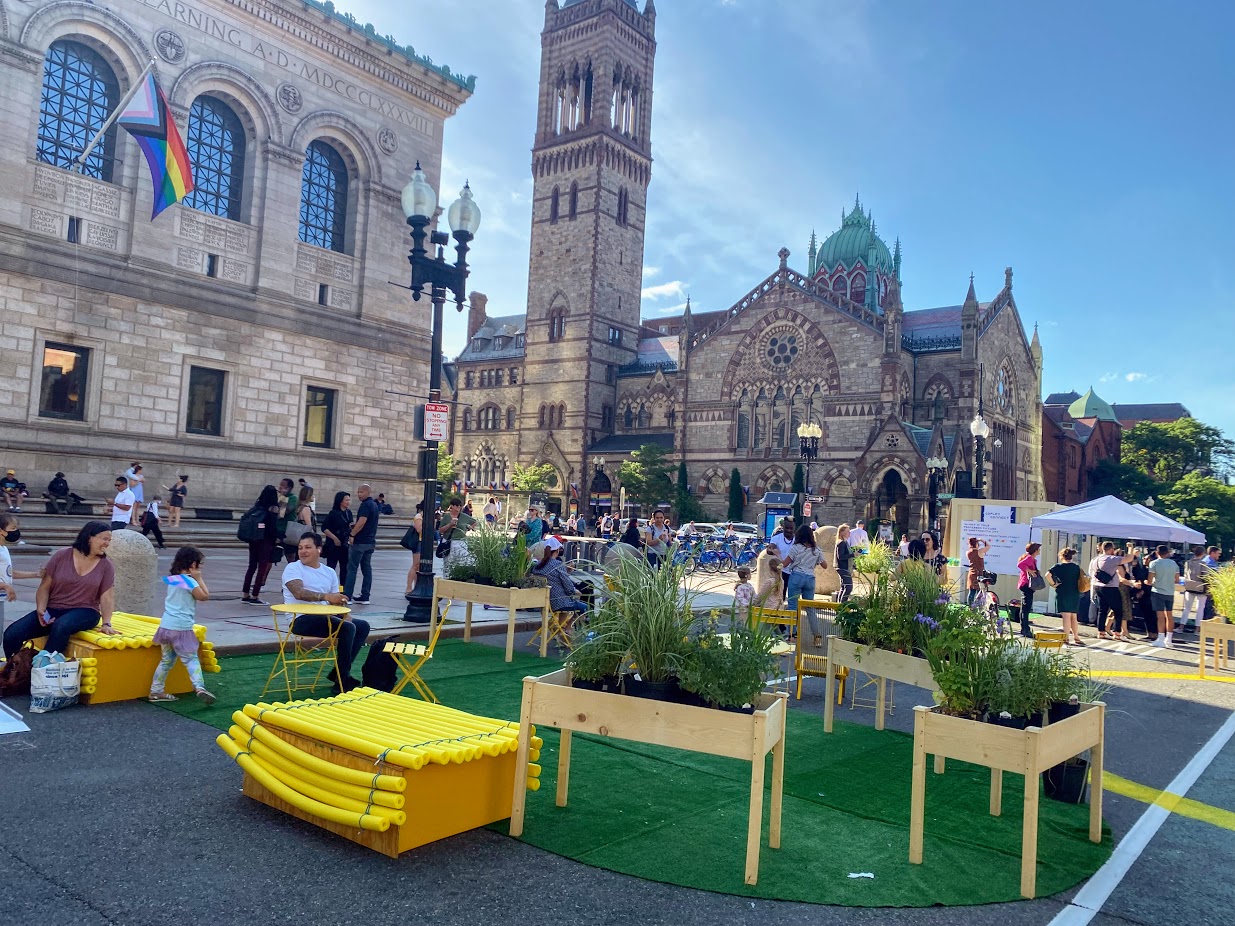
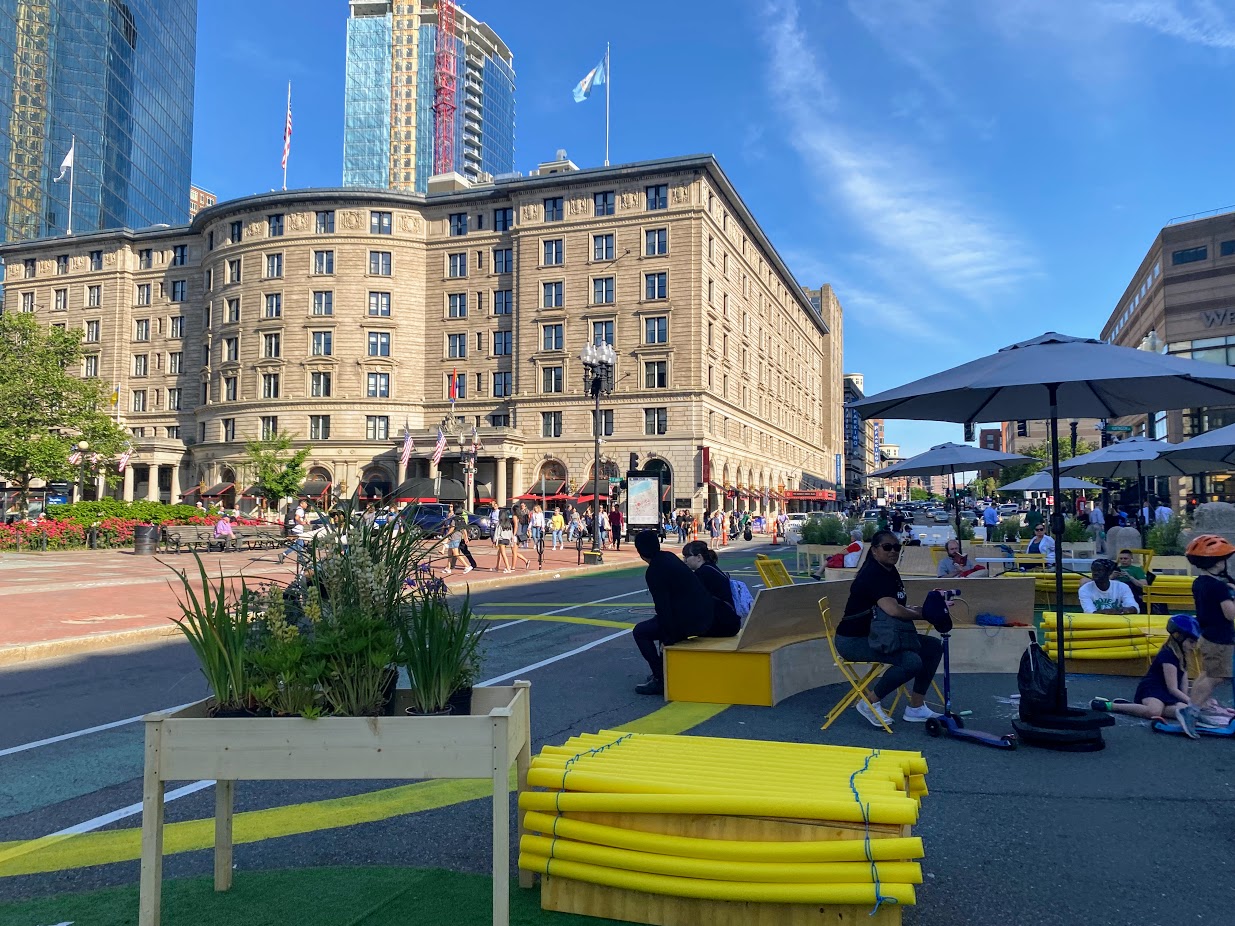
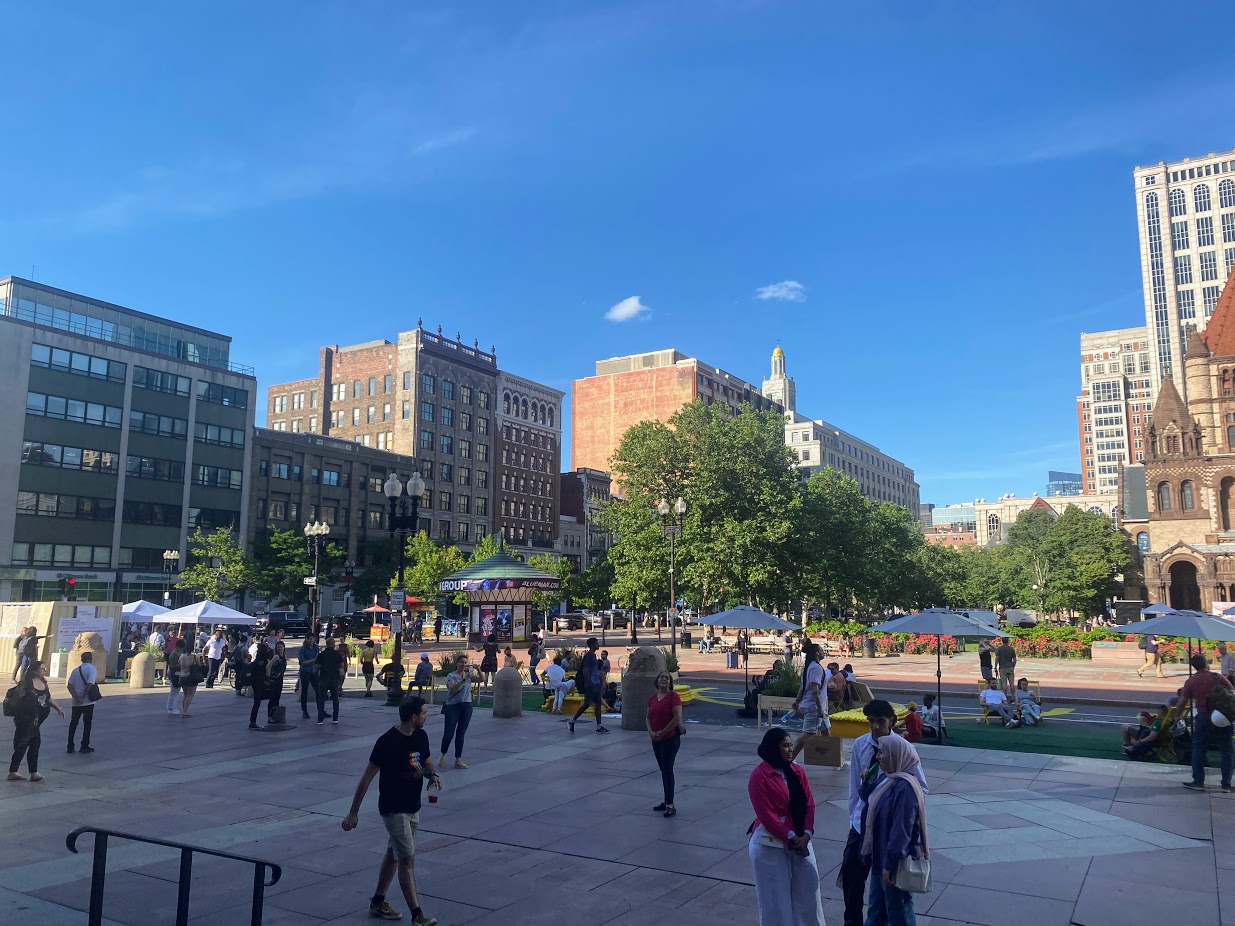
Yesterday’s weather couldn’t have been more perfect for what was a great first day of Copley Connect, a 10 day pilot which opens the space on Dartmouth Street between the public library and Trinity Church to folks walking, rolling, or biking- all free from car traffic.
Some folks danced to Latin music by MetaMovements, some rode their bikes, and many simply lounged under one of the many umbrella-shaded tables and took in the view of all the different activities happening along the street.
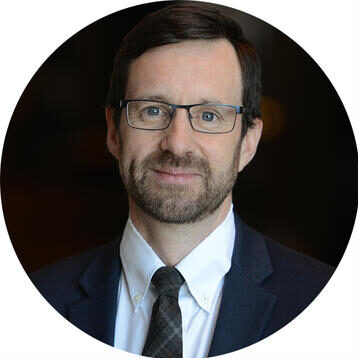
Jascha Franklin-Hodge, Boston’s Chief of Streets, could be seen smiling and chatting with folks near the City of Boston’s tent next to Boylston Street.
“I’m excited! It’s great to be out here and to see people start to see this space,” he told StreetsblogMASS. “It’s great to have this kind of space where there’s sort of an opportunity for people to look at this street in a different way, and that was the goal of this.”
The Copley Connect’s project webpage describes some of the travel data that the city will collect during the pilot, including:
- motor vehicle counts and travel times
- pedestrian counts and surveys
- bicycle counts
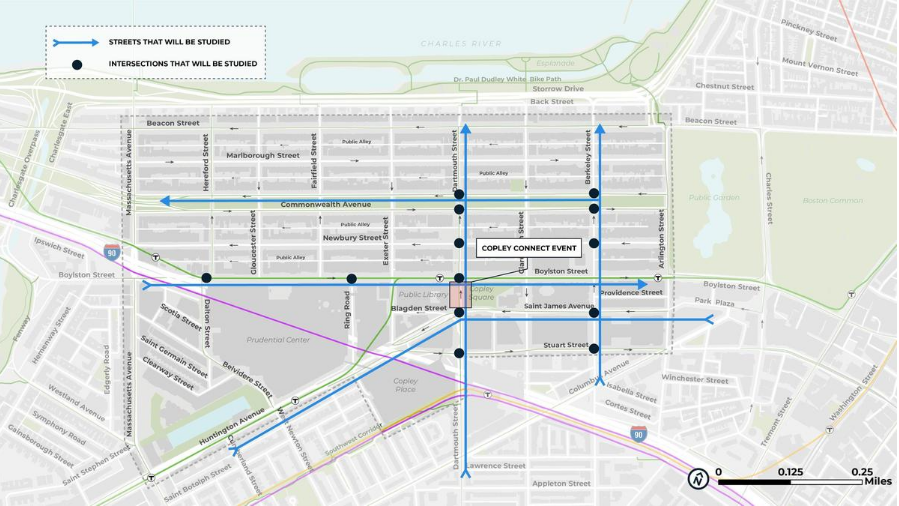
We asked Franklin-Hodge what the city is hoping to do with the data it collects.
“So we’re doing monitoring and measurements all around the area that look at traffic counts, pedestrian counts and also trying to understand when we make a change, how do vehicles flow? So it’s really just about learning kind of the role that this block plays in the larger transportation system and the goal is to understand whether something like this could become a thing we do regularly, permanently, you know, if the street isn’t permanently closed, could it be reconfigured in a different way? So it’s really just trying to get that data- there’s no better way to learn than to try it and measure it and see what happens,” he said.
Franklin-Hodge made reference to the three Open Streets projects happening over the course of summer at different locations throughout the city which also open up sections of the streets to people while closing them to car traffic.
So what does success look like for the City in terms of these projects which allow for people to walk, roll, bike without having to worry about traffic?
“We’re coming out of a really tough few years and it’s not over, but there’s this sense that we’ve lost some of that human connection, that just sort of spirit of knowing your block, knowing your neighbors. So we’re trying to rebuild that with these types of projects,” said Franklin-Hodge.
“I think for this program in particular, the success is two things: One, we hope a lot of people come out and have a ton of fun and two, we want to get a lot of data, both from traffic studies, but also from surveys and anecdotes,” he continued. “We want to take pictures and videos and see how people are using this space. That’s going to help inform what we do here and what we do in other places around the city, so it really is a learning opportunity for us.”

Streetsblog has migrated to a new comment system. New commenters can register directly in the comments section of any article. Returning commenters: your previous comments and display name have been preserved, but you'll need to reclaim your account by clicking "Forgot your password?" on the sign-in form, entering your email, and following the verification link to set a new password — this is required because passwords could not be carried over during the migration. For questions, contact tips@streetsblog.org.