Should the Orange Line to Roslindale Be The T’s Next Rapid Transit Expansion?

The concept of an Orange Line extension in Boston is gaining some traction on Beacon Hill.
Last week, the House advanced a resolve to study extending the Orange Line from Jamaica Plain to Roslindale Village.

With a $100,000 set-aside from surplus “Fair Share” surtax revenues, lawmakers have directed MassDOT to put together a report due by the end of June 2026.
The feasibility study will assess extending the Orange Line beyond Forest Hills to Roslindale Square, and potentially farther into Hyde Park and West Roxbury.
The report will explore examining cost estimates and funding models, engineering and environmental feasibility (exploring tactics like reusing existing infrastructure on the Needham commuter rail corridor to reduce project costs and complexity), challenges and opportunities, ridership projections, economic impact and equity analyses, and an assessment of alternatives like enhanced bus rapid transit.
Those findings could inform future decision-making, potentially guiding the inclusion of the project in future spending bills, capital planning budgets, and long-range plans.
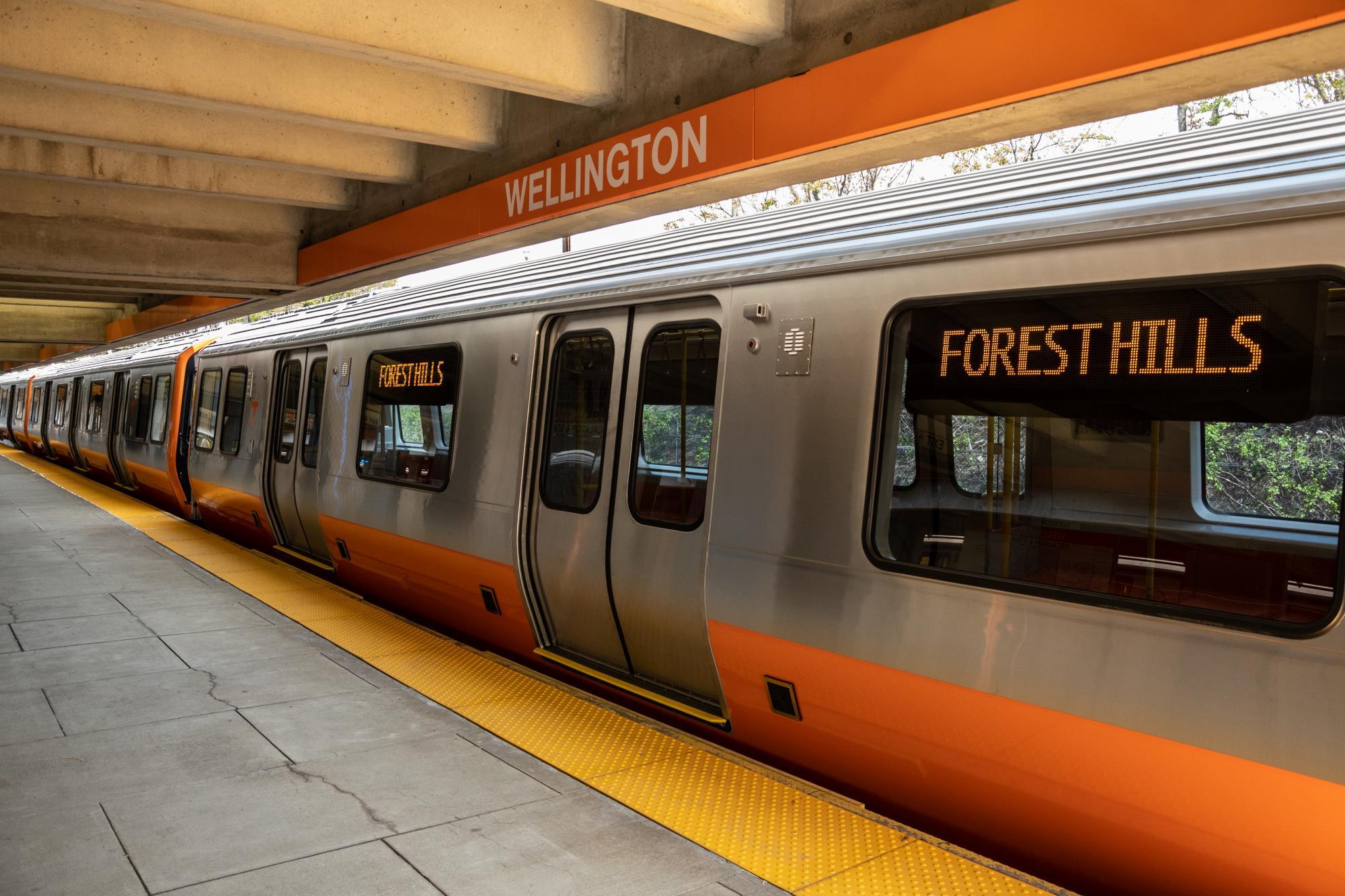
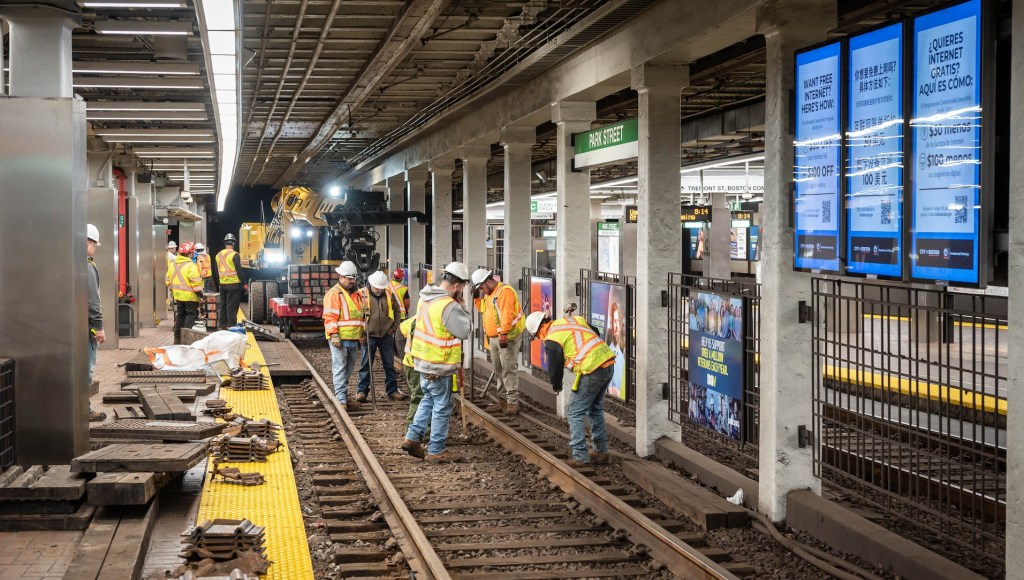
The Orange Line has undergone many changes in its lifetime. The T rerouted the northern part of the line from Everett to Malden in the 1970s, then demolished the old Washington Street elevated segment of the line when the Southwest Corridor opened in 1987. More recently, the Orange Line got new trains in 2019, and eliminated track slow zones for the first time in roughly 15 years by the end of 2024.
Today, the Orange Line takes nearly 70,000 riders between Malden and Jamaica Plain on an average weekday, but there are some advocates who think the line could go further.
The Orange Line corridor south of Forest Hills has long been discussed in transportation planning circles, from post-WWII era historical expansion concepts beyond Forest Hills.
In more recent years, advocates have proposed converting the Needham Line from a commuter rail line to rapid transit due to available right-of-way and proximity to key population centers.
Planners and advocates have pointed to the new Assembly station’s role in supporting dense, mixed-use development as a marker of opportunity for rail expansion and its additional positive impact on housing and economic development.
Why Roslindale?
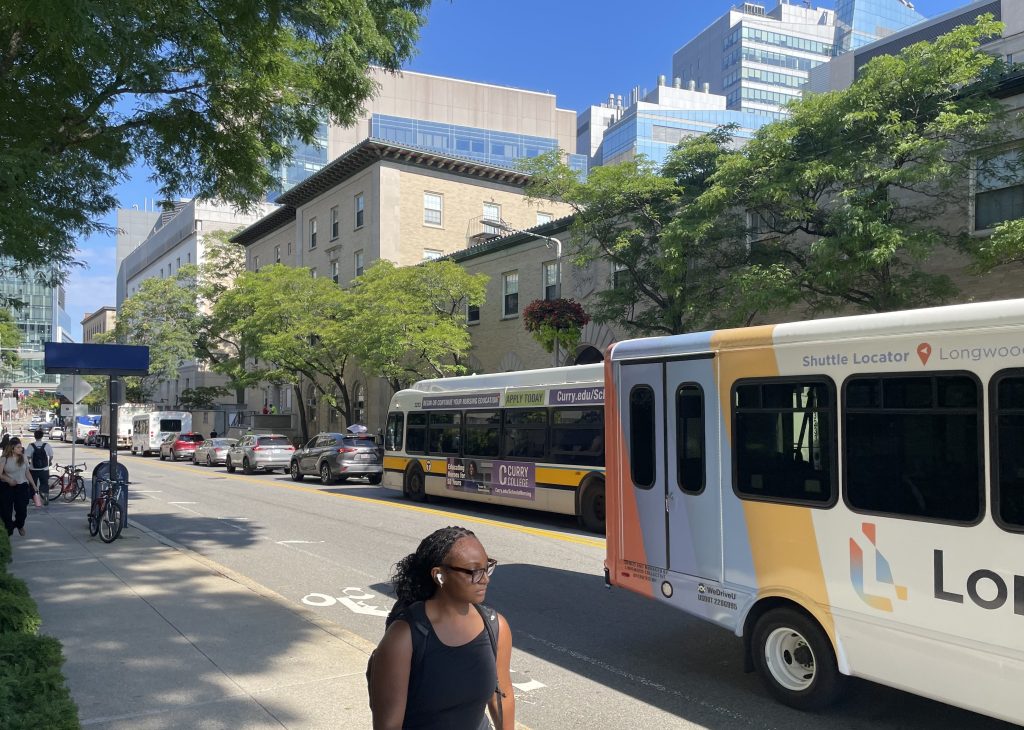
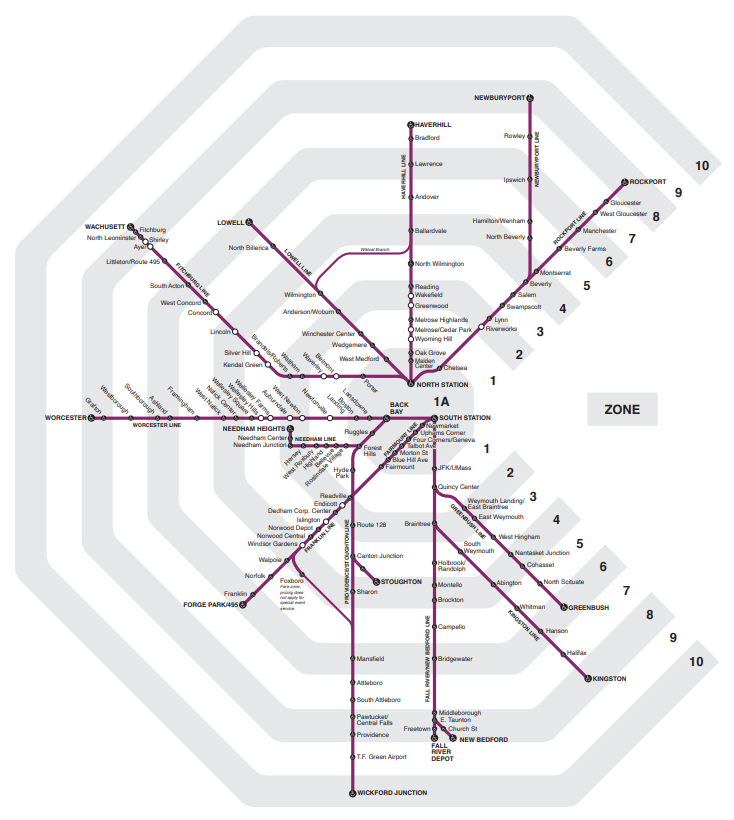
The southwest part of Boston lacks direct rapid transit service despite being geographically close to the inner-city core, leaving riders in the Roslindale Square, Hyde Park, and West Roxbury areas reliant on infrequent and costly commuter rail rides in Zones 1 and 2 (at $6.50 and $7.00 respectively for one-way trips), or slow, crowded bus routes that connect to the Orange Line at Forest Hills.
At the September 16th Joint Committee on Transportation hearing at the State House, policymakers and members of the public testified in support of the project.
City Councilor Enrique Pepén, who represents Boston’s District 5 (Mattapan, Hyde Park, Roslindale, and Readville), used his testimony time to advocate for both fare equity and the Orange Line expansion.
He argued that extending the Orange Line “would change the way commuters interact with the city,” in reducing congestion at Forest Hills, providing equitable access for residents, and strengthening local business districts like Roslindale Square.
Rep. MacGregor stressed that the current state of transit forces commuters to “wait an hour or an hour and a half for a train,” or take a bus to Forest Hills.
But repurposing the Needham Line tracks for rapid transit service would make the project affordable, he argues. “Southwest Boston deserves the same access and reliability as other neighborhoods.”
Senator Mike Rush, whose district encompasses Dedham, West Roxbury, and Roslindale (and sponsor of companion bill S.2442), agreed with the cost-saving arguments made by McGregor, noting that existing infrastructure and right-of-way make this extension an achievable project compared to costlier megaprojects like the North-South Rail Link.
Paul Sewell, a Roslindale resident, spoke as a community member in support of the House bill.
It’s “a no-brainer, really easy, relatively low-lift project,” Sewell argued, identifying Roslindale Village’s recent rezoning to allow 10-story buildings in select areas and nearly 600 new housing units as an opportunity for the extension to reinforce this growth.
Outside of the hearing, transit policy experts are also in support of an Orange Line extension.
TransitMatters Executive Director Caitlin Allen-Connolly told StreetsblogMASS that extending the Orange Line to Roslindale Village would “transform infrequent commuter rail into high-frequency rapid transit, opening up better bus connections and service to downtown Boston while eliminating Northeast Corridor bottlenecks.”
Like Sewell, Allen-Connolly cites the connection to housing, saying that “this expansion unlocks significant opportunities for transit-oriented development to support a modern, high-capacity network.”
Next stop: more planning
The legislature has appropriated funds for the Orange Line feasibility study, and Resolve H.3733 and Resolve S.2442 work to formalize and expedite the work.
The initiative aligns with the Roslindale Square zoning updates adopted by the Boston Zoning Commission in spring of this year, promoting transit-oriented development in Roslindale.
Even if the study finds that the idea is feasible, there’s still a lot that would need to happen before the T starts laying tracks toward Roslindale.
The project would need additional design and environmental review, community engagement, coordination with zoning laws and city planning, and a detailed financial plan, which would likely include federal funding through the Federal Transit Administration’s capital investment grant programs.
Streetsblog has migrated to a new comment system. New commenters can register directly in the comments section of any article. Returning commenters: your previous comments and display name have been preserved, but you'll need to reclaim your account by clicking "Forgot your password?" on the sign-in form, entering your email, and following the verification link to set a new password — this is required because passwords could not be carried over during the migration. For questions, contact tips@streetsblog.org.