‘Kavanaugh Stops’ Are Making Streets More Dangerous
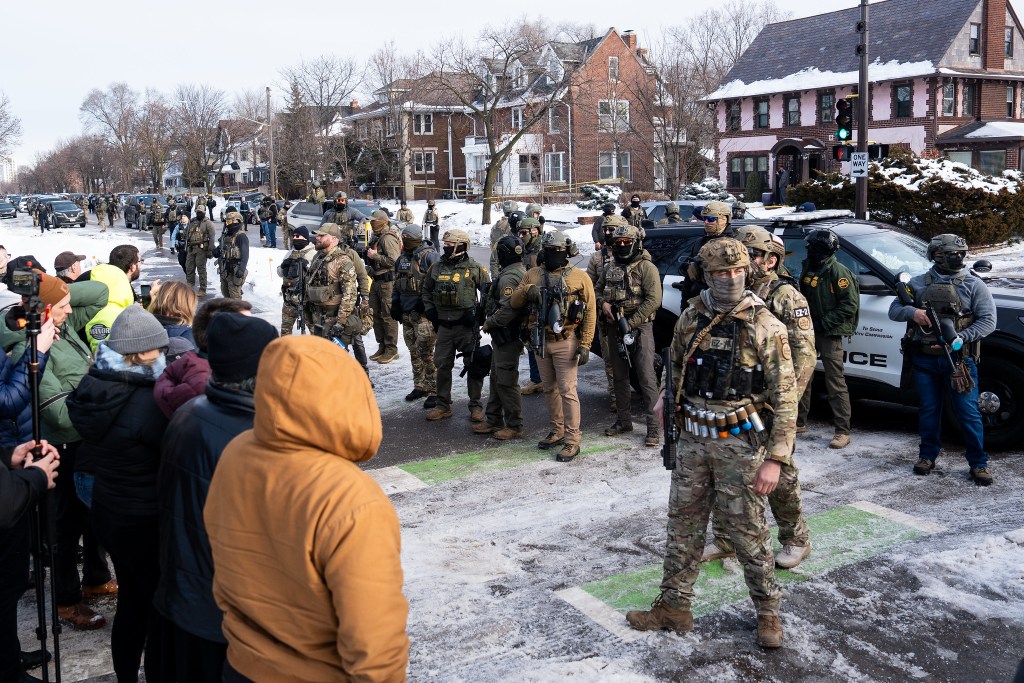
Until recently, racial profiling by police was unequivocally illegal, and widely condemned as practice that delegitimized the criminal legal system and undermined the effectiveness of local police.
But last September, U.S. Supreme Court Justice Brett Kavanaugh issued a notorious decision that gave ICE agents permission to use their personal racial and ethnic stereotypes as a “relevant factor” in deciding whom to arrest.
In his ruling, Kavanaugh employed a few factually dubious stereotypes of his own:
“To stop an individual for brief questioning about immigration status, the Government must have reasonable suspicion that the individual is illegally present in the United States … Whether an officer has reasonable suspicion depends on the totality of the circumstances … Here, those circumstances include: that there is an extremely high number and percentage of illegal immigrants in the Los Angeles area; that those individuals tend to gather in certain locations to seek daily work; that those individuals often work in certain kinds of jobs, such as day labor, landscaping, agriculture, and construction… and that many of those illegally in the Los Angeles area come from Mexico or Central America and do not speak much English. To be clear, apparent ethnicity alone cannot furnish reasonable suspicion; under this Court’s case law regarding immigration stops, however, it can be a ‘relevant factor’ when considered along with other salient factors.”
Kavanaugh, a white man who deftly evaded any legal or professional consequences after he faced allegations of rape during his Supreme Court confirmation hearings, breezily dismissed the possibility of such stops being abused to illegally abduct lawful immigrants, foreign tourists, and U.S. citizens:
“If the person is a U.S. citizen or otherwise lawfully in the United States, that individual will be free to go after the brief encounter. Only if the person is illegally in the United States may the stop lead to further immigration proceedings.”
In reality, since Kavanaugh’s decision, there have been hundreds of well-documented incidents where masked ICE agents have conducted Kavanaugh stops in order to physically assault lawful residents and citizens, and then illegally abduct them for hours or days at a time.
In Minneapolis, a city that’s embraced the “Vision Zero” target to to eliminate traffic fatalities and severe injuries on city streets, ICE agents have killed more people than violent drivers on those streets so far in 2026, according to Minnesota’s crash database.
ICE decides if you have Constitutional rights
Legal scholars are sounding the alarm that Kavanaugh stops create a massive constitutional loophole that gives permission for ICE violate their victims’ Fourth Amendment rights.
“The Supreme Court effectively rubber stamped the executive branch’s practice of engaging in racial profiling, without any meaningful consideration of the harms that result from wrongful stops, arrests, detentions, and deportations,” Elora Mukherjee, director of Columbia Law School’s Immigrants’ Rights Clinic, told Bloomberg Law.
The Fourth Amendment of the U.S. Constitution promises the “right of the people to be secure in their persons, houses, papers, and effects, against unreasonable searches and seizures, shall not be violated, and no Warrants shall issue, but upon probable cause, supported by Oath or affirmation, and particularly describing the place to be searched, and the persons or things to be seized.”
“This isn’t really a proper standard for (Kavanaugh stops). It applies too broadly for too many people,” warned Hemanth Gundavaram, an associate dean at Northeastern University School of Law and cofounder of Northeastern’s Immigrant Justice Clinic, in the Boston Globe.
“This decision does not make our communities safer. It terrorizes them, empowering ICE to operate on bias rather than evidence, due process, and the procedures of our democracy,” warned Nicole Melaku, the executive director of the National Partnership for New Americans.

Read More:
Streetsblog has migrated to a new comment system. New commenters can register directly in the comments section of any article. Returning commenters: your previous comments and display name have been preserved, but you'll need to reclaim your account by clicking "Forgot your password?" on the sign-in form, entering your email, and following the verification link to set a new password — this is required because passwords could not be carried over during the migration. For questions, contact tips@streetsblog.org.