MassDOT In Talks With Connecticut for Hourly Springfield-NYC Amtrak Service
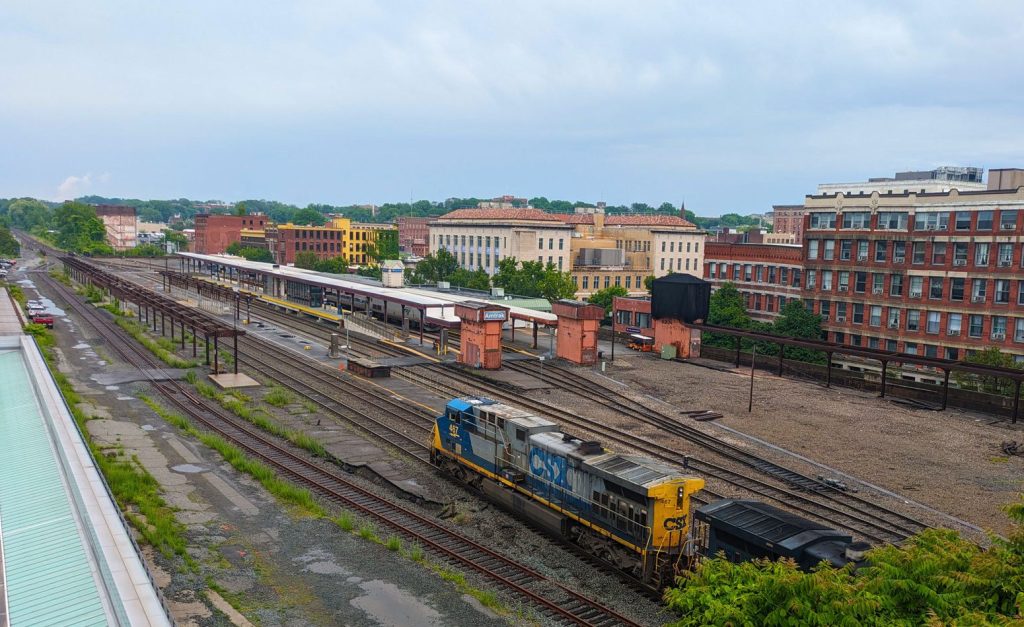
In a detailed update to MassDOT’s board of directors Wednesday afternoon, Meredith Slesinger, the agency’s Rail and Transit Administrator, revealed that Massachusetts and Connecticut are in talks to significantly expand Amtrak service between Springfield and New York City.
Slesinger told board members that MassDOT is “working with Amtrak and Connecticut to develop a service plan that would expand Springfield to New York service to operate hourly, and that would increase annual ridership on the corridor by a projected one million passengers.”
To put that ridership number in context, western Massachusetts Amtrak stations currently serve about 230,000 trips a year on Amtrak’s Vermonter, Valley Flyer, and Hartford Line routes. Most of those trains currently end their trips in New Haven.
Currently, there are only three direct Amtrak trips from Springfield to New York City on a typical day: two Northeast Regional trains, plus one daily round-trip on the Amtrak Vermonter.
Those trips currently take about three and a half hours.
The Hartford Line offers an additional 14 departures from Springfield to New Haven, where riders can transfer to the Amtrak Acela or the MTA’s Metro North commuter trains.
First phase of service improvements begin in 2030
Slesinger did not offer a timeline for implementing hourly service, and she stressed that it would be contingent on the state finishing numerous other infrastructure projects, including new maintenance facilities, layover yards, and track improvements.
Almost none of those projects have begun construction, and some (like the planned track and platform expansion at Springfield Union Station) still haven’t secured funding.
The additional service will also hinge on Amtrak’s ability to acquire new trains.
Amtrak is under contract to acquire a new fleet of new “Airo” trainsets, which are slated to replace Amtrak’s existing fleet of 1970s-era passenger cars.
“All of the infrastructure improvements in the world won’t help unless we have this new fleet,” said Slesinger.
Amtrak is slated to receive 83 new Airo trains through its current contract. According to Slesinger’s presentation, Amtrak recently applied for $2.7 billion in federal funding through the National Railroad Partnership Program, which would let it exercise an option to acquire additional trains under the same contract.
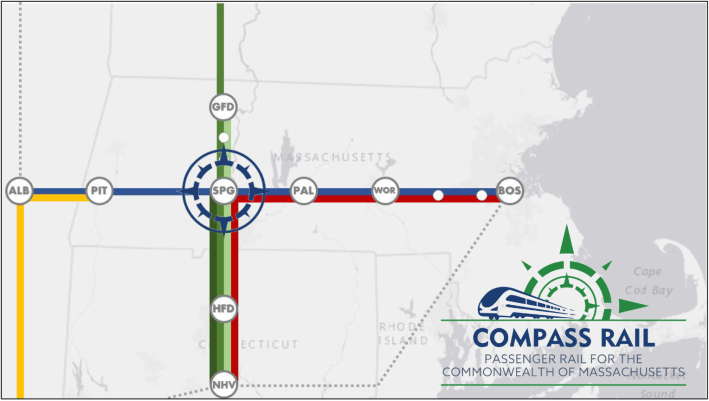
Slesinger said that MassDOT will need at least two additional trainsets for its planned new “Inland Route” Amtrak service between New Haven, Springfield, and Boston, which could begin running two daily round trips in 2030.
More ‘Compass Rail’ news
Slesinger also offered updates on several other infrastructure projects that the Commonwealth is advancing as part of its “Compass Rail” initiative, which is aiming to improve east-west and north-south Amtrak connections through western Massachusetts:
- As we’ve reported in our coverage of the Allston I-90 project, MassDOT wants to acquire additional train layover space in the Boston region – railyards where it can park trains overnight – to serve the new Inland Route and other new Compass Rail services. MassDOT expects to spend about $200 million on this project, “and we have a site analysis is underway,” said Slesinger.
- Congress’s February spending bill included a $1.2 million earmark for MassDOT to plan new “positive train control” (PTC) systems on the state-owned tracks between Springfield and Greenfield, where Amtrak currently runs the Vermonter and the Valley Flyer routes. Federal safety rules require PTC as a condition for running more frequent passenger service.
- MassDOT expects to begin construction next year on its $108 million project to upgrade tracks between Springfield and Worcester for higher-speed passenger trips. The project will benefit the new Inland Route and the proposed Boston-Albany route.
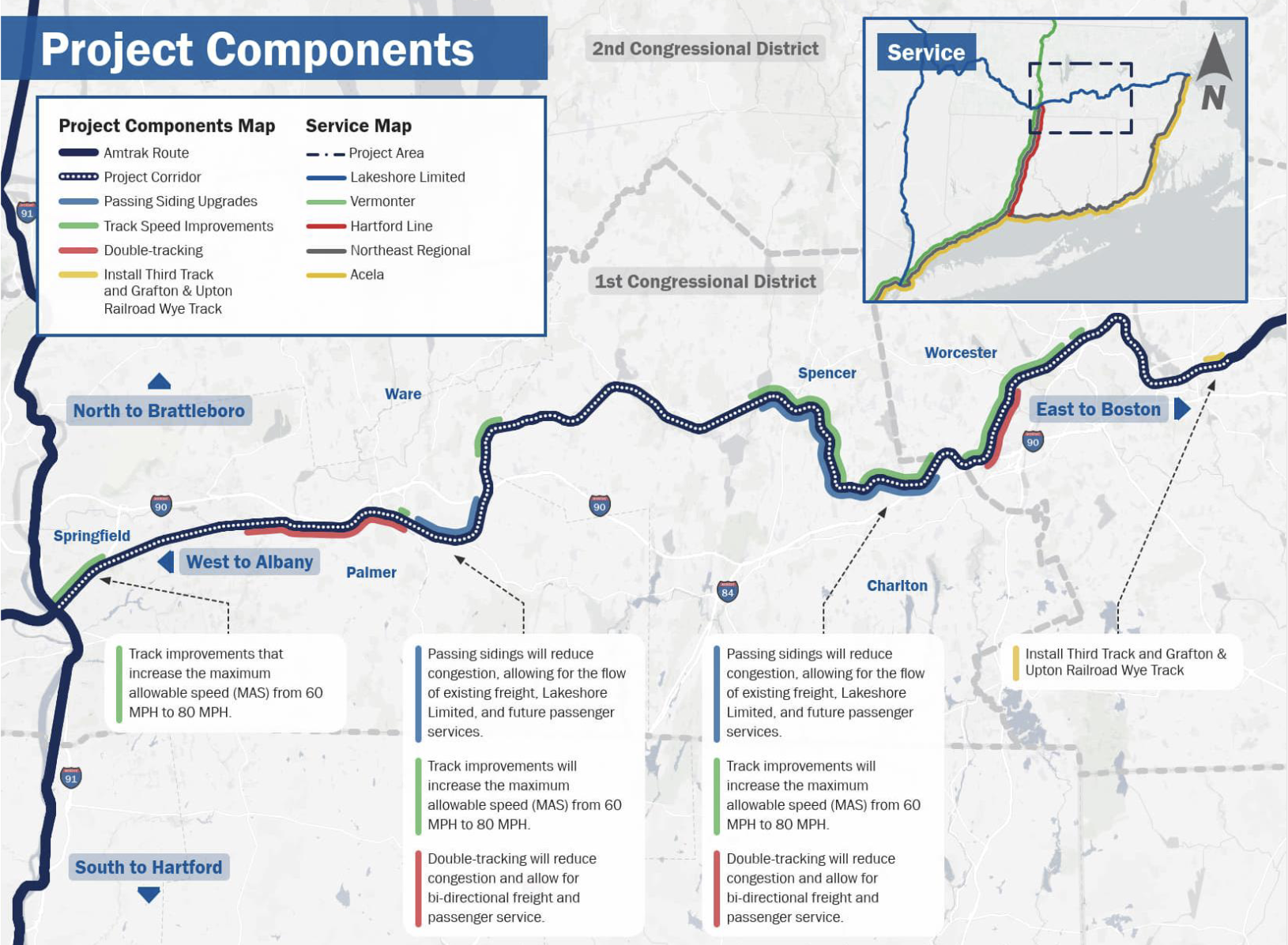
- MassDOT is also working on a service development plan for the proposed Boston-Albany route. “This is to identify the service levels and required capital projects to deliver the entire west-east service,” explained Slesinger. “Once complete, we anticipate a ‘Step 3’ award to conduct PE (preliminary engineering) and environmental review for the identified infrastructure improvements. Ultimately, completion of Step 3 enables project eligibility for FRA (Federal Railroad Administration) funds for implementation.”
- Slesinger reported that the Springfield track reconfiguration project, which we reported on last month, is nearly finished with its preliminary engineering and environmental permitting, and its final design phase will begin soon.
- MassDOT and CSX are also building new track infrastructure in the Pittsfield area to ensure that Amtrak’s Berkshire Flyer won’t get stuck behind slower-moving freight trains (most of the railway between Pittsfield and New York currently consists of a single track, so trains can’t pass each other). MassDOT is designing a three-mile passing track in Richmond, plus new siding tracks near the CSX yard in Pittsfield. These projects would also benefit the proposed new Boston-Albany route.
Slesinger finished her presentation with her most ambitious pitch.
“The future of rail in the Commonwealth is capped by capacity of South Station,” she told board members. “And I want to be clear that without an expanded (South) station, west-east rail will be limited to those two Inland Route trains, and increased MBTA and Amtrak Northeast Corridor service is also capacity constrained.”
Amtrak and MBTA officials have been talking about expanding South Station by tearing down the adjacent U.S. Postal Service sorting facility on Fort Point Channel for decades, but the project has a massive price tag and has never gotten much traction.
Numerous advocates, including TransitMatters, have argued that MassDOT and Amtrak could obtain much larger benefits at a similar cost with a new tunnel to connect North and South Stations.
At Wednesday’s board meeting, MassDOT interim secretary Phillip Eng said that there was “ongoing dialogue” with the postal service, but added that in the meantime, the MBTA and Amtrak are looking at ways to move more trains through the station with its existing infrastructure.
“How do we improve operations as they currently exist? How do we turn trains quicker?” Eng asked. “That’s working with our partners, not only Amtrak but ourselves.”

Streetsblog has migrated to a new comment system. New commenters can register directly in the comments section of any article. Returning commenters: your previous comments and display name have been preserved, but you'll need to reclaim your account by clicking "Forgot your password?" on the sign-in form, entering your email, and following the verification link to set a new password — this is required because passwords could not be carried over during the migration. For questions, contact tips@streetsblog.org.