PHOTOS: A Hard-Hat Tour of the MBTA’s New Electric Bus Garages
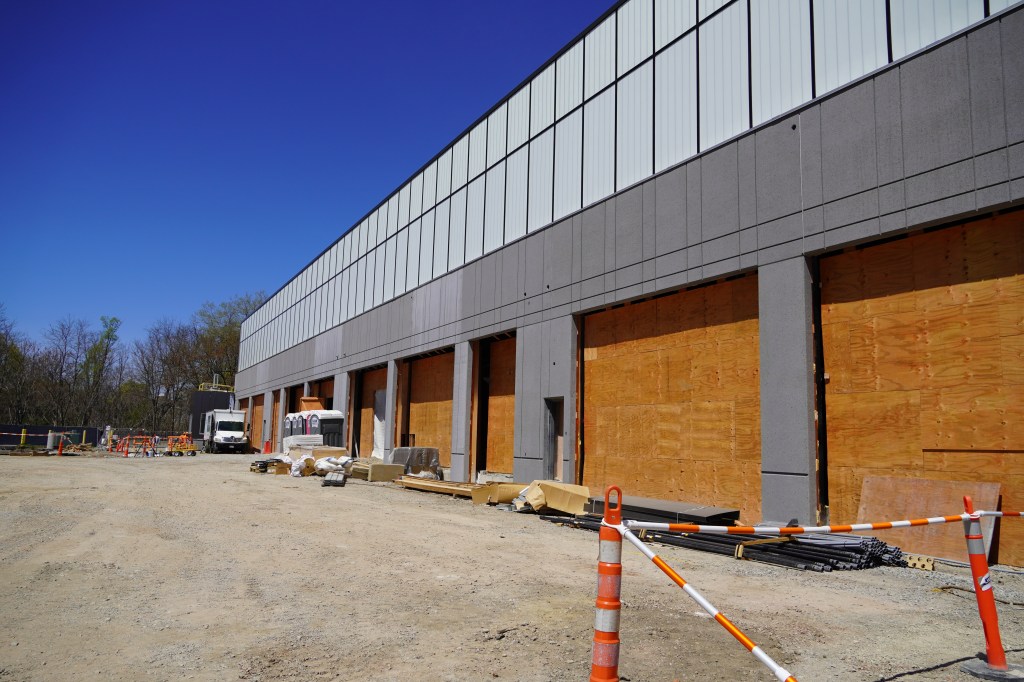
This spring, the few Red Line riders not entranced by their screens may notice a hulking, angular structure blotting out the horizon near the Quincy Adams station.
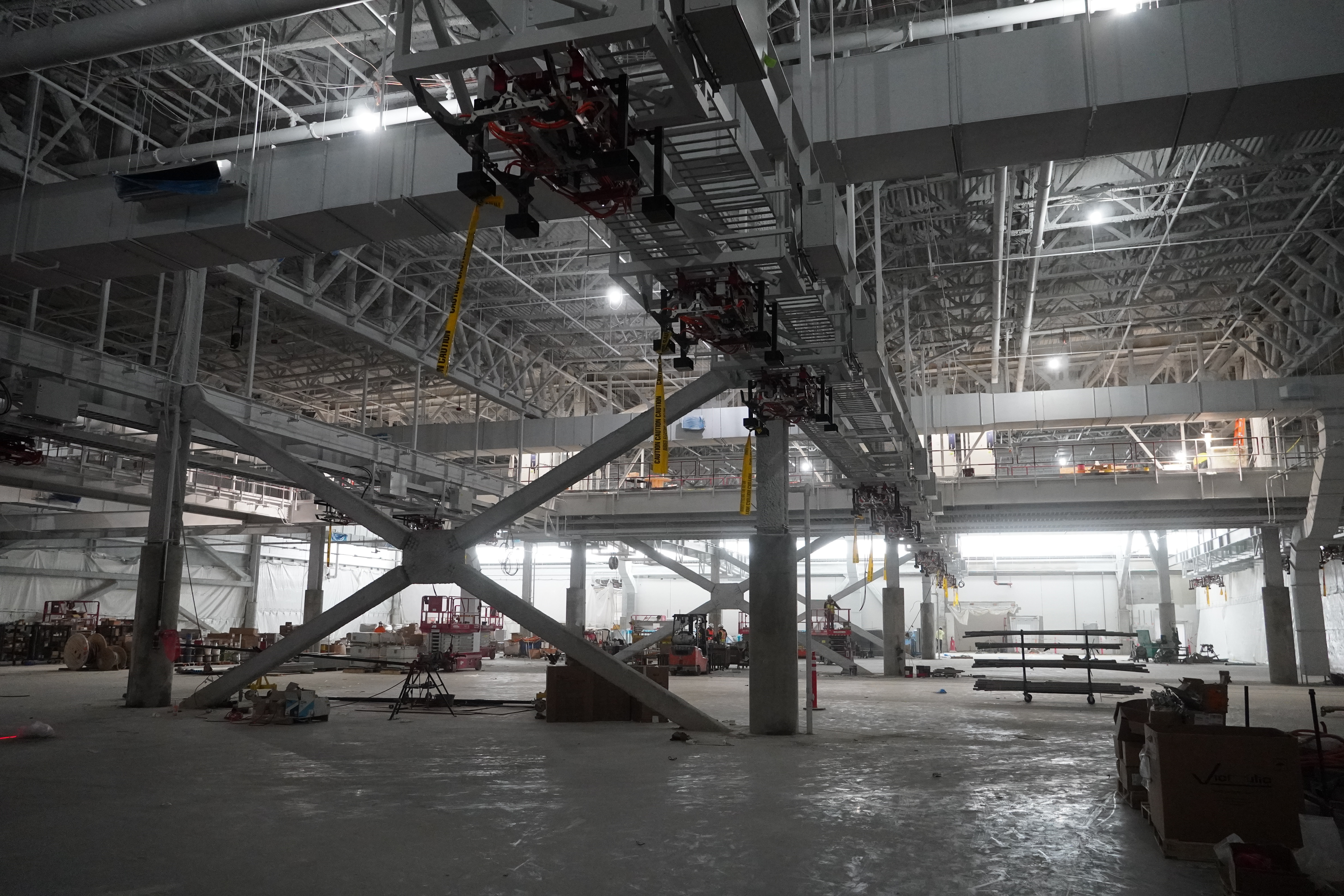
The building, paneled in black and gray and as of late April bearing no prominent insignias, spans about 300,000 square feet (equivalent to roughly 63 NBA-standard basketball courts) across its two floors.
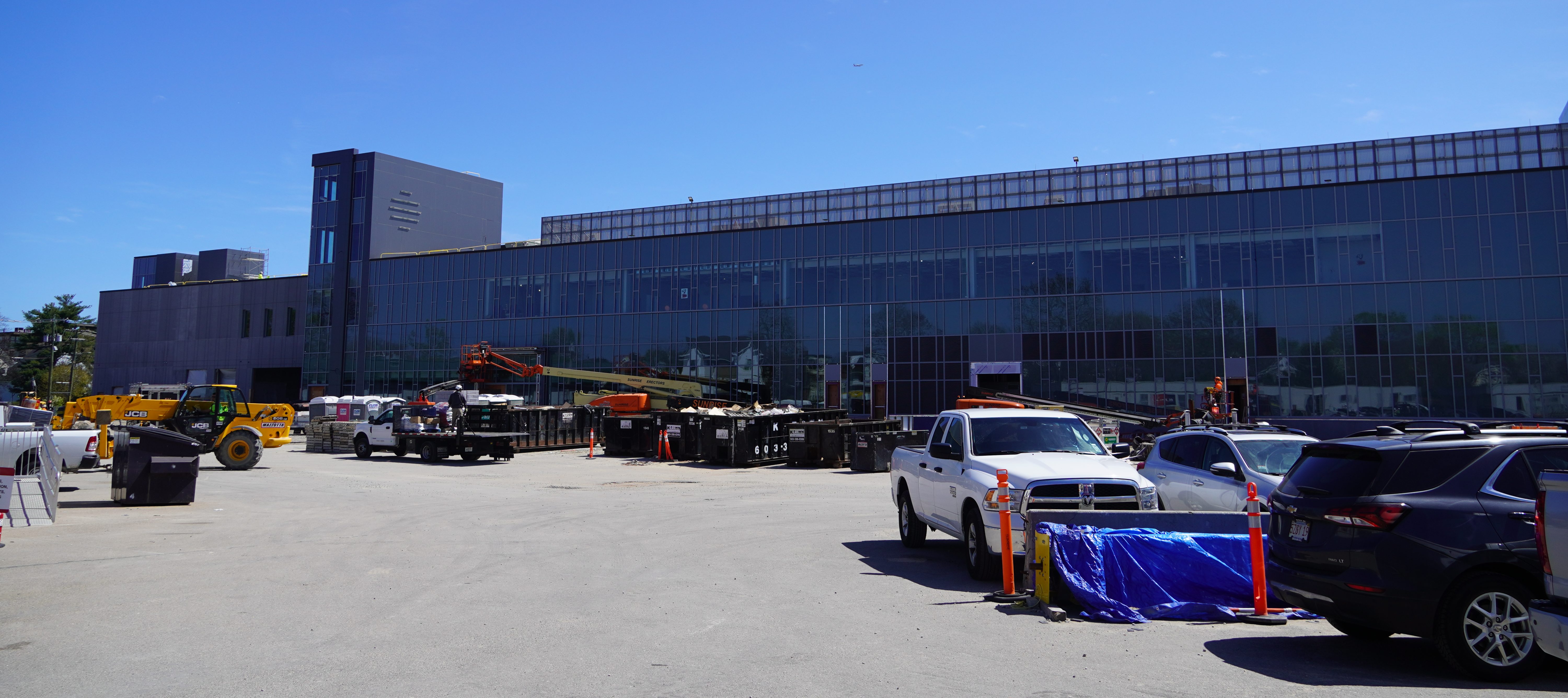
Work crews inside are piecing together one of the early keystones of the MBTA’s transition to an electric bus network: a brand-new facility capable of charging and maintaining dozens of battery-electric buses (BEBs). The highly-touted and long-delayed complex is slated to open in the summer of 2027.
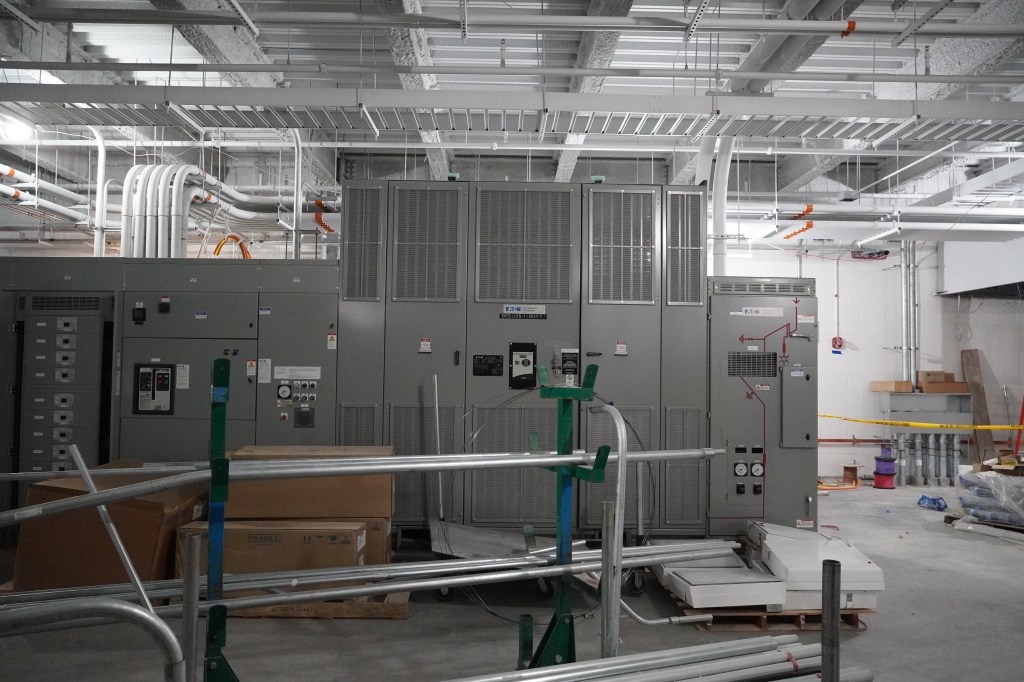
About 13 miles northwest, the T is putting the finishing touches on another, much smaller facility in North Cambridge capable of supporting a fleet of 32 electric buses.
StreetsblogMASS toured both garages in April to share an early glimpse at the infrastructure underlying the T’s ambitious bid to make its bus service sleeker, cleaner, and quicker.
Quincy
The Quincy BEB garage is a stone’s throw from Quincy Adams station, penned in by Thomas Burgin Parkway to the east, an apartment complex and some green space to the south, a small park and some homes to the west, and a commingling of homes and industrial space to the north.
The T’s existing Quincy bus facility is located about two miles away. The agency describes the garage, built in 1904 and touched up in subsequent decades, as “obsolete”, a cramped and crummy space capable of servicing only the T’s oldest diesel buses.
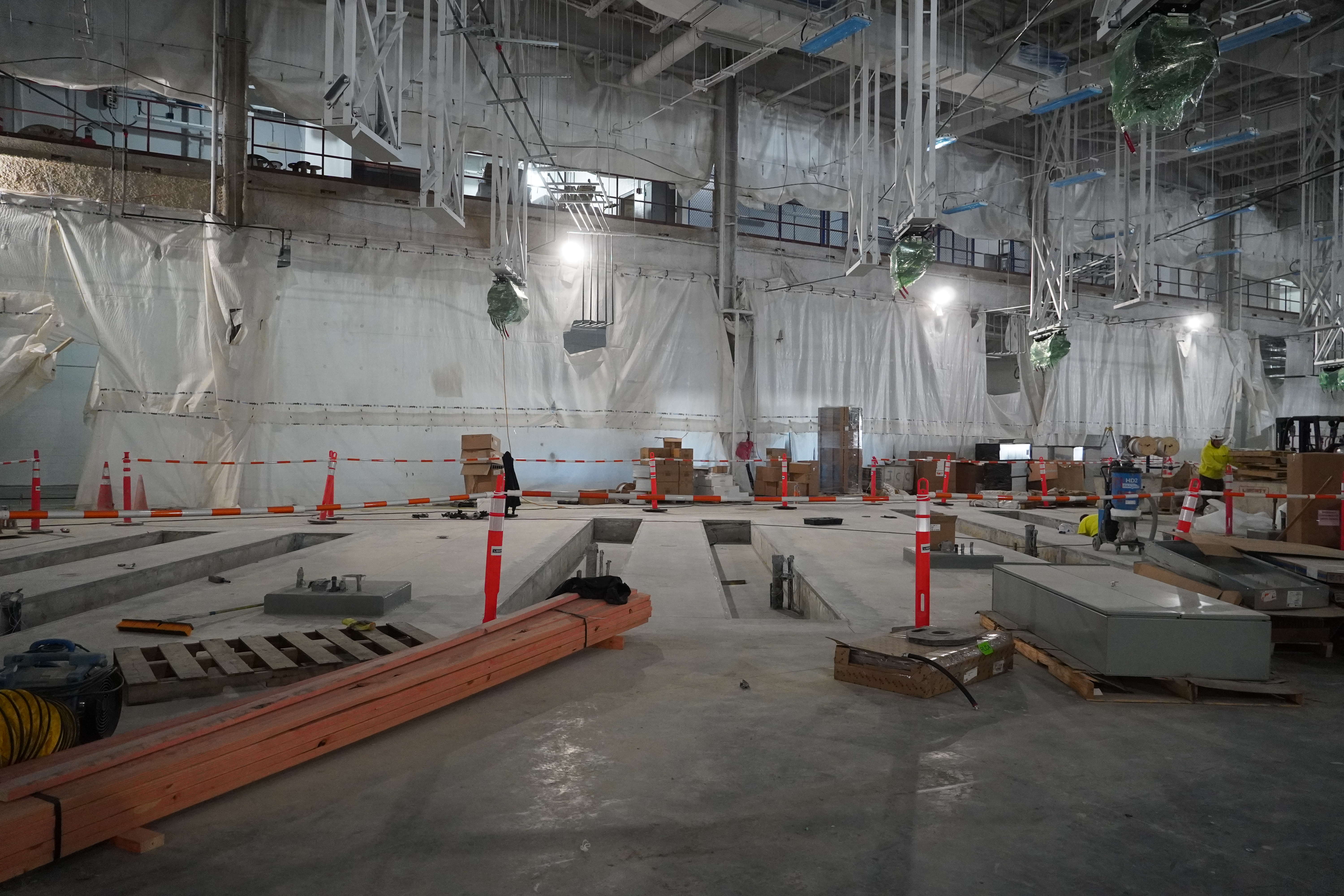
The new Quincy garage, built on the site of a shuttered Lowe’s, promises to house 120 BEBs traveling more than a dozen routes on the south side of the MBTA service area.
The multiyear undertaking has an authorized budget of $461.2 million, according to the MBTA’s latest proposed capital investment plan, released in March. The T had initially planned to finish the facility in 2024; the agency has attributed the delay to uncertain funding and higher-than-expected construction costs.
North Cambridge
The T’s North Cambridge BEB facility differs from its Quincy peer in several fundamental ways. It’s only a fraction of the size, capable of housing only 32 vehicles.
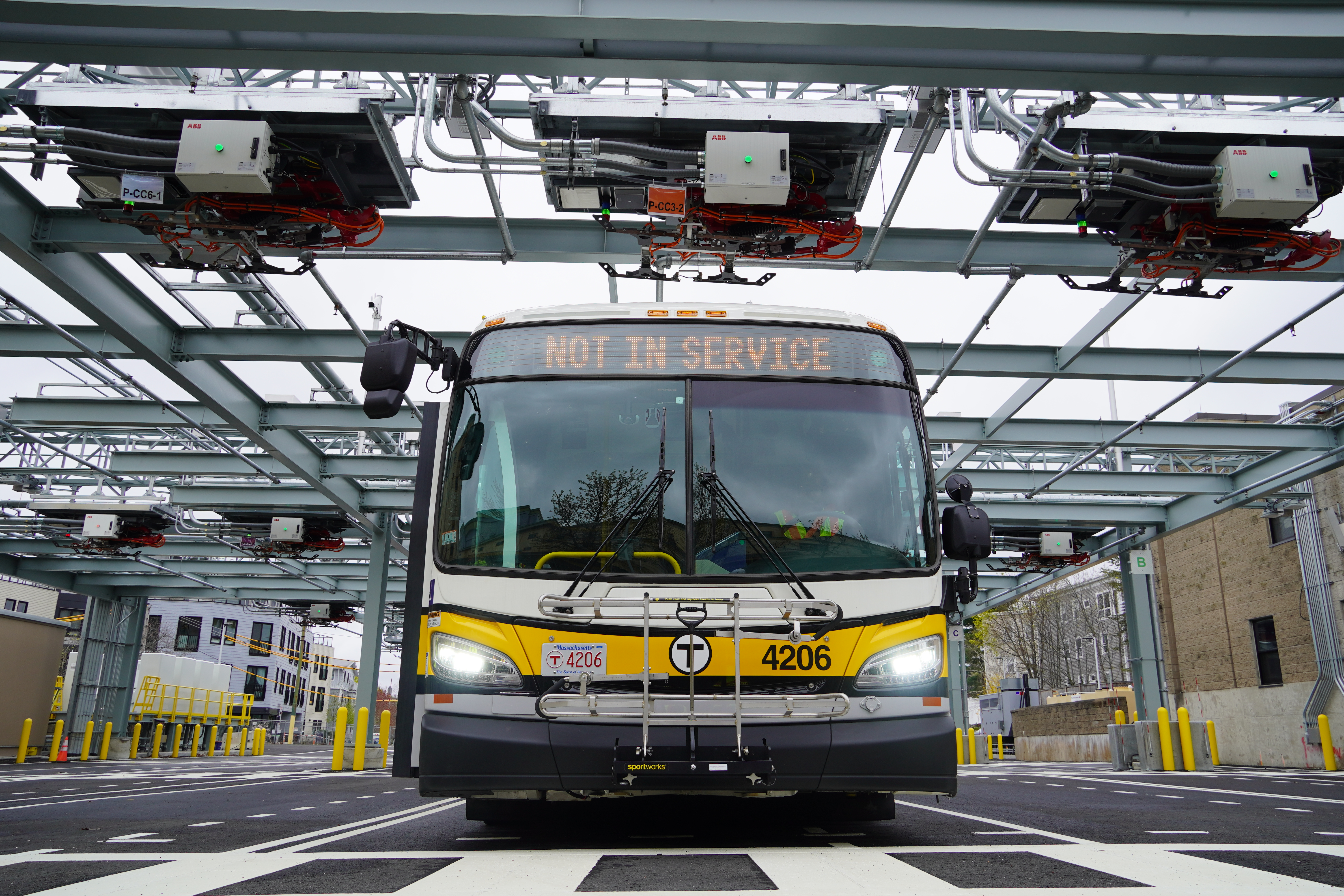
The roughly three dozen BEBs stored there will be parked and charged outdoors (unless they need maintenance; there are also two charging cables inside the site’s maintenance garage, the T says).
The North Cambridge BEB lot is also a renovation of an existing space, not a whole new complex; the facility once served as home base for the T’s electric trolley bus network, a service the T scrapped in 2022.
The lot shares a stretch of Massachusetts Avenue with apartments and low-slung storefronts. It’s a short walk from Davis Square and a slightly longer yet manageable jaunt from Porter.
Covering the lot is an elaborate and power-intensive pergola of charging pantographs fastened to a metal gantry. There are 30 pantographs in total, according to the T.
To recharge, a bus must park in a delineated spot under a charging station. Once the bus is in position, the driver sends a wireless signal to the pantograph, which, in theory, should unfold and lower onto rails mounted on the bus’s roof, initiating the charge.
The T attempted to demo the procedure for StreetsblogMASS on a cloudy Friday afternoon. A BEB looped around the garage and parked beneath a pantograph. The device took several minutes to descend (considerably longer than it should have).
“The operator attempted to request the charge sequence when the bus was already at or near a full state of charge,” the T later explained to StreetsblogMASS. “Because of this, the battery controller had to be reset before it would accept a charge.”
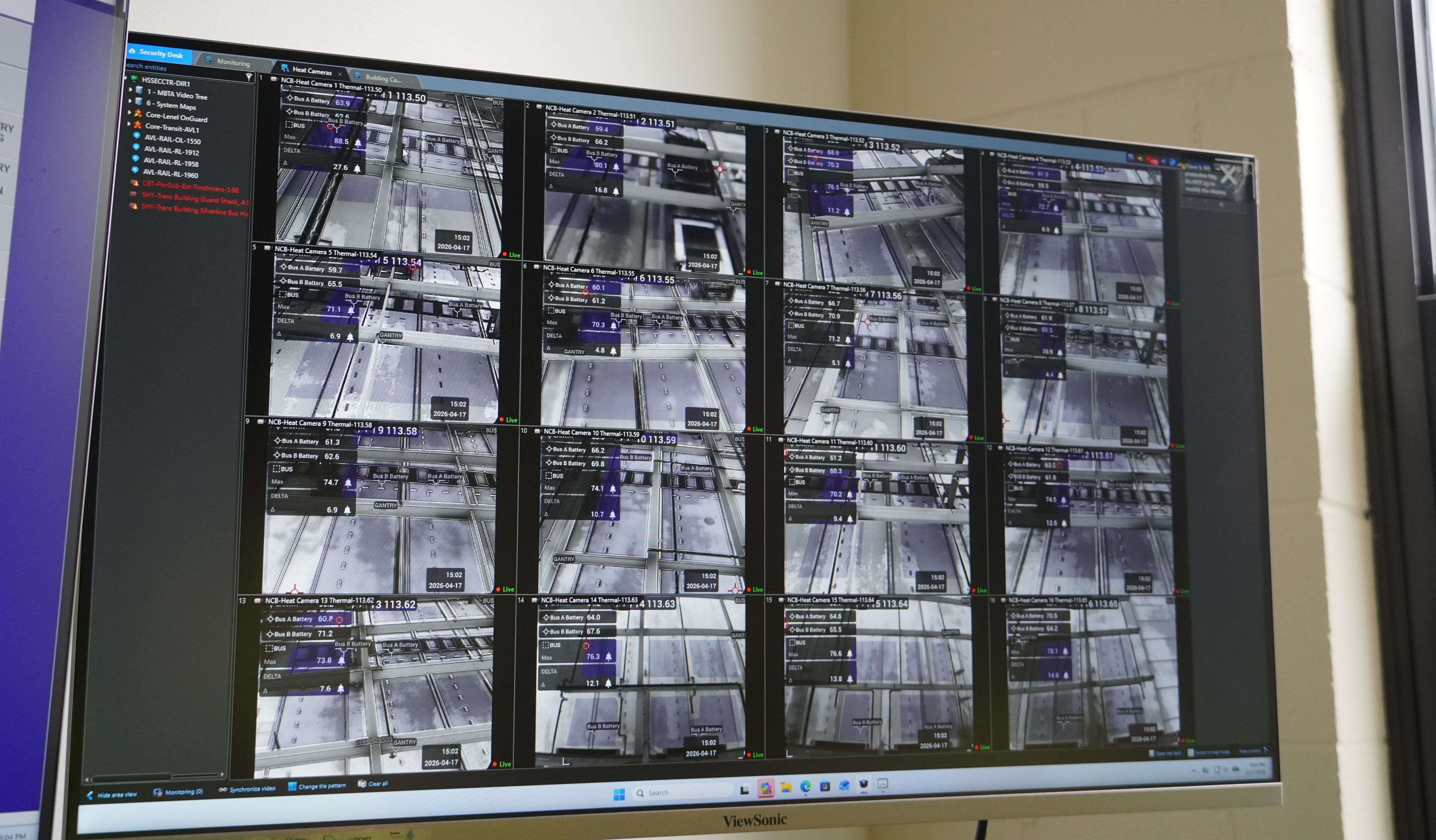
The T says it is still fine-tuning the charging system, with the aim of opening the site this summer.
The North Cambridge project had a base budget of $44.1 million, according to the T’s proposed capital investment plan. “Supplemental” construction and equipment costs tacked on an additional $7.8 million.

Read More:
Streetsblog has migrated to a new comment system. New commenters can register directly in the comments section of any article. Returning commenters: your previous comments and display name have been preserved, but you'll need to reclaim your account by clicking "Forgot your password?" on the sign-in form, entering your email, and following the verification link to set a new password — this is required because passwords could not be carried over during the migration. For questions, contact tips@streetsblog.org.