The T’s New Electric Buses Will Still Belch Diesel Fumes For Winter Heat
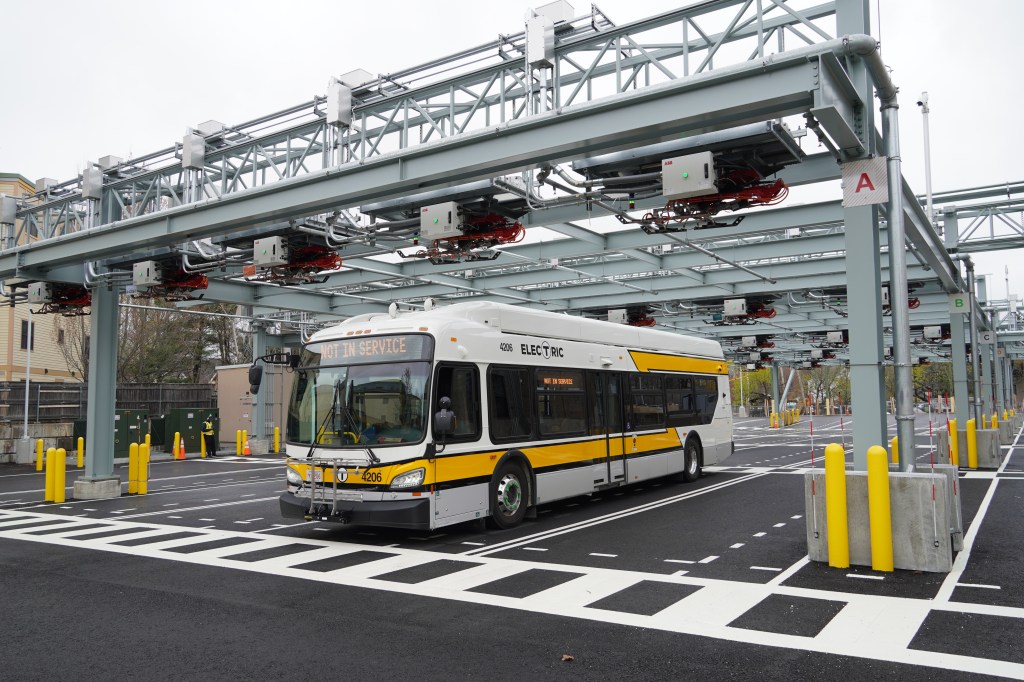
The MBTA’s new fleet of electric buses won’t quite be “zero emissions,” at least during the winter months, because they still rely on diesel fuel-burning heating units to keep riders warm.
“Keeping the batteries from getting too cold has the biggest impact on range improvement,” MBTA officials explained* to StreetsblogMASS. “To save battery power, the buses rely on a diesel heater below 40 degrees Fahrenheit.”
The MBTA has been testing a small fleet of new battery-electric buses (BEBs) over the past few months. They’re hard to distinguish from other buses, but you can look for the “ELECⓉRIC” logo on their sides, above the windows (see photos above).
“In the cold weather we had been experiencing this past winter, we saw them averaging over 160 miles for each charge,” MBTA officials said. “The even better news is there is some battery charge left over – (they could run) closer to 190 miles per charge if fully used.”
But that range was only possible because these buses relied on diesel-burning auxiliary heating systems to keep the buses warm enough for passengers, while saving the batteries’ power for moving the wheels.
If the buses had relied solely on electric heat, the T estimates that their range between charges would have dropped to under 100 miles.
“The heaters use 0.8 gallons per hour of use,” the MBTA told StreetsblogMASS. “You can assume that on a cold day below 40 (degrees), they are operating nearly every hour in service.”
Because they’re only providing heat, and not moving a 20-ton bus down the street, these heaters use considerably less fuel than a typical city bus.
The MBTA’s new BEBs come equipped with a 30-gallon fuel tank for the heating system, whereas a typical hybrid diesel bus has a 100-gallon tank.
Unregulated exhaust
However, because they’re not powering the buses’ wheels, the exhaust from these auxiliary heating systems isn’t subject to regulation under the Environmental Protection Agency’s usual emissions standards for diesel engines.
That means that, even though they’re not burning as much fuel, these heating systems might be producing much dirtier exhaust.
“Research is thin” on the pollution impacts from such systems, says Kevin Shen, a senior analyst for the Clean Transportation Program at the Union of Concerned Scientists.
He noted that California does require such heaters to meet its “ultra low-emission vehicle” emission standards.
“MBTA could ensure that the units are the same as those certified under California’s standards, and analyze their emissions impacts,” Shen suggests.
Hitting the road
When it’s warmer than 40 degrees – that is, for most of the year – the diesel-powered heaters shut down and battery-powered electric heat takes over.
When it gets hot out, there are also battery-powered air conditioning systems that can operate with “minor” impacts on the buses’ range, MBTA officials say.
The T currently has 11 new BEBs are currently in service, and 27 have so far been accepted from the manufacturer, New Flyer.
These buses have been operating out of the Charlestown bus garage until the T opens its first dedicated electric bus charging and maintenance facility in North Cambridge later this year.
The T expects to take delivery of an additional 95 additional BEBs by 2027, which will let the agency retire 150 of its oldest, least-reliable diesel-powered buses.
*Editor’s note: The technical information and quotes in this story were shared “on background,” meaning that they were relayed through an MBTA press official on an agreement that StreetsblogMASS would not attribute the information to a specific, named person.

Read More:
Streetsblog has migrated to a new comment system. New commenters can register directly in the comments section of any article. Returning commenters: your previous comments and display name have been preserved, but you'll need to reclaim your account by clicking "Forgot your password?" on the sign-in form, entering your email, and following the verification link to set a new password — this is required because passwords could not be carried over during the migration. For questions, contact tips@streetsblog.org.