MBTA Wants You to Help Plan for Its Future with ‘Focus 2050’

For the first time since the Covid-19 pandemic, the MBTA is updating its long-range plans for the future of transportation in eastern Massachusetts.
Focus 2050, the MBTA’s long-range strategic planning initiative, will guide the agency’s decision-making on long-term investments, inform the T’s annual capital investment plan (CIP), and help the agency respond and adapt to a changing world.
However, the MBTA is not doing this alone. The agency is soliciting feedback from the public on their long-term plans.
“Collaboration between the T and the riders are critical to developing the T’s future,” said Laura Gilmore, Senior Director of Strategic Transit Planning at the T at a recent virtual public meeting.
The Focus 2050 plan will incorporate ideas from MBTA staff as well as public feedback, and together, both will inform decision-making that shapes the future of the transit agency.
Gilmore noted how Focus 2050 is about more than just transportation.
“This plan recognizes that an efficient and effective transportation system is key to unlocking many of the Commonwealth’s goals – including housing, economic development, sustainability and resilience, and mobility,” she said.
The main goals of Focus 2050 are to provide a framework for the MBTA and relevant stakeholders to plan, prioritize, and execute on its investments in the regional transit system.
The T also wants to celebrate and tell the story of everything the T has done since it published its last long-range plan, Focus40, in 2019.
At a recent virtual kickoff meeting, Gilmore and other MBTA officials presented an outline of the Focus 2050 plan, discussed trends in the transit industry, and asked for stakeholder feedback.
Then and now
In 2019, the T’s previous long-range plan, Focus40, categorized projects into one of three buckets: doing, planning, or imagining.
The “doing” section represented near-term capital projects that were already funded, designed, or actively under construction – projects like the Green Line Extension, South Coast Rail Phase 1, the initial wave of Orange Line train replacements, ferry fleet expansion, and new Silver Line buses.
The “planning” category highlighted midterm priorities that were partially complete or in progress, like the T’s transit priority strategy, elements of our bus network redesign, the water transportation study, and the Silver Line extension.
Finally, “imagining” included ambitious long-term capital projects, like connecting the Red and Blue lines with a new subway tunnel.
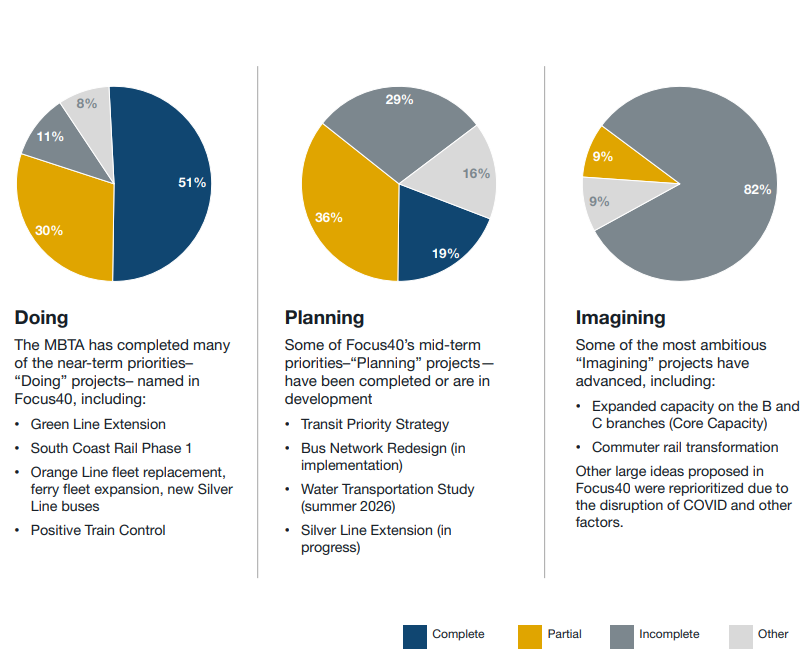
However, in the years since 2019, many of the transit expansion plans in Focus40 ended up gathering dust thanks to poor management, a pandemic, and under-investment from the state government.
A series of derailments and other crises during former Governor Charlie Baker’s administration forced the T instead to focus on rebuilding its depleted workforce and on basic maintenance work to fix dozens of slow zones on the subway system.
It wasn’t exactly what Focus40 envisioned, but it did result in a more resilient and reliable transit system.
“That more reliable system means that riders spend less time waiting, and hopefully making transit an easier choice for them,” Nolan theorized. “So we’re really proud of the results that we’re delivering for our riders.”
More traffic, changed travel patterns
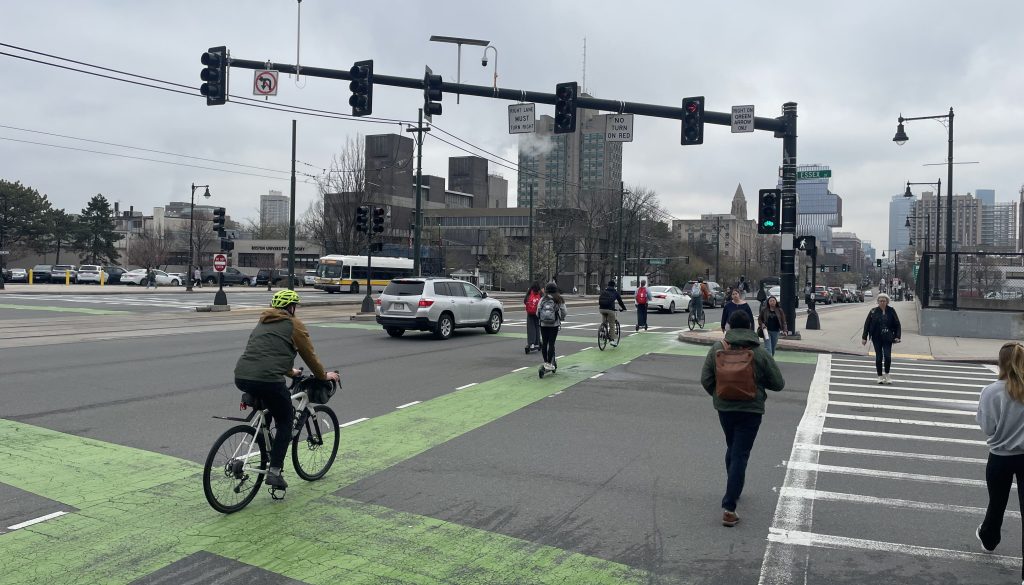
Since the pandemic, growth in weekend ridership has outpaced midweek ridership, especially on the commuter rail, ferry, and bus services.
Low income and minority rider numbers have grown, as well as “all-day, all-week” travel. Rush hour travel in and out of Boston in the morning and evening has quieted in part due to remote and hybrid work, reducing the need for peak-hour service.
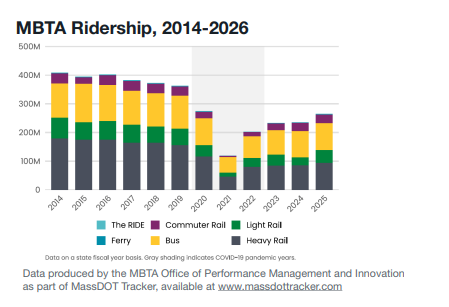
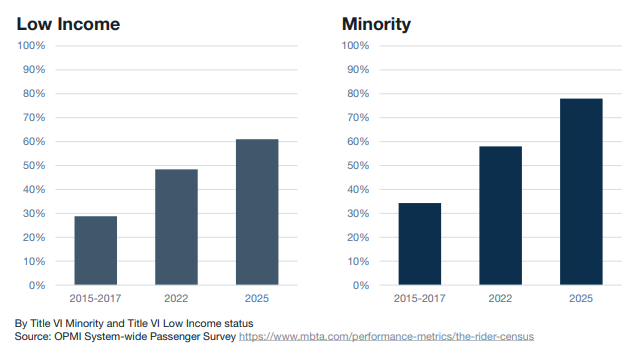
Sandy Johnston, the MBTA’s Deputy Director of Regional Transit Planning, noted that the increase of commuting options like rideshare companies have had an impact on transit ridership.
“Relative to 7 to 10 years ago, the options available to our riders and our potential riders have changed, as have their needs,” Johnston said. “But the need for travel options that don’t include using a car do endure… Americans want to drive less.”
The T’s response to these trends was to shift away from the traditional 9-5 commuting schedule in favor of a “flat” service structure, providing consistent frequency throughout the day with increased service during the mid-day and late-night hours. An updated commuter rail schedule nearly doubled weekend ridership.
However, while more trips are being taken throughout the week than in 2019, with a wider breadth of options, almost 85 percent of those trips are still done by car, the MBTA estimates.
The state uses vehicle miles traveled (VMT) to measure traffic patterns, and according to the Commonwealth’s Clean Energy and Climate Report Card, VMT is predicted to continue increasing through at least 2030.
The result of this has been decreasing average bus speeds, which means longer trips, and forces the T to use more buses and drivers to provide the same level of service.
Part of Focus 2050’s work will be to align with the state’s climate goals to curb the congestion, safety, and budget implications that come with increased traffic in the MBTA service area.
Focus 2050 takes Focus 40’s work beyond improving the pre-existing system and the state of good repair into an entirely new framework for the post-pandemic world.
Looking at the data Johnston shared, this new plan will facilitate the T’s long-term growth and reach to new communities, increasing the “capacity, accessibility, and travel options” for riders, said Paul Nolan, the MBTA’s Deputy Director of Strategic Planning.
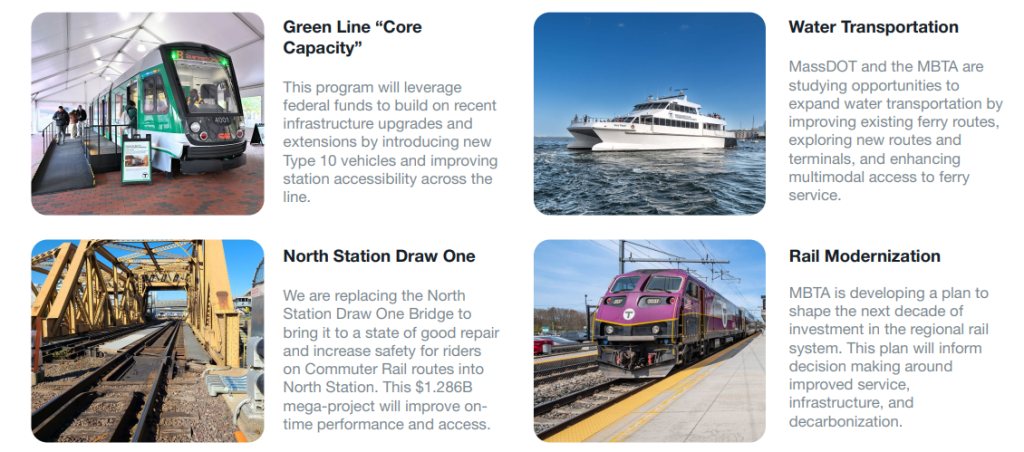
One of the new initiatives for the Green Line is a portfolio of projects called “Core Capacity”, which will include introducing new Type 10 vehicles and improving accessibility of stations across the Green Line network.
On the ferry front, the T is actively collaborating with MassDOT on its water transportation study to develop a comprehensive ferry network that meets the MBTA’s goals via new routes, terminals, and different multimodal points of access.
The third priority is rail modernization. The MBTA is developing a plan to inform future investments in regional rail, helping the T focus its decision-making around investments that improve service, infrastructure, and decarbonization.
Planning for the Future
While the T is trying to plan for the future, there are uncertainties like global politics affecting energy and gas prices, climate change, and a changing federal funding landscape that has influenced the importance of making long-range plans.
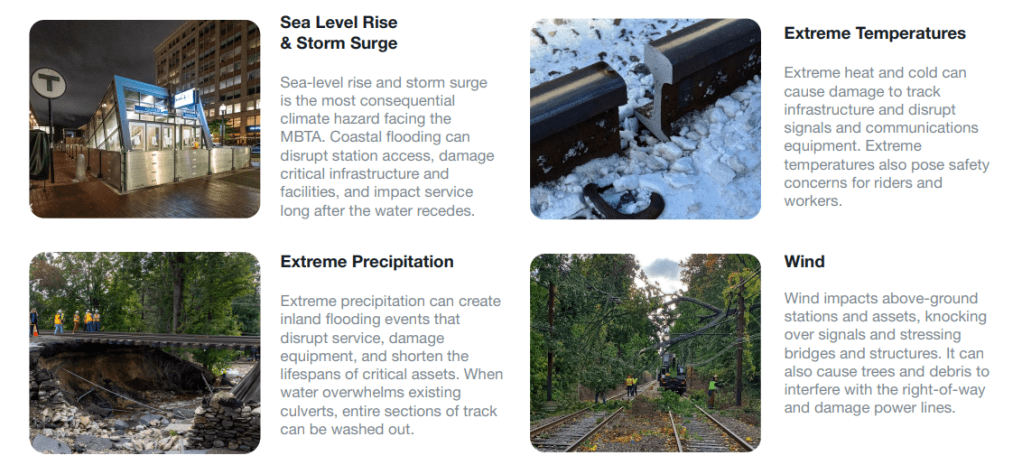
As the T expects the unexpected as the world changes everyday, Johnston says. “Long-range plans, such as Focus 2050, have to build frameworks for smart decision-making in an uncertain world.”
The goal with Focus 2050 is to have a framework that will help the T make informed decisions, even in the face of uncertainty.
“Transit does not exist in a vacuum. It intersects with many other areas of life, and many other fields of policy and concern to regular folks. One of the key responsibilities that we have as planners is to understand where the world around us is going and how it might affect what we need to do in the future,” Johnston explained.
Starting with the initial virtual meeting, the 18-month community engagement process will include many opportunities to share challenges and hopes for the T, and to help consider priority investments for the agency over time.

There will be virtual and in-person meetings, outreach tables at MBTA stations, and email correspondence at focus2050@mbta.com. This outreach will take place for the next year and a half, with the first current stage of outreach pertaining to what the general public wants to see from the MBTA, and the second helping the agency prioritize, compromise, and identify tradeoffs in the spring of next year.
Community organizations are also making their voices heard. Transit Matters is circulating an Action Alert letter that constituents can send to spotlight bus garage maintenance and advancing Regional Rail, and encourage all projects aligned with opportunity, equity, and environmental sustainability across the Greater Boston Area.
Past convenings have taken place at La Colaborativa in Chelsea and Action for Boston Community Development (ABCD) in Boston.
There is also an in-person meeting tonight at the Community Room at McGovern Transportation Center in Lawrence from 5:30-6:30 PM.
For more information on the project, visit the MBTA Focus 2050 project website.
Streetsblog has migrated to a new comment system. New commenters can register directly in the comments section of any article. Returning commenters: your previous comments and display name have been preserved, but you'll need to reclaim your account by clicking "Forgot your password?" on the sign-in form, entering your email, and following the verification link to set a new password — this is required because passwords could not be carried over during the migration. For questions, contact tips@streetsblog.org.