State Street Improvements Delayed: One of Downtown’s Most Poorly-Designed Streets Will Get A Fresh Coat of Asphalt Instead
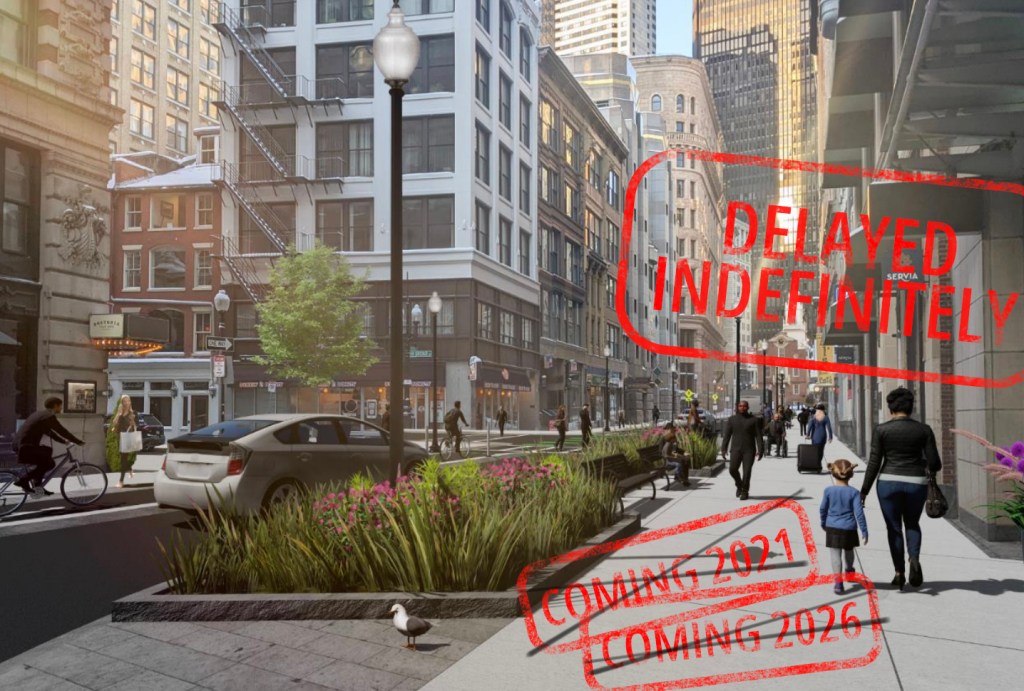
Mayor Wu is postponing a plan to improve State Street in downtown Boston with wider, wheelchair-accessible sidewalks, safer crosswalks, and a protected bikeway connection.
Instead, the city will pay to re-pave the street this summer, preserving many of the street’s well-documented safety problems under a fresh coat of asphalt.
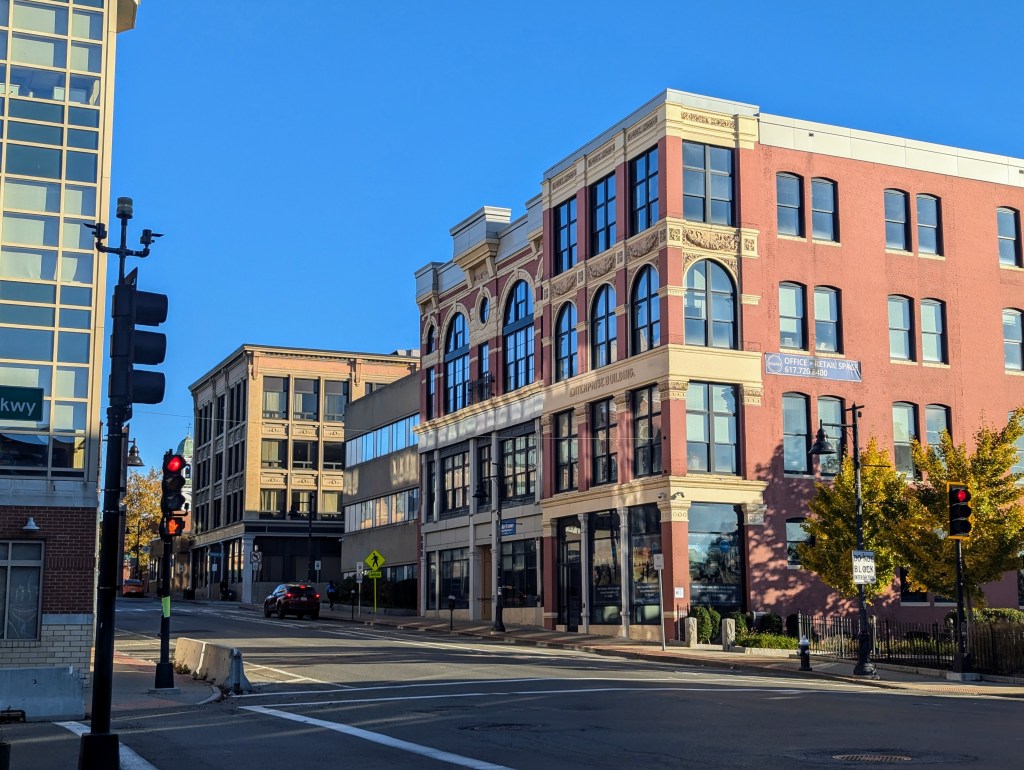
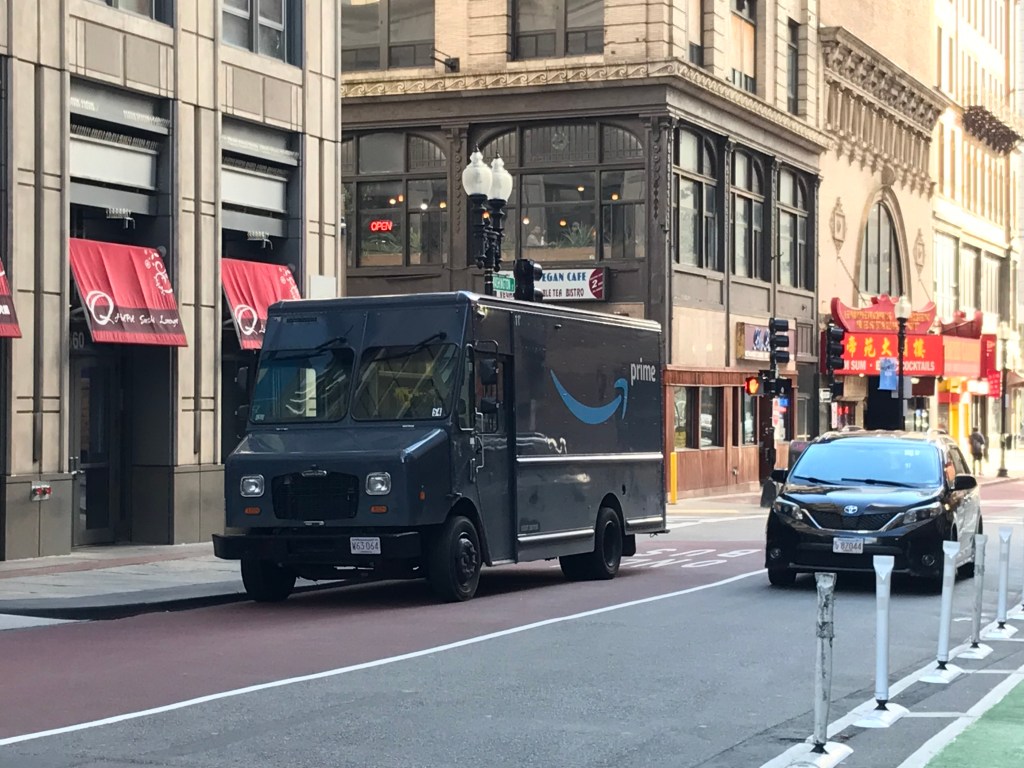
State Street runs from the Rose Kennedy Greenway to the Old State House in downtown Boston. In its current layout, the most of State Street’s public space is set aside for cars and trucks, even though the vast majority of the street’s users are pedestrians.
It’s also on the City of Boston’s “high-crash network” of city streets that pose the highest risks of injury or death from drivers.
In public meetings, city officials have admitted that the street’s current design is a public safety risk to downtown foot traffic, which frequently overflows into the roadway from State Street’s narrow, crowded sidewalks.
For several years now, engineers in the city’s Public Works Department have been planning to address these problems with a wholesale redesign and reconstruction of the street. The plan (pictured above) called for wider, wheelchair-accessible sidewalks, new dedicated loading zones to discourage illegal double-parking, shorter, more visible crosswalks, and a curb-protected bike lane that could also serve as an emergency vehicle shortcut around traffic.
In the city’s most recent public hearing for the project, in 2024, city officials said that the project would be finished this year.
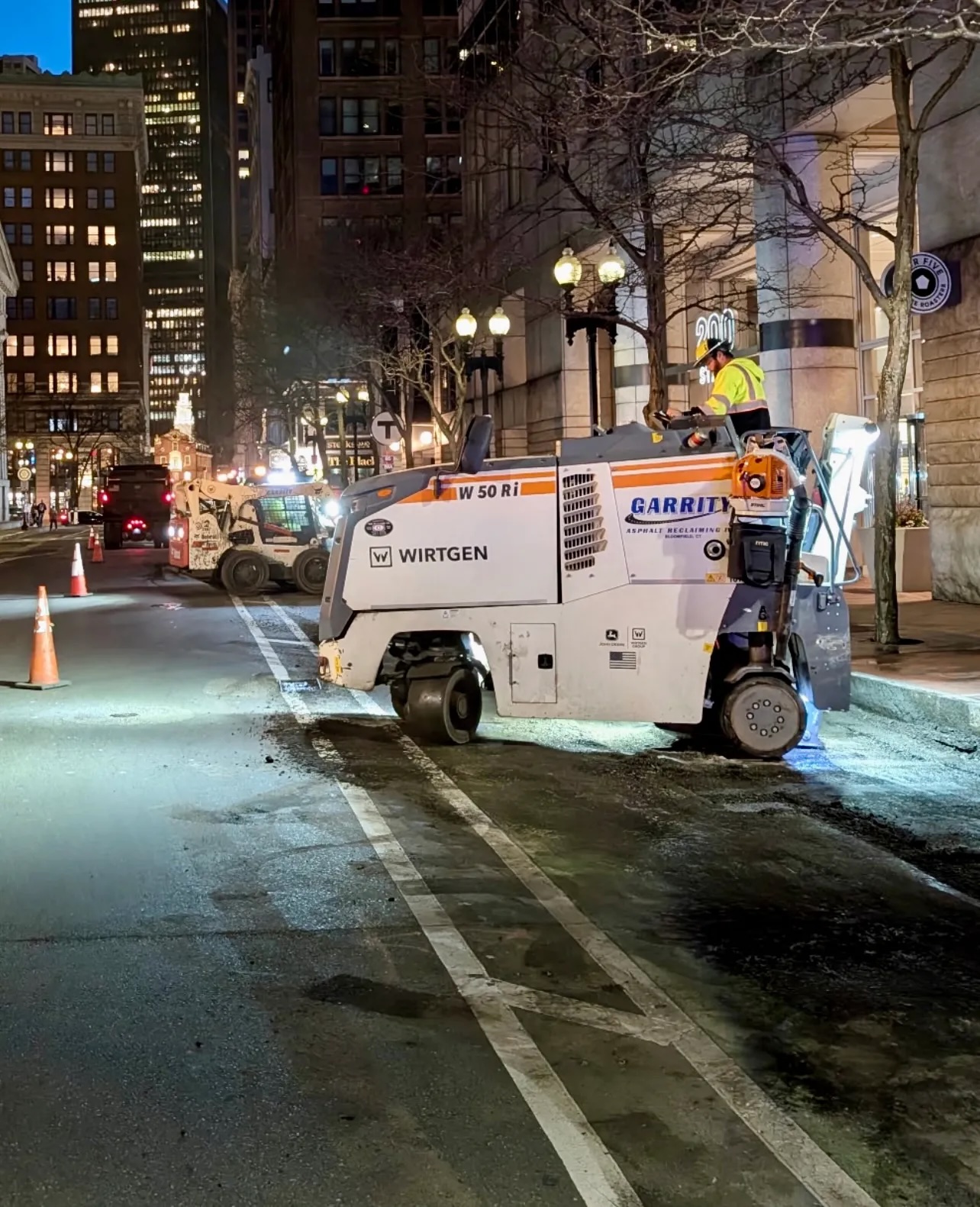
But instead, the project has become yet another example of Mayor Wu’s stonewalling against safety-focused infrastructure projects.
A city spokesperson told StreetsblogMASS that “because this extensive reconstruction will span two construction seasons, the work can not be completed in time for this summer’s large-scale events. As a result, the City has moved forward with resurfacing (the asphalt roadway) in order to ensure a baseline state of good repair to accommodate heavy foot traffic and usage this summer.”
The spokesperson acknowledged that “abutters and stakeholders” had requested that the repaving project should incorporate as many design elements as possible from the long-planned redesign. The repaved street will retain the existing bike lane, and move it to the left (southern) side of the street.
But the spokesperson declined our request to see the city’s paving plans, and did not specify whether the repaving project would include any additional changes to slow down motor vehicle traffic, improve safety, or repair the street’s crowded, broken sidewalks.
Sidewalk improvements are usually outside the scope of paving projects, which are usually focused on resurfacing the asphalt between the curbs.
The spokesperson stressed that, unlike several other long-planned infrastructure projects, “the major reconstruction of State Street for wider sidewalks and safer multimodal access remains fully-funded in the City’s capital plan” and that the city’s long-term plan for the street “continues to reflect the same elements presented at the last public meeting in 2024.”
Mayor Wu’s proposed capital budget does not specify a timeline for the project, but it does indicate that her administration isn’t planning to begin work on it until at least fiscal year 2028.
Six years’ worth of delays, and counting
Since 2019, City Hall has been planning a project to completely redesign and reconstruct the street to improve safety, widen sidewalks, and generally do a better job serving the street’s heavy foot traffic.
In late 2020, during the Covid-19 pandemic, the city tested an early concept for the street with paint and flexible post bollards, which created space for a new bike lane.
At that time, the city hoped to begin construction on a more permanent version of that design, with wider, wheelchair-accessible sidewalks and a curb-protected bike lane, in 2021.
The city’s most recent public hearing for the project was in March 2024, when officials presented a “final” design and reported that the project would get underway later that year for completion in 2026.
Elite objections to car-free concept
Early in the design process, in 2019 and 2020, Mayor Marty Walsh’s administration briefly considered making State Street a car-free zone, similar to the area around Downtown Crossing.
Members of the general public overwhelmingly supported the idea in public outreach efforts and surveys, but after Mayor Wu took office in 2021, city officials opted not pursue the idea over the objections of nearby office tower landlords, who own large parking garages near State Street.
In a June 2022 public hearing, the city also reported that the Wharf District Council, a lobbying group for nearby hotels and waterfront homeowners, had been pressuring the city to eliminate the bike lane in order to create an additional motor vehicle lane instead.
However, a formal third-party evaluation concluded that adding more lanes on State Street would in fact offer few benefits to drivers – but it would considerably increase the risks of crashes and injuries on the street, particularly for pedestrians and people on bikes.
“Whether State Street has one or two travel lanes, the network will adjust accordingly,” according to a traffic evaluation memo by Greenman-Pedersen, Inc. (GPI). “The difference between one and two travel lanes in terms of pedestrian and bicyclist safety is significant.”
Streetsblog has migrated to a new comment system. New commenters can register directly in the comments section of any article. Returning commenters: your previous comments and display name have been preserved, but you'll need to reclaim your account by clicking "Forgot your password?" on the sign-in form, entering your email, and following the verification link to set a new password — this is required because passwords could not be carried over during the migration. For questions, contact tips@streetsblog.org.