Most World Cup Host Cities Are Pedestrianizing Streets This Summer – But Not Boston
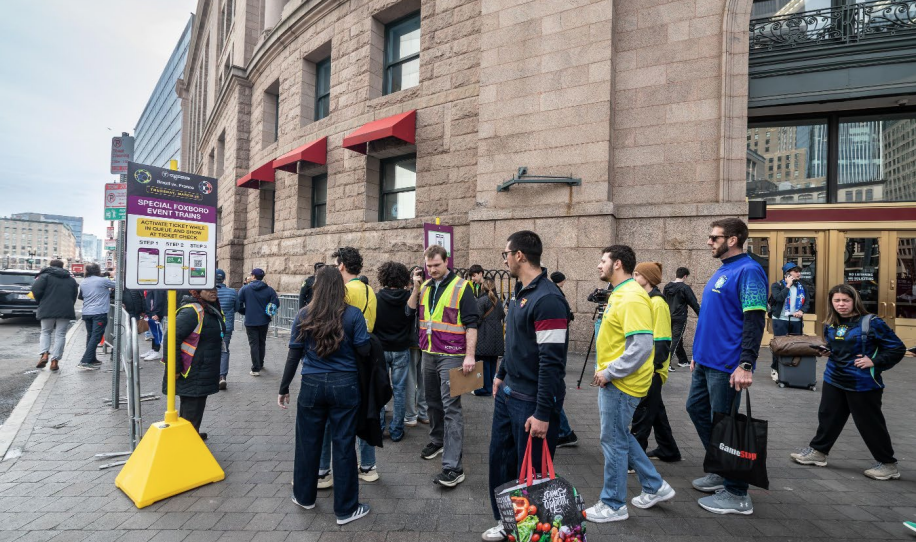
In a few days, host cities across North America will welcome huge World Cup crowds by pedestrianizing major streets – and in some cases, entire neighborhoods – to keep traffic jams out of the fan parades and festivals associated with the international event.
Boston will not be among them.
On Tuesday, the City of Boston and MBTA announced a compromise plan for managing heavy crowds around South Station that would keep Summer Street open to vehicular traffic on some – but not all – World Cup match days.
Mayor Wu’s administration had been fighting the T to keep Summer Street open to cars and trucks amidst the thousands of soccer fans that are expected to converge at South Station as they wait to board trains to Foxboro.
In the compromise plan announced Tuesday, Summer Street will be pedestrianized between Dorchester Avenue and Atlantic Avenue for eight hours on four match days: Saturday June 13, Friday the 19th, Monday the 29th, and for the quarter-final match on Thursday July 9.
For matches held on Tuesday the 16th, Tuesday the 23rd, and Friday the 26th, the city plans to keep the northern lanes of Summer Street open to cars for the convenience of people who desire to drive through thick crowds of soccer fans into one of the most congested districts of the city.
But drivers should be warned: “the direction of travel will be coordinated based on the demands of the respective day and time,” and the city and the T may add “additional temporary traffic restrictions and lane closures to accommodate crowd management,” according to a press release that the MBTA and City of Boston issued yesterday.
Summer Street will also be entirely closed for an indeterminate period on all seven match days “while the MBTA sets up the temporary security screening and queuing space” outside South Station.
Other cities have more serious game plans
Boston’s nearest World Cup peer city, New York, recently announced a major transit-focused transportation plan for match days that will ban private cars and truck deliveries from numerous busy streets around Midtown Manhattan, even though the actual games are happening six miles away in New Jersey.
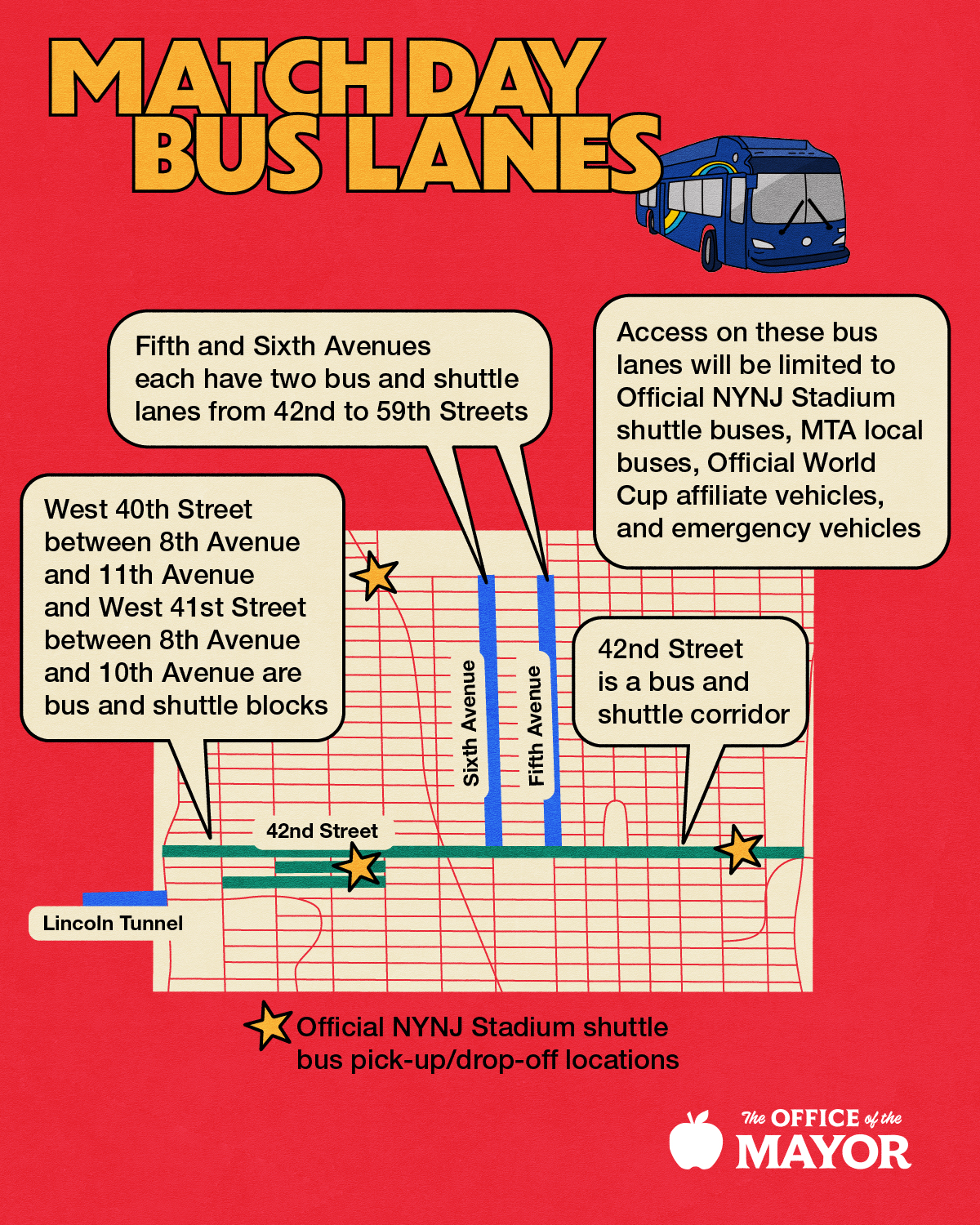
New York Mayor Zohran Mamdani last week announced that on World Cup match days, the city will expand bus-only lanes throughout Midtown Manhattan and transform 42nd Street – a major cross-town connection – to a bus-only corridor.
In a striking contrast to Mayor Wu’s approach, Mamdani’s administration is also planning to create large car-free pedestrian zones on the streets around Penn Station so that thousands of soccer fans will have plenty of space as they wait for trains to New Jersey.
New York had also previously announced plans to transform 50 streets near schools into car-free “soccer streets” this summer.
In another contrast with Boston, Philadelphia is also coordinating its World Cup traffic planning with its preparations for a surge of tourism for the 250th anniversary of the Declaration of Independence.
Philadelphia will close several Lemon Hill roadways to vehicular traffic for the duration of its World Cup fan festival, and it will also pedestrianize the outer lanes of Benjamin Franklin Parkway, the grand boulevard between Center City and the Philadelphia Museum of Art, for the entire summer.
The city is also pitching in $450,000 to subsidize additional PHLASH bus service between the fan festival in Lemon Hill and the central city.
Even the two World Cup host cities in Texas are taking a more enlightened approach to transportation.
Houston is pedestrianizing roughly 30 blocks of streets in its East Downtown district for daily World Cup “fan festivals” in June and July.
In Dallas, where games will take place in a suburban stadium about 17 miles from the city center, the city will close several downtown streets near its World Cup broadcasting center in the downtown convention center, and on several blocks around the city’s fan festival in the state fairgrounds.
Streetsblog has migrated to a new comment system. New commenters can register directly in the comments section of any article. Returning commenters: your previous comments and display name have been preserved, but you'll need to reclaim your account by clicking "Forgot your password?" on the sign-in form, entering your email, and following the verification link to set a new password — this is required because passwords could not be carried over during the migration. For questions, contact tips@streetsblog.org.