Fed Up With Blocked Bike Lanes? ‘Bike Bureau’ Wants to Let City Hall Know It

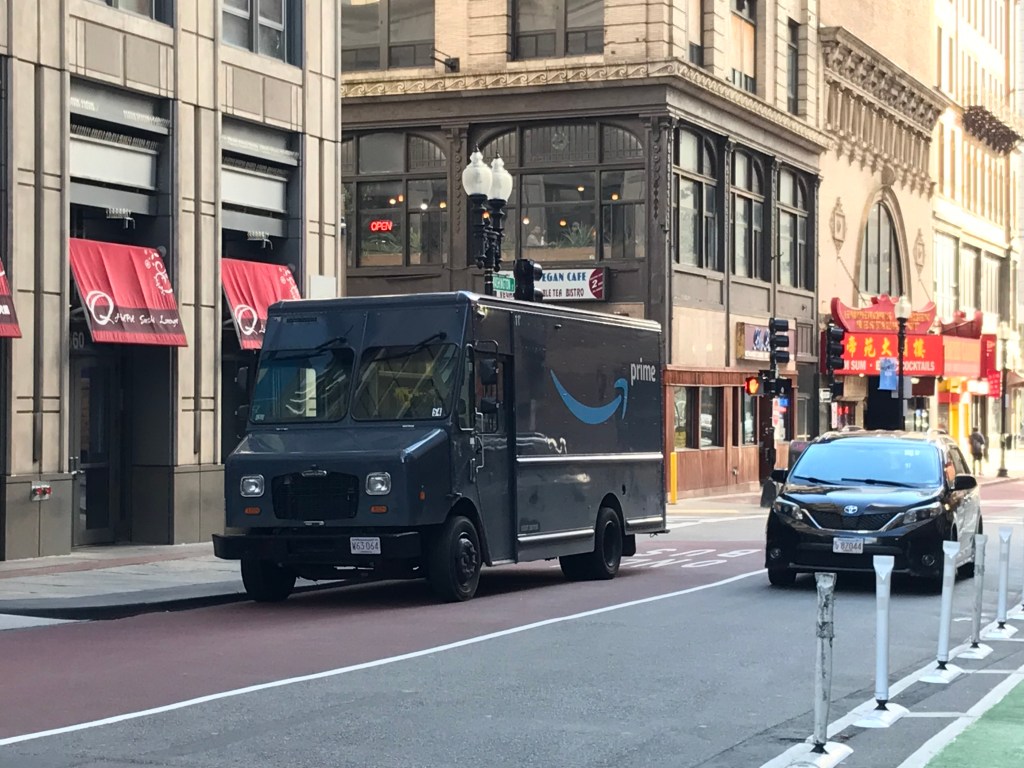
A local software engineer has created a new web app that’s designed to make it easier for citizens to report illegally-parked vehicles that block crosswalks and bike lanes, and hold local governments more accountable in their promises to keep people safe on busy city streets.
Jonathan Lansey is a software engineer at Cambridge Mobile Telematics, which provides data-based solutions to problems of vehicle safety.
Lansey built and launched his app, Bike Bureau, in June, citing frustration with the amount of daily bike lane obstructions he observed during his morning commute from Waterfront to Kendall Square.
“I was frustrated by the appearance of the city having a space for bikes to be safe and the reality, which was (seeing it) used almost as a parking lot,” he said.
Lansey launched Bike Bureau to a community grieving the loss of transportation planner and street safety advocate Louisa Gag, who was struck and killed by a truck driver in mid-July while biking her morning commute.
At a vigil for Gag on July 16, Mayor Wu promised “stepped-up enforcement of blocked bike lanes, crosswalks, and other double-parking violations” in response to the public’s demands that the city do more to improve street safety.
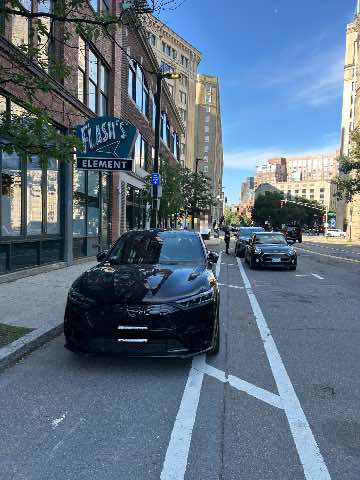
In Boston, blocking bike lanes is illegal, and the city receives reports of these violations through its 311 system.
But Lansey described the system as “cumbersome and confusing,” and he set out to make Bike Bureau efficient and straightforward.
Local community members have taken notice.
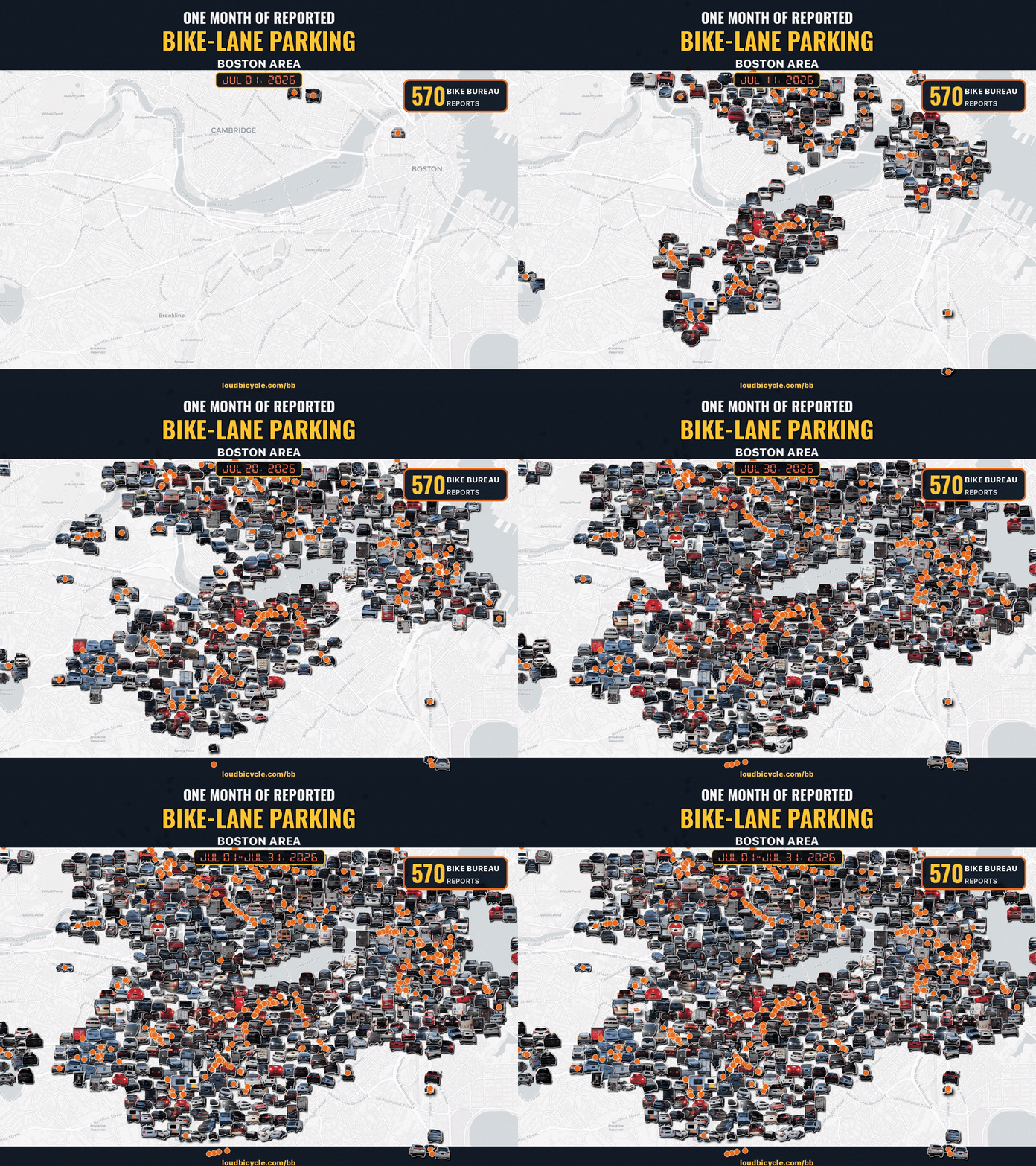
Bike Bureau reported 570 Boston area reports in July, including 330 in Boston proper. The app automatically anonymizes submitted photos from users, blurring faces and license plates, before the data reaches Bike Bureau’s servers. The license plate of the violating vehicle is retained, but kept private. A user’s submission can be crafted anonymously and processed in seconds, anywhere in the world.
“I wanted it to be really easy for people to notice something and submit it as a report,” he said, “because the scope of the problem is enormous. If it takes too long for somebody to actually make the report than we’re not going to be able to capture the full size of the problem.”
Bike Bureau has been approved for integration with official reporting apps in Cambridge and Medford. Those cities have an application programming interface (API) which allows Bike Bureau reports to be sent into their SeeClickFix database.
The City of Boston’s Department of Innovation and Technology initially refused Lansey’s request for similar API integration with the Boston 311 system.
Since then, though, ongoing communication with City Hall has assured him the rejection may not be final.
A city spokesperson from the Boston Dept. of Innovation and Technology stated that Boston 311 will reopen for integration with apps like Bike Bureau following a technology upgrade that’s expected to be complete by the end of the year.
“Once this process is complete, the City can again direct our capacity to securely reopen write access to the Open311 API,” the spokesperson added. “We will continue working with partners to find meaningful ways to incorporate resident-driven data.”
“Right now I feel somewhat positive and supported by the government,” Lansey said. “I understand that they are working with some IT infrastructure that might not be as nimble as they themselves would like.”
For now, Lansey has found a workaround to get reports in Boston and other municipalities submitted automatically, but the solution requires more effort, and costs extra.
His goal is to efficiently bring obstruction data to the city’s databases so that the government understands the scope of the problem.
“We have a problem with the bike lanes and people parking in them,” Lansey said. “In order to have the government take that issue as seriously as the scope is, they need visibility into what’s happening.”
‘The problem is an infrastructure problem’
Dr. Sanne Boersma, a Brookline-based virologist originally from the Netherlands, is the longest active Bike Bureau user, and credits the app with improving her commute to her postdoc position at Harvard Medical School.
“I became more aware of how dangerous many places are [for bikers],” she said. “I had places where I felt uncomfortable, and now I can see based on the heatmap that this is an unsafe spot to cycle.”
Bike Bureau also gives her a way to vent frustration when obstructions make her commute less safe, and she enjoys the feeling of quickly and easily contributing to a fix.
Dr. Boersma unfavorably compared her experiences biking in Boston to cities like Utrecht in the Netherlands, which have robust networks of protected cycling lanes.
“I initially had a bit of a culture shock adapting to the Boston system. It felt horrible,” she said. “There were moments that I didn’t cycle at all because it was so unsafe.“
She expressed hope that her reports on Bike Bureau will ultimately help convince cities to build safer streets.
“If there’s an area where cars are guaranteed to block the bike lane, that is creating an unsafe situation,” she said. “A sustainable solution to that is a separate or protected bike lane.”
Lansey agrees.
“The problem is an infrastructure problem,” said Lansey, “and no amount of education or policing is the solution.”
You can use Bike Bureau to report illegal parking in any web browser, or download an app version, at https://loudbicycle.com/bb.
Sunny Ramos is a freelance journalist in Massachusetts interested in the intersection of local and international culture and politics. You can send her an email at sunnyramos@proton.me or follow her @sunnyramosma on Instagram.

Streetsblog has migrated to a new comment system. New commenters can register directly in the comments section of any article. Returning commenters: your previous comments and display name have been preserved, but you'll need to reclaim your account by clicking "Forgot your password?" on the sign-in form, entering your email, and following the verification link to set a new password — this is required because passwords could not be carried over during the migration. For questions, contact tips@streetsblog.org.