The T Is Throwing More Money Into the Alewife Money Pit
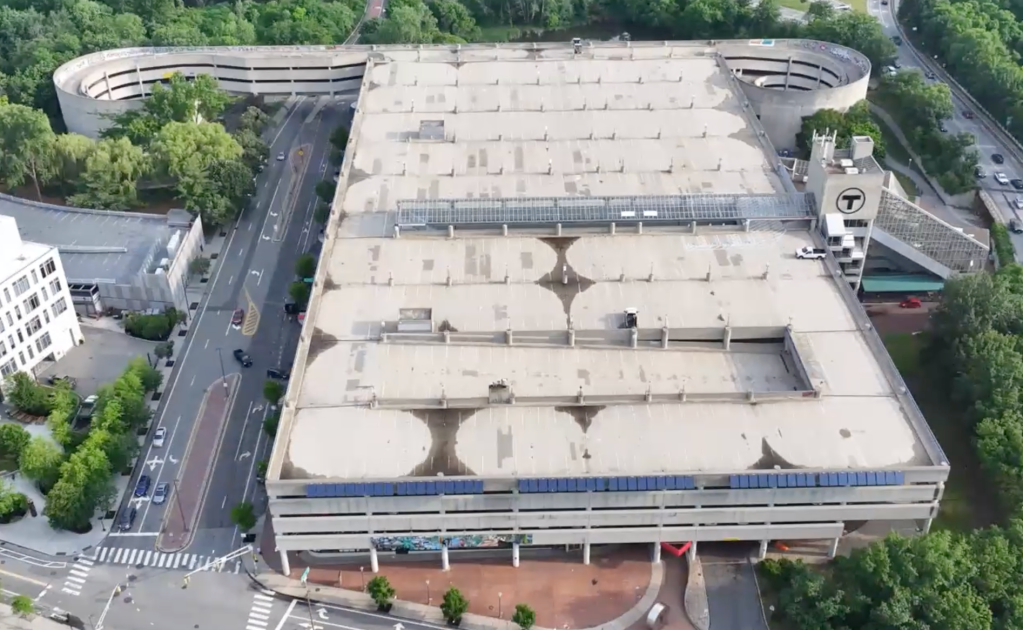
As a decade-long, $45 million repair project for the massive Alewife parking garage draws to a close, the MBTA is soliciting bids for even more work to try and keep the decrepit structure standing for 10 more years, at an additional cost of $30 million.
The Alewife parking garage opened in 1985. It was part of a major expansion of the Red Line that took place in the 1970s and 1980s, when the region’s busiest subway line expanded south into Quincy and Braintree, and northwest with new stations at Porter, Davis, and Alewife.
In a reflection of 20th-century planning dogmas, many of those new stations were built with massive parking decks attached.
Braintree station, which opened in 1980, includes a 1,200-space garage. The Quincy Adams station, which opened in 1983, is located under a garage with 1,940 parking spots with dedicated on- and off-ramps to Route 3.
These garages provided a public subsidy for downtown employers and office landlords – who were able to outsource some of their parking costs to the Commonwealth – while also locking in private automobiles as the government’s preferred mode of transportation for the region’s suburbs, where most of the metropolitan area’s growth was happening.
But nearly half a century later, those policies haven’t aged well, and there are an alarming number of cracks showing up in their weather-beaten concrete edifices.
Parking fees won’t cover repair bills
In 2024, the T wrapped up a 6-year, $64 million rehab project for the Quincy Adams and Braintree garages.
In downtown Lynn, the T has abandoned about two-thirds of another massive garage that it owns because crumbling stairs and broken elevators have made the upper stories inaccessible.
The Lynn garage was built in 1990, which makes it one of the younger parking facilities that the T owns. The T is currently looking for private developers who might be willing to tear it down for them.
And then there’s Alewife, the T’s largest garage.
Alewife has been under expensive repair since 2018, the year a large chunk of concrete fell off and landed on a customer’s car.
A repair contract that the T signed that year will continue through 2027, at a budgeted cost of $45 million.
But even after that work wraps up next year, Alewife will continue draining millions of dollars a year from state taxpayers.
The T recently issued a “request for qualifications” for engineering firms to develop yet another rehabilitation plan. The T has tentatively budgeted another $30 million in its latest capital budget (project ID #P0605b) for the additional work.
“This program is intended to extend the service life of the structure for an approximate 10-year planning horizon to allow the MBTA to develop and execute a viable redevelopment plan for the site,” according to an MBTA spokesperson.
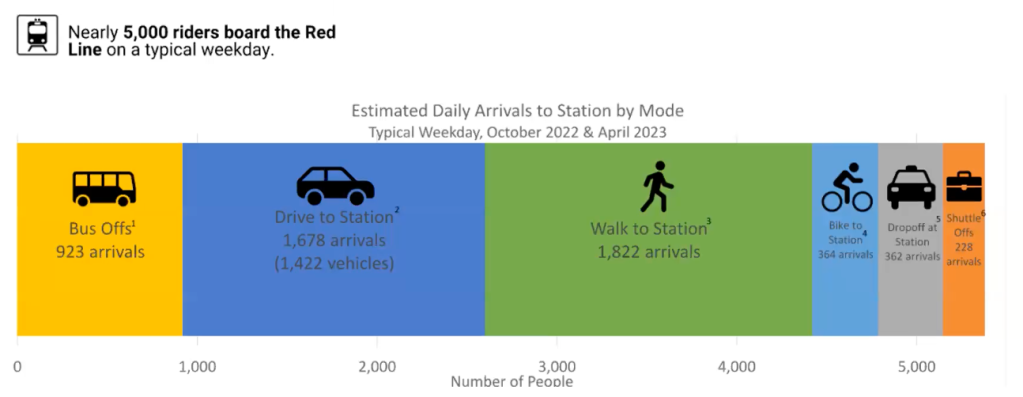
The MBTA told StreetsblogMASS that the garage currently generates about $3.8 million a year in net revenues (which are the parking fees the T charges, minus operating costs like utilities and snow removal).
At current interest rates, those revenues won’t come anywhere close to covering borrowing costs for the $75 million in bonds that the T will issue to pay for the repair projects.
It’s a teardown
In 2024, the T was ready to write off the Alewife garage as a liability that it wanted to get rid of.
That year, the T issued a request for proposals for private developers to take it off their hands, demolish it, and replace it with more valuable transit-oriented development.
But those plans fell apart last winter. In January, StreetsblogMASS broke the news that the T was cancelling its search for a development partner for the Alewife site, after the agency decided that “current market conditions are not favorable to maximizing the property’s value.”
That decision means that in addition to spending millions of dollars on an obsolete structure, the region will also need to wait for several more years to build thousands of desperately-needed new homes that could eventually replace the parking deck.
The delay in those transit-oriented housing plans is also an expensive proposition for City of Cambridge taxpayers.
According to Cambridge’s tax assessors, the land that the Alewife garage occupies has an assessed value of $8.8 million, and the property’s total assessed value is $78 million.
But the T does not pay property tax, which means that Cambridge taxpayers are paying over $500,000 per year in additional property taxes to subsidize the tax-exempt status of the garage.

Read More:
Streetsblog has migrated to a new comment system. New commenters can register directly in the comments section of any article. Returning commenters: your previous comments and display name have been preserved, but you'll need to reclaim your account by clicking "Forgot your password?" on the sign-in form, entering your email, and following the verification link to set a new password — this is required because passwords could not be carried over during the migration. For questions, contact tips@streetsblog.org.