In the Midst of A Reelection Campaign, Gov. Healey Proposes $120 Million Tax Cut For Drivers and Oil Companies
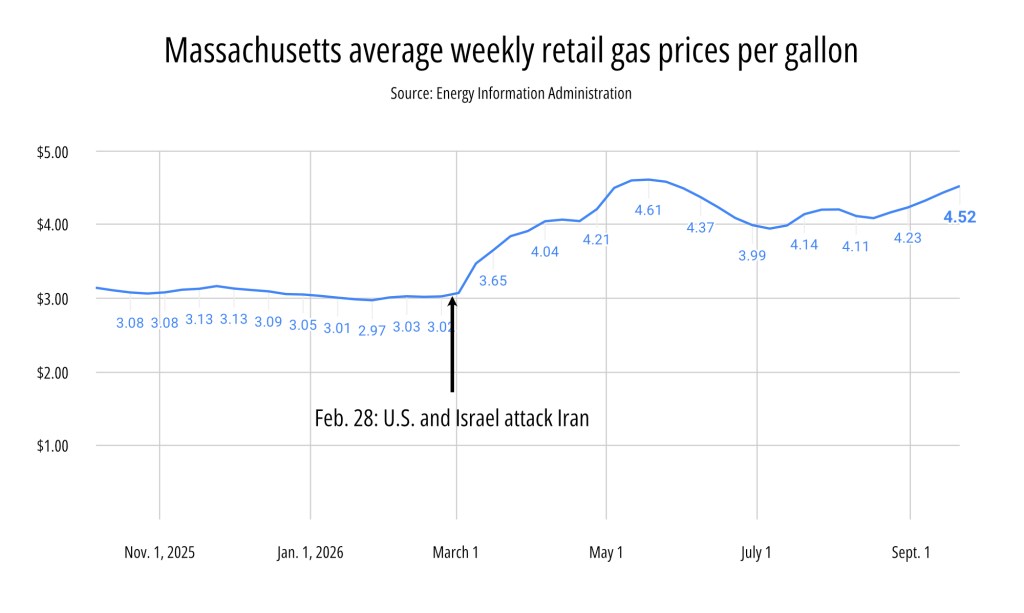
In the midst of a not-particularly challenging reelection campaign against a Republican challenger, Gov. Maura Healey hosted a press conference Tuesday morning to announce her support of an early-2000s Republican Party shibboleth – tax cuts for fossil fuels.
The Governor announced plans to file legislation that would temporarily suspend the Commonwealth’s 24-cent-per-gallon gas tax for two months.
“The skyrocketing price of gas is a direct result of Donald Trump’s actions. He chose to send us into this reckless war in Iran with no goals, no plan, and he refuses to get us out. Now everyone is paying the price,” said the Governor.
“Because Donald Trump refuses to act, I’m doing what I can to lower the cost of gas in Massachusetts. Suspending the gas tax will provide some much-needed relief for Massachusetts families,” she claimed.
Shell game
In her pitch on Tuesday, the Governor made a dubious claim: that she could suspend the gas tax “without impacting the transportation investments we need to improve public transportation and fix our roads and bridges.”
The Commonwealth’s gasoline tax typically delivers around $60 million a month to the Commonwealth Transportation Fund, which is the main source of funds for MassDOT’s annual operations budget and major construction projects.
The Commonwealth Transportation Fund also finances some big-ticket MBTA projects (if you want to get into the weeds about how Massachusetts finances its transportation projects and programs, read this explainer from MassBudget).
The administration admits that the Governor’s proposal would ding the state’s transportation accounts by $120 million.
But the Governor’s team claimed that they’d be able to replace that lost revenue “with projected, unbudgeted Fiscal Year 2027 Fair Share surtax collections, allowing residents to see savings at the pump without reducing funding for roads, bridges or public transportation.”
That claim is false. Whether they’ve already been budgeted in a law or not, the state’s Fair Share tax collections – which come from the state’s higher tax rate on incomes over $1 million – are required to be spent on education and transportation programs.
In previous years, the state’s budget writers have relied on similar unplanned Fair Share surpluses to plug growing gaps in the MBTA’s operating deficit, finance hundreds of low-cost local safe streets projects, and make major capital investments in the MBTA’s infrastructure.
If the Governor uses these funds to backfill her gas station tax break, the state will have $120 million less for other transportation needs.
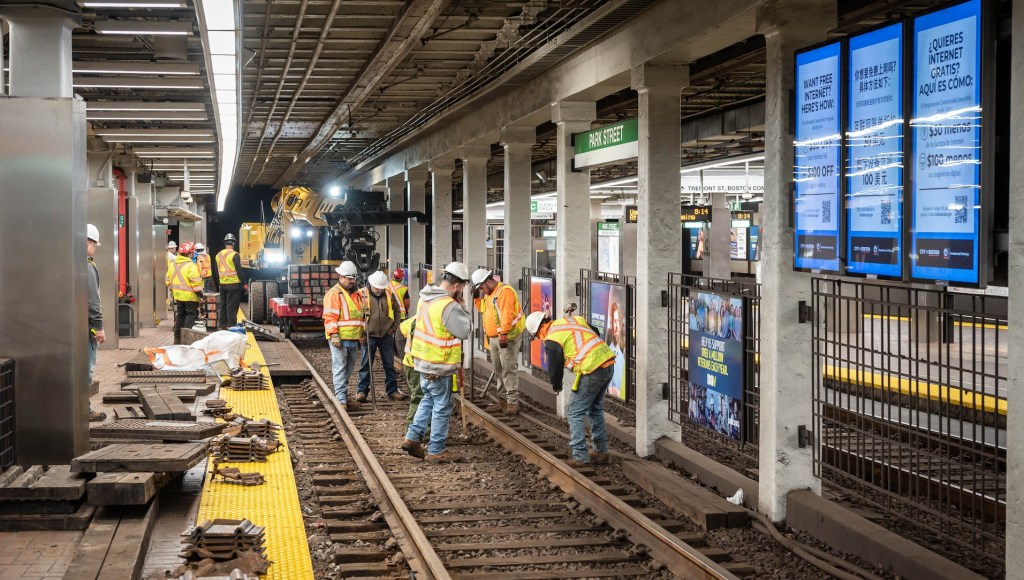
As we’ve reported previously, as of 2023, MBTA alone had a backlog of $24.5 billion worth of basic maintenance projects that were awaiting funding from the state government, and that backlog keeps growing as the agency’s buildings, tracks, and vehicles continue to get older.
Oil companies would get a windfall
The Governor’s proposed legislation would allegedly require gas stations to lower their prices to reflect the suspended tax, so that drivers will receive the full benefit of the tax cut.
Experts say that’s unlikely to happen, and extremely difficult to enforce in reality.
In a widely-cited study of a similar election-year gasoline tax break that happened in Illinois and Indiana in the summer and fall of 2006, economists Joseph Doyle and Krislert Samphantharak found that the temporary repeal of those states’ 5 percent gas taxes only produced a 3 percent reduction in prices at gas stations.
But when the gas taxes went back into effect, prices jumped back up by 4 percent.
Doyle happens to be a professor at MIT’s Sloan School of Management, and StreetsblogMASS reached out to him on Wednesday afternoon to get his take on the Governor’s proposal.
“When you put a tax on something, part of it gets passed on to consumers, and part of it gets absorbed by the sellers. The share that gets passed on is related to elasticity (how sensitive consumers and suppliers are to prices),” explained Doyle.
Conversely, when a tax goes away, prices go down – but suppliers will also have a powerful motive to raise their prices and pocket some of the tax cut for themselves.
Based on his findings from the midwest, Doyle estimates that about 70 percent of Gov. Healey’s proposed tax cut would make its way to consumers in the form of lower prices – about 17 cents per gallon, or $84 million out of the $120 million cost of the program.
But the remaining benefit – $36 million – would benefit the supply side: gas stations and oil companies.
Several Republicans in Washington have offered similar proposals to suspend the federal gas tax, and, like Governor Healey, their legislation would direct the Treasury to “use all applicable authorities to ensure the benefit of the reduction … is received by consumers.”
However, in a May policy brief, the Congressional Research Service observed that “such a provision may be difficult for the federal government to enforce, as it may require estimating what the price of gasoline in each locality would have been in the absence of a federal gasoline tax suspension.”
Doyle, the MIT economist, also cautioned that the relief will be slow in coming, and might not be particularly noticeable to consumers.
“We know that when oil prices go down, it takes a little while – gasoline prices are slow to adjust. But after a couple weeks, there should be a difference. Still, 24 cents off prices that are over $4 per gallon – this is not going to change your feeling at the pump very much,” said Doyle.
Ultimately, there are many factors that influence gas prices – and the 24 cent-per-gallon fuel tax that the Commonwealth collects is a relatively minor one.
After all, our neighbors in Rhode Island pay 40 cents per gallon in gasoline tax – 67 percent higher than the rate in Massachusetts – but average gas prices in the Ocean State this week are actually slightly lower than prices in Massachusetts, according to price data from the American Automobile Association.
Streetsblog has migrated to a new comment system. New commenters can register directly in the comments section of any article. Returning commenters: your previous comments and display name have been preserved, but you'll need to reclaim your account by clicking "Forgot your password?" on the sign-in form, entering your email, and following the verification link to set a new password — this is required because passwords could not be carried over during the migration. For questions, contact tips@streetsblog.org.