UMass Study: Rural Transit’s Economic Benefits Far Exceed Its Modest Costs
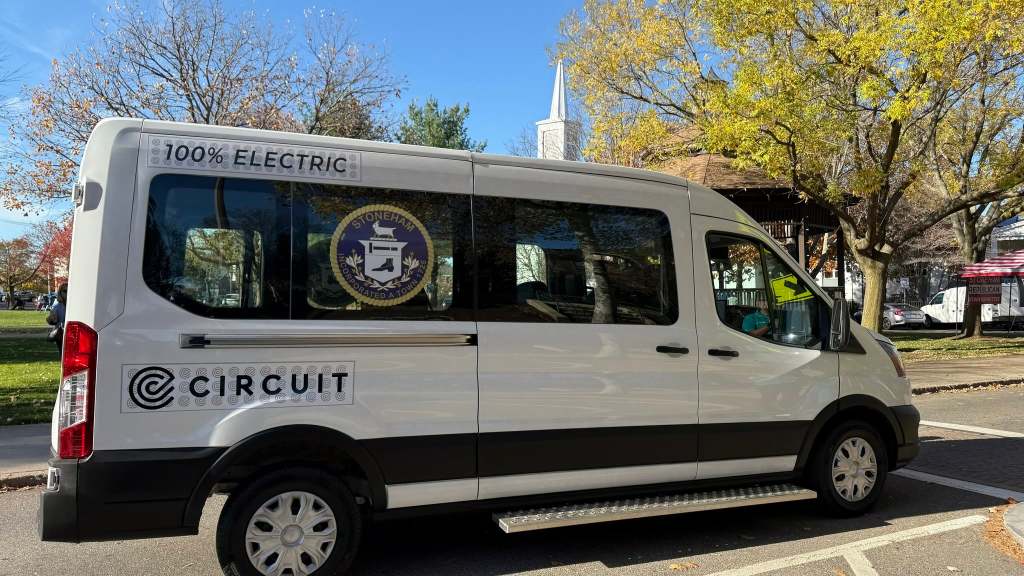
A suite of economic impact studies from Transportation for Massachusetts and the UMass Amherst Donahue Institute concludes that rural microtransit services generate millions of dollars’ worth in economic benefits each year for the small towns where they operate.
Operating in relatively rural regions, across large, mutli-town service areas, microtransit offers a hybrid between a scheduled bus route and an app-based ridesharing service like Uber and Lyft.
Riders typically book their rides in advance with a phone call or a mobile app.
The services offer a way for sparsely-populated communities – places that wouldn’t otherwise be able to sustain a regularly-scheduled bus route – to share a lower-cost public transportation option.
“Too often, transportation conversations in Massachusetts focus on the MBTA, while rural communities have few reliable ways to reach health care, work and other basic needs,” said Reggie Ramos, Executive Director of Transportation for Massachusetts, in a press release announcing the findings.
“These programs are lifelines, and this research shows they also strengthen local economies and deliver a strong return on investment,” Ramos argues.
Big benefits on shoestring budgets
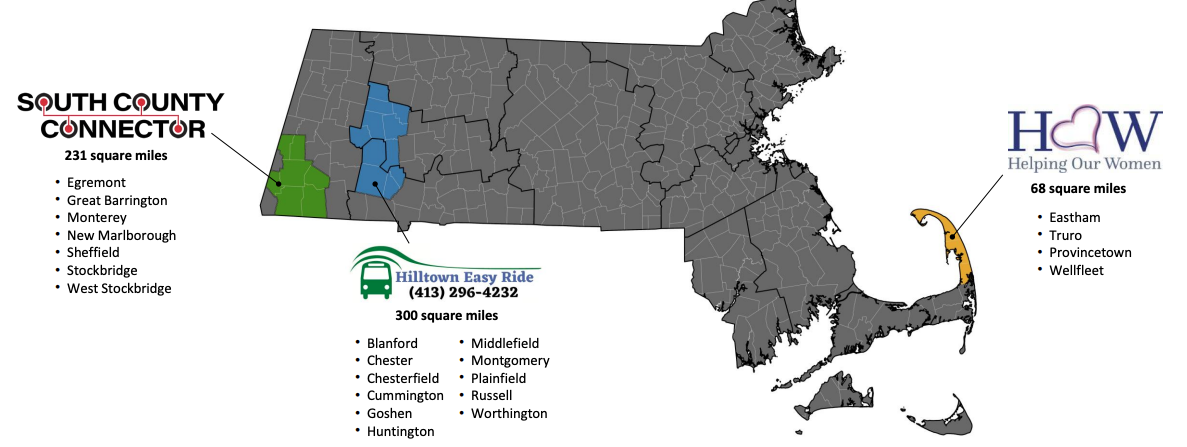
The South County Connector – the largest of the services studied, with 8 vans serving around 2,500 rides per month – operates on an annual budget of just $900,000.
MassDOT grants cover about two-thirds of the service’s budget, while fares and municipal contributions cover the rest.
UMass’s researchers concluded that the South County Connector generates over $8 million a year in economic benefits for southern Berkshire County – a 1200 percent return on the public’s investment.
The South County Connector supports around two dozen jobs in the region, by connecting workers to workplaces that would otherwise be inaccessible to them.
The Connector also generates roughly $3 million a year in health care savings, by connecting people with medical appointments they might otherwise miss.
Public transportation is a public health program
Roughly than half of the economic benefits from rural microtransit services accrue to better public health outcomes, UMass found.
Those benefits accrue to the clients who are healthier because they can access better health care, but taxpayers also benefit, with lower costs to public health insurance like Medicaid and Medicare.
Citing a 2005 federal Transportation Research Board report, UMass’s researchers note that reliable transportation to medical appointments helps people access more cost-effective preventative health care services – managing health problems before they become emergencies – and can manage certain chronic health conditions like heart disease and diabetes in a way that reduces costs for the health care system as a whole.
The UMass researchers note that one of the microtransit services they studied – the Helping Our Women vanpool on the Outer Cape – was founded in the 1990s “when a group of volunteers set out to support a local woman undergoing breast cancer treatment.”
In 2025, Helping Our Women provided approximately 1,100 trips, the majority of which (around 900) were for medical appointments. UMass estimates that those medical trips save clients and healthcare providers over $800,000 a year.
Uncertain funding creates an uncertain future
Transportation for Massachusetts has been lobbying the state legislature to recognize the value of rural transit services and commit a dedicated, reliable source of funding for services like these.
Governor Healey’s administration has funded numerous microtransit services across the state through MassDOT’s new Microtransit and Last Mile Transit Grant program.
That program has awarded a total of $15 million this year, with Fair Share funding from Governor Healey’s 2025 and 2026 supplemental budget bills.
For more reliable funding in the future, Transportation for Massachusetts has endorsed “An act establishing a special commission on micro-transit” (S.2873/H.4669).
The bill would, among other things, “assess funding sources and current limitations or outstanding funding needs” for the state’s microtransit programs.
Both the House and Senate version of the bill earned an “ought to pass” recommendation from the Joint Transportation Committee in February.
Since then, however, both versions of the bill have stalled in each chamber’s respective Ways and Means committees.

Read More:
Streetsblog has migrated to a new comment system. New commenters can register directly in the comments section of any article. Returning commenters: your previous comments and display name have been preserved, but you'll need to reclaim your account by clicking "Forgot your password?" on the sign-in form, entering your email, and following the verification link to set a new password — this is required because passwords could not be carried over during the migration. For questions, contact tips@streetsblog.org.