Poll Finds Overwhelming Public Support for Worcester’s Fare-Free Buses
A new MassINC poll of residents who live in the greater Worcester region found that the public overwhelmingly supports the city’s fare-free bus program, which as been in place since the beginning of the Covid-19 pandemic.
In a survey of 500 people living in the 16-town service area of the Worcester Regional Transit Authority (WRTA), pollsters asked “how much would you support or oppose continuing fare-free service on the WRTA?”
54 percent of respondents said that they “strongly support” fare-free service, and another 16 percent said that they “somewhat support” it.
Just 21 percent of respondents said that they “stongly” or “somewhat” opposed the policy.
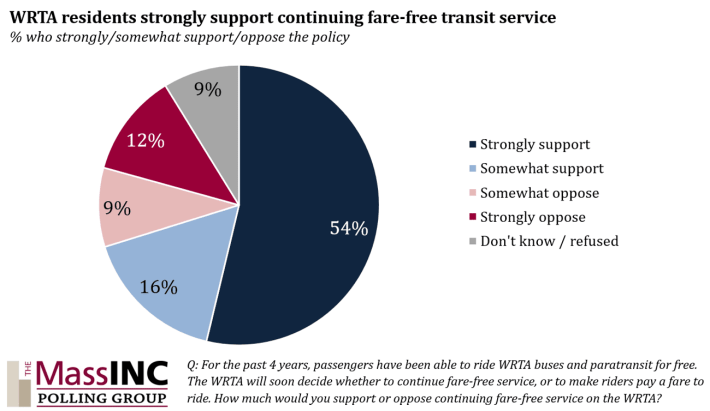
In a press statement accompanying the poll results, Richard Parr, Senior Research Director of The MassINC Polling Group, observed that “it’s pretty unusual to see an outright majority ‘strongly support’ any public policy. Free fares seem to be an idea that residents see as working and that they want to continue.”
Ridership data show that Worcester’s fare-free buses have been more successful at retaining riders compared to other transit agencies in the Commonwealth, in spite of the agency’s struggles to recruit and retain bus drivers.
The 2024 state budget gave the WRTA and other regional transit authorities – the transit operators that serve areas of the Commonwealth outside of the MBTA service area – a major increase in state funding. Lawmakers earmarked some of those funds specifically for expanded fare-free transit programs.
In their budget proposal for 2025, the Healey administration has proposed flat-funding the state’s financial support for fare-free programs, which would amount to a 2 to 3 percent budget cut when inflation is taken into account.
Streetsblog has migrated to a new comment system. New commenters can register directly in the comments section of any article. Returning commenters: your previous comments and display name have been preserved, but you'll need to reclaim your account by clicking "Forgot your password?" on the sign-in form, entering your email, and following the verification link to set a new password — this is required because passwords could not be carried over during the migration. For questions, contact tips@streetsblog.org.