Governor’s Task Force Has A Plan to Dodge the T’s Fiscal Crisis, But Only for the Short Term
Members of the Governor’s transportation funding task force have come up with a plan to shore up the MBTA’s finances and avoid layoffs and service cuts for the next year, but major questions still remain about how to fund the state’s transportation infrastructure for the longer term.
“It’s a really good starting position,” Brian Kane, the executive director of the MBTA Advisory Board and a member of the task force, told StreetsblogMASS on Tuesday afternoon, after the task force convened for its final meeting.
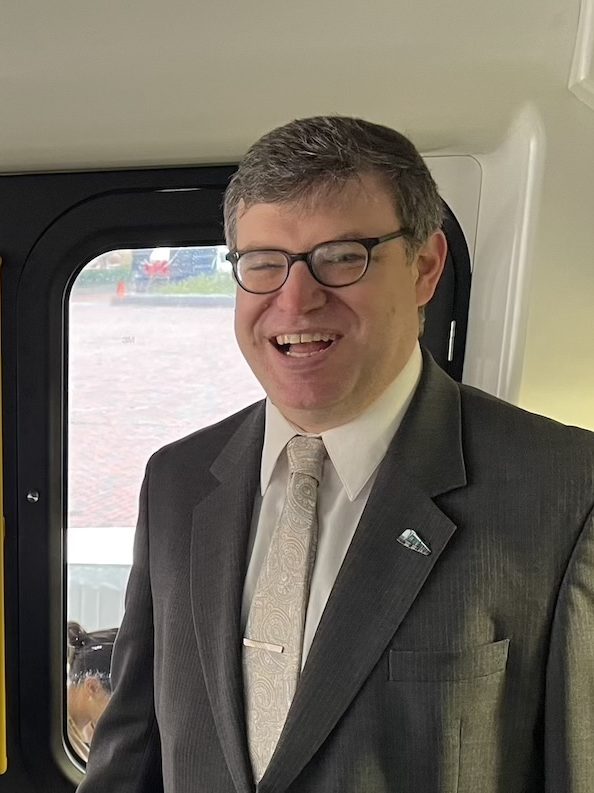
“It puts us in a solid place to stabilize us for the next three to four years, and then we have to continue the conversation for the longer term,” said Kane.
Governor Healey created the transportation funding task force in an executive order nearly one year ago, a few weeks after the T published an assessment of its infrastructure maintenance needs that concluded it would take nearly $25 billion to attain a “state of good repair” for the transit system.
The Governor directed the task force to “review current and projected revenue sources for transportation funding and consider their adequacy to meet long-term transportation funding needs.”
Short-term deficits vs. long-term needs
Governor Healey and Lt. Gov. Kim Driscoll joined the task force for over an hour on Tuesday afternoon at the group’s final meeting.
According to Kane, the administration now has a plan to fix the MBTA’s operating budget shortfall – which had been forecast to be around $700 million for the upcoming fiscal year – with an increased infusion of funds from the state’s new Fair Share income tax surcharge.
“There will be no service cuts, no layoffs, and no fare increases, and if nothing else, that’s a positive thing,” Kane told StreetsblogMASS.
The Fair Share tax, which voters endorsed in 2022, levies a higher income tax rate on household income that exceeds $1 million a year.
In 2024, state budget planners conservatively budgeted to spend $1 billion in Fair Share revenue, with any excess tax collected going toward one-off capital projects and a Fair Share reserve fund.
But in fact, the state ended up collecting $2.2 billion in Fair Share revenue that year, which makes considerably more money available for transportation and education programs.
On Thursday morning, state budget officials issued their annual budget revenue forecast, which predicted that the Fair Share surtax would generate $2.4 billion next year.
Of that, they propose to budget $1.95 billion for education and transportation spending – up from $1.3 billion last year (a 50 percent increase).
Notably, the difference between $1.95 billion and $1.3 billion is $650 million – roughly the same size as the MBTA’s expected budget shortfall.
However, Kane warned that the task force has not come up with a plan to address the MBTA’s $25 billion “state of good repair” bill to fix aging bridges, stations, and bus garages.
The T finances those projects in a separate capital budget. In previous years, Governor Healey’s administration has used a considerable portion of Fair Share revenues to pay for the MBTA’s capital spending, and it’s unclear how increased Fair Share funding for the T’s operational budget would affect those investments.
Kane told StreetsblogMASS that congestion pricing – which recently launched in New York City – came up as a topic of discussion at Tuesday’s meeting as a potential long-term solution that merits further conversation.
Key details remain uncertain
The precise details of how this plan will work remain cloudy, even to budget experts like Kane.
“We all will get more details over the next few weeks as the Governor gears up for the State of the Commonwealth address (scheduled for January 16th) and presents her budget proposal,” said Kane.
The task force had been instructed to deliver a written report of its recommendations to the Governor by December 31st, 2024.
Kane told StreetsblogMASS that that report is still being edited, but should be delivered within the next few weeks.
This story was updated on Thursday, Jan. 9 to add new information in the middle section on the Commonwealth’s Fair Share revenue forecasts.

Read More:
Streetsblog has migrated to a new comment system. New commenters can register directly in the comments section of any article. Returning commenters: your previous comments and display name have been preserved, but you'll need to reclaim your account by clicking "Forgot your password?" on the sign-in form, entering your email, and following the verification link to set a new password — this is required because passwords could not be carried over during the migration. For questions, contact tips@streetsblog.org.