Snow Piles Reveal Pointless Pavement In the Wake of the Storm
Editor’s note: this is an updated version of a story we originally published in 2020.
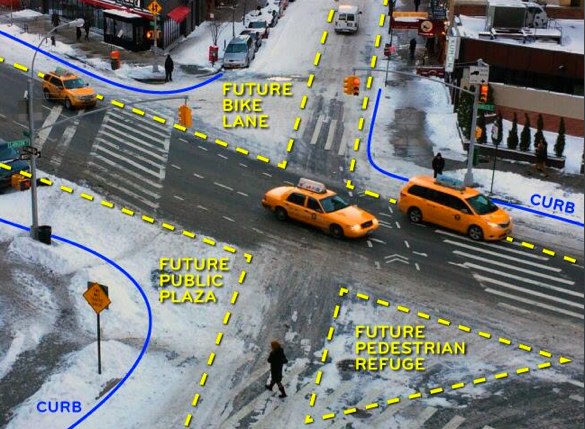
Last week’s big snowstorm created major hassles for pedestrians trying to navigate buried sidewalks, but there’s one silver lining: it’s also slowing down dangerous drivers by narrowing roadways and forcing people to make slower, more careful turns at intersections.
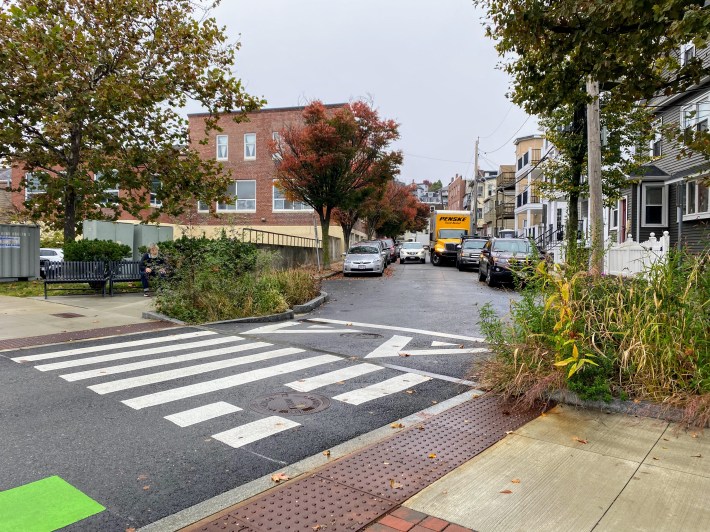
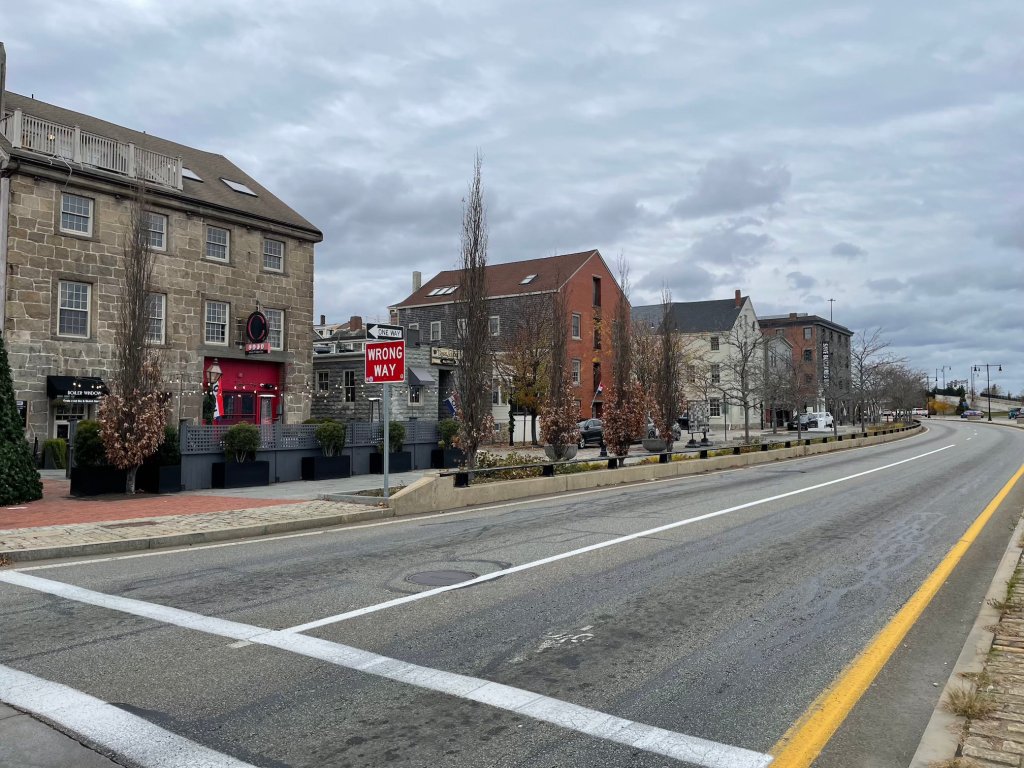
Traffic engineers will sometimes move curbs to install “neckdowns” that encourage drivers to slow down. As an added bonus, those neckdowns also swap out asphalt for wider sidewalks with space for amenities like benches, gardens, and bus stops.
Last week’s storm implemented thousands of “sneckdowns” (a “snow neckdown”) on virtually every street in the Commonwealth.
They might not last much longer, but the piles of snow that remain on our streets eight days after the snow stopped falling reveal the parts of our cities where pavement might not be a priority.
Streetsfilms editor Clarence Eckerson first documented “naturally occurring neckdowns” in 2006.
“The snow is almost like nature’s tracing paper,” Eckerson told the BBC in 2014. “It’s free. You don’t have to do a crazy expensive traffic calming study. It provides a visual cue into how people behave.”
Readers: do you have any sneckdowns in your neighborhood? Snap a photo and email it to christian [at] streetsblog.org, or post it and tag us on Instagram or Bluesky; we’ll post a compilation later this week.

Read More:
Streetsblog has migrated to a new comment system. New commenters can register directly in the comments section of any article. Returning commenters: your previous comments and display name have been preserved, but you'll need to reclaim your account by clicking "Forgot your password?" on the sign-in form, entering your email, and following the verification link to set a new password — this is required because passwords could not be carried over during the migration. For questions, contact tips@streetsblog.org.