Gov. Healey Files Legislation to Regulate Higher-Speed Motorbikes and Scooters
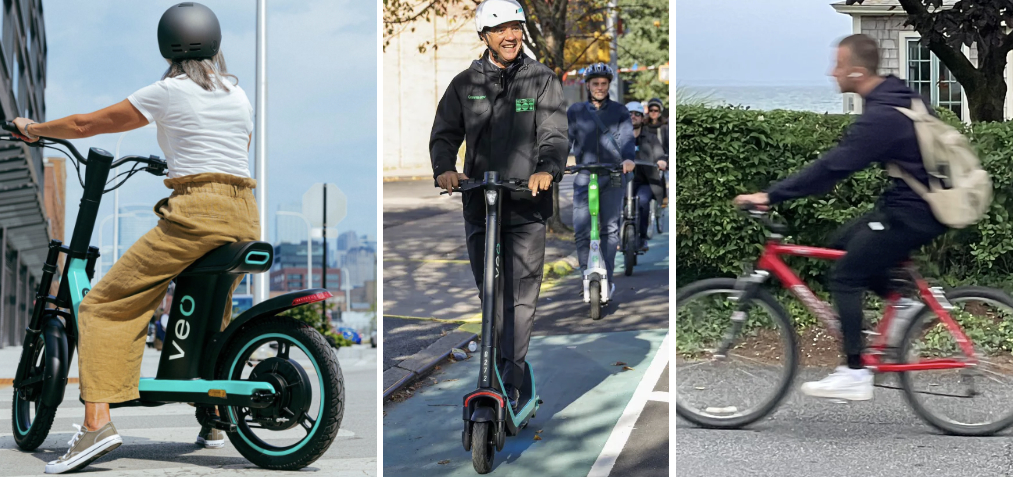
On Monday, Governor Maura Healey today submitted “an Act to enhance the safe use of micromobility devices,” a bill that would provide clearer definitions and regulations for powered personal transportation devices like e-bikes, scooters, and mopeds.
“Micromobility is already a part of how people get to work, school and around their communities, but right now, the rules are unclear and inconsistent,” said Governor Maura Healey in a press release announcing the new bill. “We are seeing too much reckless behavior, more crashes and close calls, and too many people, especially pedestrians and young riders, are at risk.”
“This bill is about protecting people and preventing tragedies before they happen,” the Governor continued. “The Ride Safe Act will establish clear safety rules, hold riders accountable, reduce congestion and make our roads safer for everyone.”
The bill would enact several recommendations from the Massachusetts Special Commission on Micromobility, which issued its final report this winter after a year’s worth of work.
That commission issued 16 public policy recommendations, including several that would more precisely define and regulate different kinds of small electric vehicles based on their maximum speeds and engine power.
The Governor’s proposed legislation embraces one of the Commission’s recommendations: a speed-based, four-tier framework, which would impose more stringent safety requirements for faster, more powerful vehicles.
The Governor’s office claims that this is a “first-in-the-nation” approach to regulating a proliferating array of personal mobility devices.
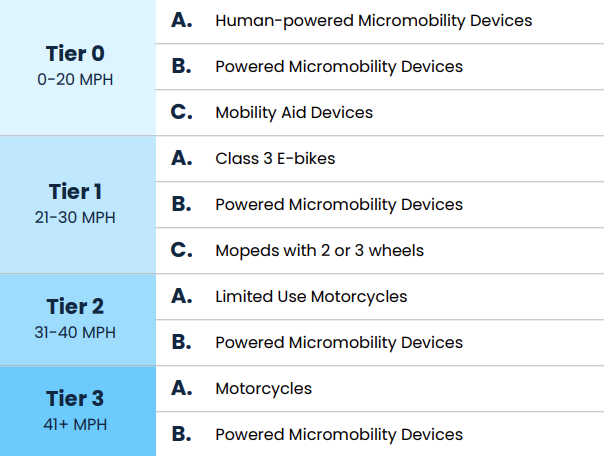
The bill specifically would not impose any new regulations on “Tier 0” vehicles, which include most pedal-assist e-bikes whose electric motors cease operating above 20 mph.
The bill’s language says that “tier 0 micromobility devices, and the operator of a speed tier 0 micromobility device, shall be afforded all of the rights and privileges, and shall be subject to all of the duties, of the operator of a bicycle or duties related to a bicycle” established in existing laws.
The bill does not specify any registration or licensure requirements for higher-speed devices, but it would give the Registrar of Motor Vehicles broad latitude to introduce their own rules without the legislature’s involvement.
“The registrar may promulgate regulations establishing registration, licensure, insurance, fines and other requirements for micromobility devices necessary to promote public and roadway safety,” according to the bill’s text.
The Governor’s bill also calls for yet another micromobility working group that would “develop recommendations for a regulatory scheme and additional legislation” by 2027.
The working group would also be tasked with improving crash reports that involve motor vehicles and users of micromobility devices – another recommendation from the special commission.
“You need better data to understand the impacts of what’s happening on the street and get a better sense of what’s happening out there,” says Brendan Kearney, who served on the commission in his role as executive director of WalkMassachusetts. “The number one public safety threat isn’t e-bikes, it’s people who are driving cars and trucks.”
In other words, Massachusetts could be a safer place if more people used bikes and scooters instead of 4,000-pound pickup trucks and SUVs.
The commission was “thinking about expansion, and increasing the ability to get around without a motor vehicle,” said Kearney. “It’s not all about regulating the device, it’s also about creating safer spaces where people can get around without a car.”
Kearney notes that the Governor’s bill would only implement a handful of the commission’s 16 recommendations.
Several other more comprehensive ideas that aimed to improve safety – including implementing automated enforcement cameras, increased funding for safer street infrastructure, and stricter legal liability standards for motor vehicle operators – aren’t included in the Governor’s proposal.

Read More:
Streetsblog has migrated to a new comment system. New commenters can register directly in the comments section of any article. Returning commenters: your previous comments and display name have been preserved, but you'll need to reclaim your account by clicking "Forgot your password?" on the sign-in form, entering your email, and following the verification link to set a new password — this is required because passwords could not be carried over during the migration. For questions, contact tips@streetsblog.org.