MBTA Board Meeting Recap: Bus Lane Enforcement Cameras Go Live Next Week
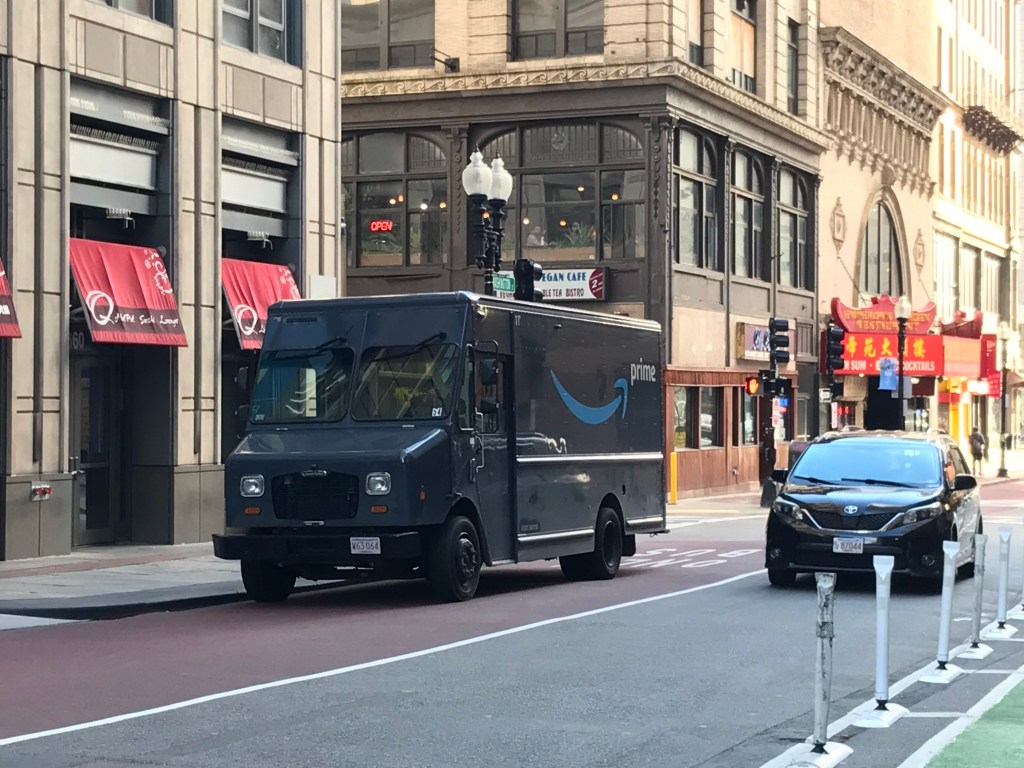
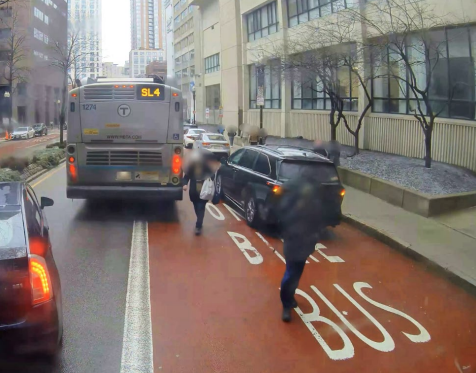
The MBTA’s new automated camera enforcement program, which will capture and issue fines to the owners of vehicles caught blocking bus stops and dedicated bus lanes, will go live with a soft launch next Thursday, October 1.
For the first few weeks, the camera systems will only issue warnings to scofflaw car owners, and will only be installed on the Silver Line 4 and 5 routes, which operate between downtown Boston and Nubian Square.
The system will start issuing its first fines at the start of the new year.
Alex Hallowell, the T’s Director of Transit Priority, delivered an update on the program’s implementation at the MBTA board of directors monthly meeting on Thursday afternoon, and discussed the results of a test phase for the system earlier this year.
The trial phase installed cameras on just four Silver Line 4 and 5 buses for a 30-day period in February. During the trial, those four buses captured about 26,500 bus stop and bus lane violations – an average of 220 violations per bus per day.
Hallowell said that bus operators are especially eager to have the new system online.
“Last year we went to an operator town hall, which is a particularly large gathering of operators out at Cabot garage,” said Hallowell. “And when we told them that we would finally be launching automated camera enforcement, it was the first time I’ve ever received a standing ovation in my career.”
$200 Million for new regional rail trains
At the same meeting, the board also voted to formally transfer $200 million from MassDOT to the T as part of the new transportation bond bill that we covered earlier this summer.
The new law – Chapter 100 of the Acts of 2026 – leverages future Fair Share funds to borrow $1.4 billion for various statewide transportation projects, including $200 million for the T.
The T is planning to use some of that funding to buy 20 new locomotives for its regional rail system, which still relies on some equipment that was originally built in the 1970s.
10 of those new train engines would run on electric power through overhead wires and on-board batteries. Those locomotives could run on the Providence Line – which already has overhead power for Amtrak’s Northeast Regional trains – and on its various branches.
The other 10 would have fossil-fueled diesel engines, and would operate on lines where the T still hasn’t installed overhead electrical power.