Memo For the #ClimateStrike: Cars and Trucks Generate Most of New England’s Pollution
Tomorrow morning, thousands of students from all over Massachusetts will leave their classes to converge in Boston’s City Hall Plaza and demand a meaningful response to the climate emergency as part of the Global Climate Strike movement.
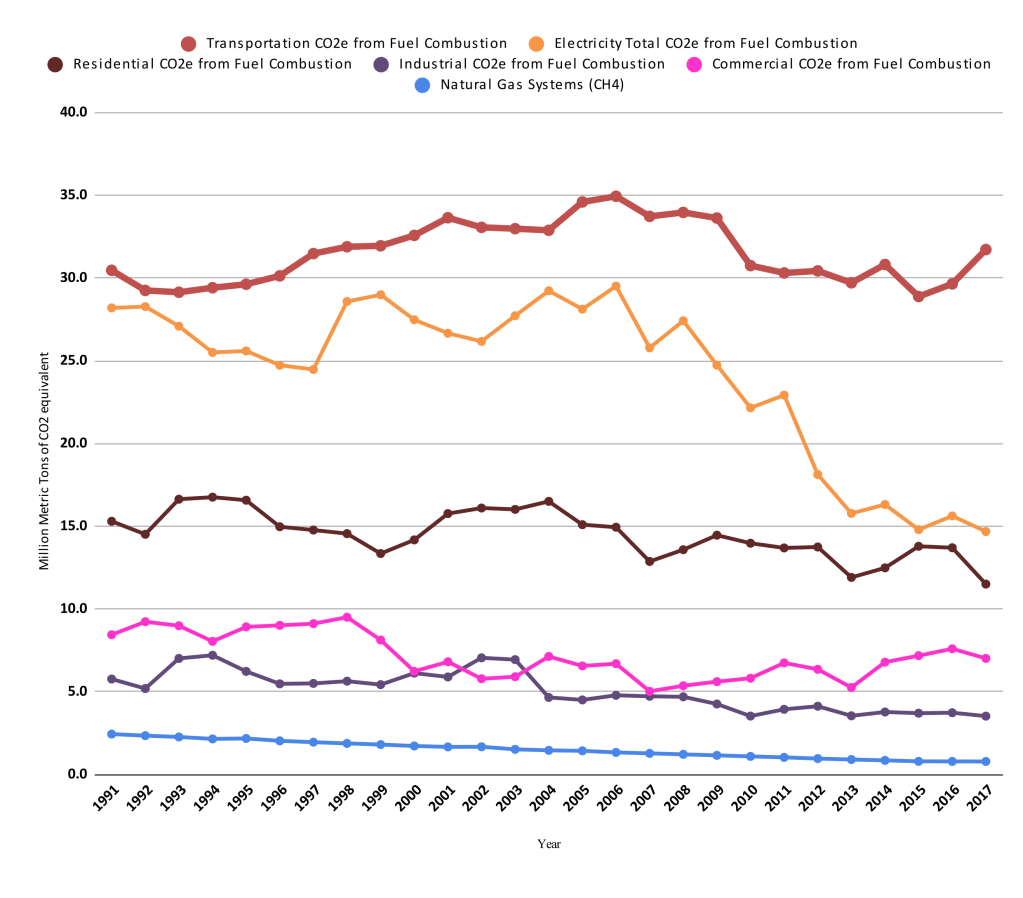
In Massachusetts, meaningful action against climate change will require leaders in the State House and in municipal governments all over the state to rein in the use of cars and trucks, which are the biggest source of the state’s climate-heating pollutants (see chart above).
Massachusetts has been effective in promoting energy efficiency in other sectors. The state’s power plants, homes and businesses have all made significant progress in cutting energy use and shifting to renewable sources of power.
But the state has so far failed to make similar progress in its transportation systems.
In fact, pollution levels have been trending upwards in recent years, in spite of improving fuel efficiency in new cars and generous incentives for electric vehicles, because Massachusetts residents are driving more and causing more traffic jams. And electric cars, which are forecast to remain a small portion of vehicles on the road for many years to come, won’t be anywhere near sufficient to the task of cutting emissions by half in the next decade, when action is most urgent.
Political leaders and transportation bureaucrats have plenty of great reasons to design safer streets that accommodate fewer cars. It would make our cities safer from violent drivers who kill and maim innocent people daily, and from the deadly pollution-related chronic diseases that disproportionately impact people of color. It would make our cities more equitable, and save us from wasting thousands of hours stuck in stressful traffic jams instead of in our jobs or with our families.
So, after we march on Beacon Hill tomorrow, let’s double down on holding local and state officials accountable – at every opportunity – by demanding serious changes to the state’s transportation policies. To survive the climate emergency, Massachusetts needs to put an end to the failed, climate-baking highway engineering of the 20th century, and instead start building for a future with fewer cars.
Event details: Boston Climate Strike
Friday, Sept. 20, 2019
Rally at City Hall Plaza begins at 11:30 a.m.; march to the State House at 1 p.m.
RSVP here.

Read More:
Streetsblog has migrated to a new comment system. New commenters can register directly in the comments section of any article. Returning commenters: your previous comments and display name have been preserved, but you'll need to reclaim your account by clicking "Forgot your password?" on the sign-in form, entering your email, and following the verification link to set a new password — this is required because passwords could not be carried over during the migration. For questions, contact tips@streetsblog.org.