‘People Before Highways’ Author Picked to Head Boston’s New Equity Cabinet
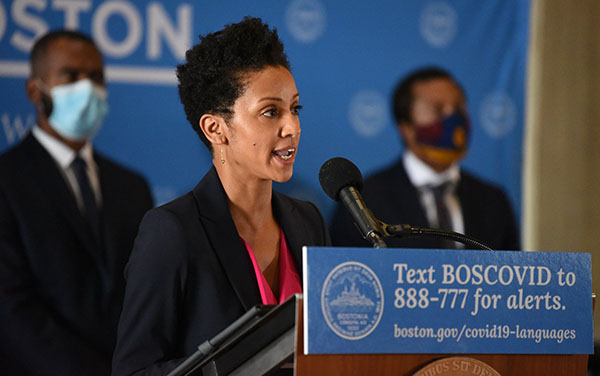
Dr. Karilyn Crockett, a Lecturer in Public Policy & Urban Planning at MIT and author of People Before Highways, will lead the City of Boston’s efforts to promote equity and racial justice in city government as Mayor Walsh’s new Chief of Equity.
Dr. Crockett will lead a new cabinet-level office, which Mayor Marty Walsh announced last week after a contentious budget debate. The new office is being described as a cross-departmental effort “to embed equity into all city work” and dismantle racism by “supporting communities of color and marginalized groups across all departments, and building equitable governmental structures to sustain this work,” according to a city press release.
Mayor Walsh announced Dr. Crockett’s appointment at a press event on Monday.
“Karilyn is one of the most intelligent people I know, and I am so honored to welcome her back to city government to take the helm of this new role,” said the Mayor. “I am confident that with her leadership, together we will combat systemic racism and inequities in every single way that city government touches people’s lives.”
Dr. Crockett joined StreetsblogMASS earlier this month to discuss her book, People Before Highways, a chronicle of anti-highway activist movements in the Boston region in the 1960s. The book was the inaugural pick for the StreetsBooksMASS book club.
During the conversation, Dr. Crockett, who grew up in Dorchester, discussed how the kinds of questions raised in the region’s 1960s anti-highway movement are still relevant today, as communities of color still struggle with the economic and environmental impacts of 20th-century urban renewal and highway construction projects.
“There’s a question about what infrastructure do we need, whom does it serve, and to what end?” asked Dr. Crockett. “And what do you do with those kinds of questions in the midst of a climate crisis? Now we have to ask very different questions about the kind of infrastructure that we intend to build, who it serves, and how we can save our lives.”

Read More:
Streetsblog has migrated to a new comment system. New commenters can register directly in the comments section of any article. Returning commenters: your previous comments and display name have been preserved, but you'll need to reclaim your account by clicking "Forgot your password?" on the sign-in form, entering your email, and following the verification link to set a new password — this is required because passwords could not be carried over during the migration. For questions, contact tips@streetsblog.org.