MassDOT Starts Planning For Tobin Bridge Replacement
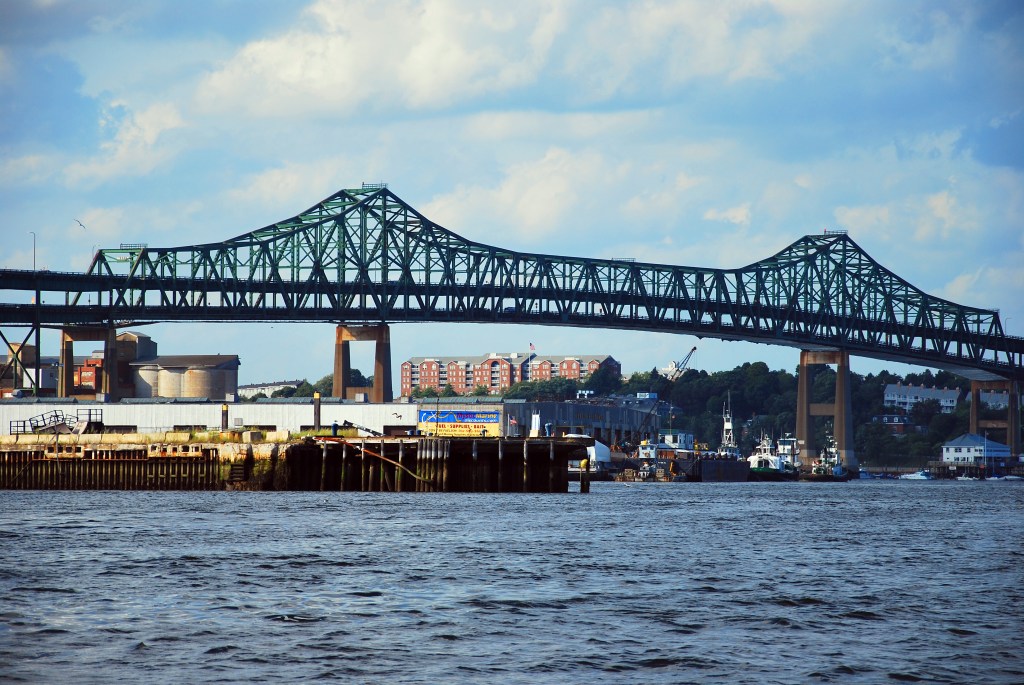
MassDOT has begun the process of planning a replacement for the 73-year-old Tobin Bridge, one of the largest bridges in New England and a major regional connection for the greater Boston region.
“This week MassDOT will release a request for proposals (RFP) to procure a transportation planning and engineering consultant team to develop and evaluate options for the eventual replacement of the Tobin Bridge,” said MassDOT Secretary Monica Tibbits-Nutt at today’s meeting of the MassDOT Board of Directors.
The Tobin Bridge carries Route 1 over the Mystic River. It was built between 1948 and 1950 with three lanes for motor vehicle traffic on an upper deck for southbound traffic and a lower deck for northbound traffic.
The bridge has no sidewalks or bike paths, which means that thousands of car-free residents in the region must rely almost exclusively on the 111 to travel the 1.5 miles between downtown Chelsea and downtown Boston (the nearest bridge crossing that does allow walking or biking is over a mile upstream, on Boston’s Alford Street bridge).
MassDOT’s updated design standards would require adequate facilities for bike and pedestrian traffic, as well as accommodation for bus traffic, on any new replacement bridge.
The bridge carries around 84,000 vehicles on a typical weekday, including one of the MBTA’s busiest bus routes, the 111, which serves over 7,000 riders a day.
During the pandemic, MassDOT created a dedicated southbound bus lane across the Tobin Bridge to benefit the 111 and several privately-operated intercity bus routes; as we reported here earlier this month, the agency’s data indicate that the improved bus service has improved travel times across the bridge for everyone, including motor vehicle drivers in the bridge’s other two lanes.
Because of its size and its age, the current Tobin Bridge requires near-constant maintenance work. In 2021, the MassDOT Board of Directors approved an $18 million contract for structural repairs; at Wednesday’s meeting, the MassDOT Board approved another $109 million dollar repair contract.
“Repairs are not a permanent solution, that’s why we are releasing the (request for proposals),” said Tibbits-Nutt.
She added that the study will “help us think and gather perspective on the bridge’s future while it is still in good working order.”
After MassDOT engages a consultant, the study is anticipated to take about 24 months with “a robust public engagement process,” said Tibbits-Nutt.
Streetsblog has migrated to a new comment system. New commenters can register directly in the comments section of any article. Returning commenters: your previous comments and display name have been preserved, but you'll need to reclaim your account by clicking "Forgot your password?" on the sign-in form, entering your email, and following the verification link to set a new password — this is required because passwords could not be carried over during the migration. For questions, contact tips@streetsblog.org.