Trump’s U.S. DOT Is Rolling Back Safety Rules Meant to Protect the Public
This story was originally published by ProPublica, where former Streetsblog reporter Jesse Coburn now works.
On its face, the rule proposed in July by the country’s pipeline-safety regulator seemed innocuous. The regulator, a division of the U.S. Department of Transportation called the Pipeline and Hazardous Materials Safety Administration, was proposing what looked like minor, bureaucratic changes to its process for issuing regulatory waivers. Between the lines, agency watchers saw a much more consequential effort — one that would curtail the power of agency experts to impose conditions aimed at preventing catastrophic pipeline failures.

The rule was signed by Ben Kochman, whom the administration of President Trump appointed as deputy administrator of the agency. In the proposal, Kochman noted that the Interstate Natural Gas Association of America, a powerful pipeline industry group, had criticized the policy that the new rule would change. It went unmentioned that Kochman was a director of that same trade group until January.
“You hear of the phrase ‘the fox guarding the henhouse,’” said Bill Caram, executive director of the Pipeline Safety Trust, an advocacy group. “What we’re worrying about in this situation is the fox designing the henhouse.”
The rule is part of a much larger rollback of regulations at the DOT under the second Trump administration. The agency’s new leaders have touted this rollback as cutting red tape and encouraging innovation. But dozens of the regulations they have targeted sought to prevent deaths and injuries in the nation’s transportation and infrastructure systems.
The DOT’s sprawling regulatory domain stretches from air traffic control to highway and train safety to maintenance of oil pipelines and rules governing autonomous vehicles. In recent months, the agency has scrapped possible limits on subway and bus driver hours meant to keep them from falling asleep at the wheel; delayed a requirement that airplanes be equipped with an extra cockpit barrier to prevent 9/11-style takeovers; nixed a planned mandate for safer motorcycle helmets; proposed exempting school bus child-restraint systems from new crash-protection requirements; and postponed a rule that freight trains transporting hazardous materials carry emergency oxygen masks to protect crews.
In total, ProPublica identified 30 regulatory actions taken by the DOT under the new administration that current and former agency officials as well as safety advocates said are at odds with the agency’s mission to protect the public. Some of the regulations targeted by the new administration were required by federal legislation. Five of the targeted regulations could prevent as many as 1,000 deaths and 40,000 injuries each year, according to the agency’s own prior estimates.
“The regulations are written in blood,” said John Putnam, the agency’s general counsel during the administration of former President Joe Biden. “Most of them are driven by a tragedy that resulted in the loss of life.” But industry groups objected to many of the rules as unjustified or burdensome and pushed for, or later commended, the DOT’s recent changes to them.
The DOT’s safety enforcement has dropped dramatically as well. In the first eight months of Trump’s second term, the agency opened 50 percent fewer investigations into vehicle safety defects, concluded 83 percent fewer enforcement cases against trucking and bus companies and started 58 percent fewer pipeline enforcement cases compared with the same period in the Biden administration, agency data shows. The agency has also proposed allowing subjects of DOT enforcement actions to bypass career staff and appeal directly to Trump appointees.
Overseeing these decisions are dozens of political appointees who previously worked for industries regulated by the DOT. The agency’s top posts are now occupied by lobbyists and consultants, former airline and railroad CEOs, alumni of autonomous vehicle technology startups and shipping and infrastructure firms, and ex-lawyers for pipeline and trucking companies. Some of the appointees previously battled against the DOT divisions they now control. Some took industry jobs after prior stints at the agency and have now cycled back into the upper ranks of the DOT.
ProPublica identified 32 political appointees at the DOT with industry ties, including 11 who recently held investments in transportation companies and adjacent industries. Those appointees disclosed between $12 million and $52 million in stock holdings and other financial interests in airlines, railroads, oil and gas corporations, transportation technology firms and other businesses whose work is close enough to the agency’s purview that the appointees pledged to divest or recuse themselves from matters involving those companies. Such investments by DOT leadership may be far greater, but financial disclosures are not publicly available for all of the appointees. The agency has not fulfilled a request by ProPublica for any disclosure filings from other appointees that are subject to release under federal law.
ProPublica’s findings are based on a review of hundreds of rulemaking documents as well as internal agency emails, financial disclosures, legal filings and other records. ProPublica also interviewed safety advocates and researchers as well as 19 current and former DOT officials, most of whom spoke on the condition of anonymity for fear of retribution from the administration.
Some degree of industry presence at the DOT is common, even desirable, those officials noted. The agency’s regulatory responsibilities are vast, often involving arcane technical matters for which the input of engineers and operators is essential. Many of the DOT’s recent deregulatory moves are backed by lengthy justifications from the administration or industry groups, and safety advocates do not view all of them as equally consequential.
DOT spokesperson Nate Sizemore said in a statement that “safety comes first” at the agency under its new leadership. “The insinuation that slashing duplicative and outdated regulations contradicts that mission isn’t just wrong — it ignores the fact that doing so enhances focus on enforcing the key rules that actually keep the American people secure.” (He disputed that the pipeline rule signed by Kochman would reduce the agency’s regulatory authority.) Regarding the industry ties of agency leadership, he added: “ProPublica’s gross smears are flat out lies, and these attacks on our exceptionally qualified staff are a shameful attempt to fearmonger.” He did not respond to a question about what the agency viewed as lies or answer other detailed questions.
The breadth and speed of the rollbacks are unprecedented, according to Marc Scribner, a senior transportation policy analyst at Reason Foundation, a libertarian think tank, who studies the agency’s regulatory activity. “We haven’t seen deregulatory rulemaking volume at U.S. DOT like this before,” Scribner said.
And the number of DOT appointees who hail from industries they now regulate is also raising eyebrows among some agency veterans. “Historically Republicans have been more business focused, Democrats have been more public transportation and public interest and safety focused,” said one former senior DOT official. “What you’re seeing this time around is the industry focus on steroids.”
Safety advocates and former agency officials fear this will lead to deaths and injuries that could be prevented. “The consequence of this, of pulling back on these safety regulations, is that more daughters, mothers, children, bread winners are going to lose their lives,” said Barbara McCann, a former senior DOT safety official who served in Democratic and Republican administrations. “Government is here to safeguard people, protect people, and the new leadership at DOT is not performing that role.”
Trucking safety regulations delayed
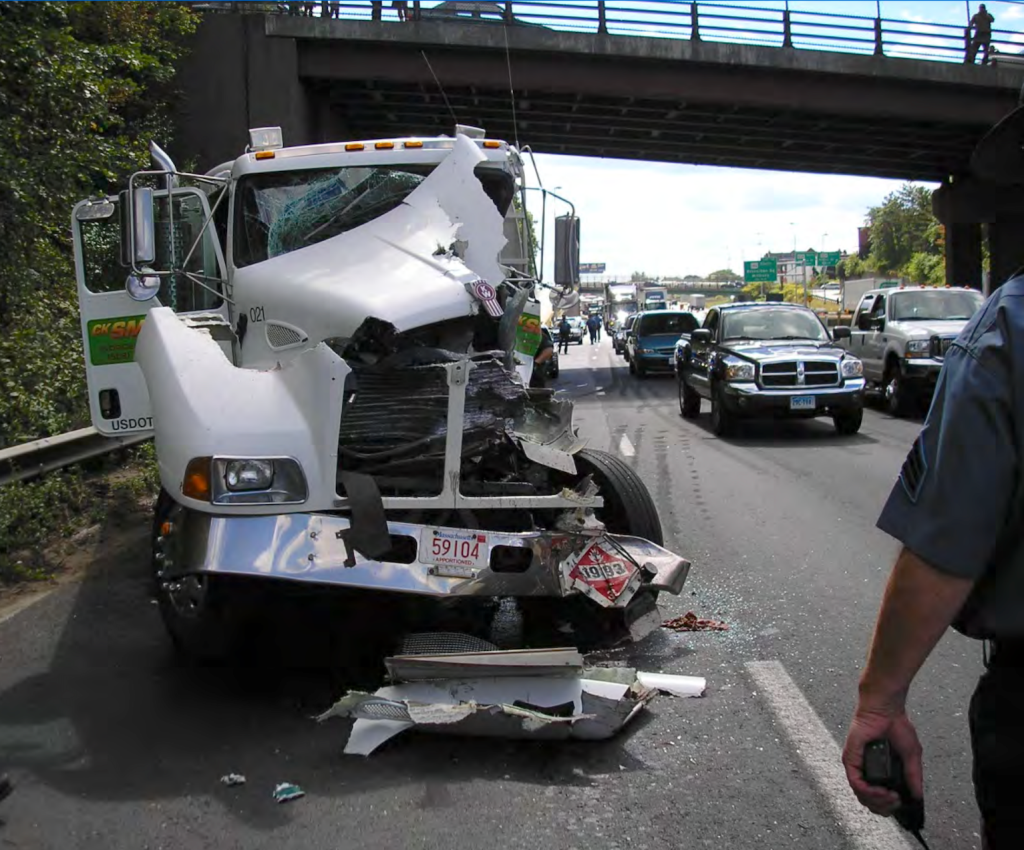
Transportation Secretary Sean Duffy frequently says safety is his “top priority.” But that rings hollow to Gary Wilburn. It calls to mind a sunny morning 23 years ago when Wilburn, then a volunteer firefighter, came upon the charred remains of a driver.
Wilburn had responded to a crash on an interstate in western Oklahoma. The deceased man, a subsequent investigation would show, was stopped in traffic on his way home from college when a semitruck traveling an estimated 75 miles per hour smashed into his Chevrolet Camaro from behind, crushing it and causing it to burst into flames. Wilburn was on the scene for 45 minutes before finding the Camaro’s license plate and realizing the victim was Orbie Wilburn, his 19-year-old son. His body had been burned beyond recognition.
Since then, Wilburn and his wife, Linda, have spent decades advocating for stronger truck safety regulations through letter-writing campaigns and conversations with members of Congress. One of their primary goals has been to secure a federal requirement for devices in big rigs that prevent them from speeding. By 2016, it seemed their efforts would finally pay off: The U.S. Department of Transportation proposed a rule mandating speed limiters in trucks like the one that killed their son. Studying possible maximum speeds of 60, 65 and 68 miles per hour, the agency estimated the regulation could prevent up to 500 deaths and 10,000 injuries each year.
But many truckers hated the idea. The devices would force them to travel slower than surrounding traffic, which could itself be dangerous, they argued. Less discussed was that many truckers are paid per mile, which means the faster they go, the more money they can make.
The rule stalled for years before seeming to be revived in 2022 when the Biden administration put it back in play. Then Trump appointees returned to the DOT.
“We want D.C. bureaucrats OUT of your trucks so we’re eliminating the absurd speed limiters rule,” Duffy posted on social media in July. The rule was dead.
“It just is heartbreaking,” Linda Wilburn told ProPublica. “It has potential to save lives.”
The agency has drawn less attention to other road and vehicle safety regulations that it has targeted. In September, the DOT quietly signaled that it was delaying two possible rules, one for side underride guards on heavy trucks to prevent cars from getting crushed underneath them, another for additional seat belt warning systems in cars. The rules were estimated to prevent as many as 70 deaths and 600 injuries annually, but industry groups objected to aspects of both. Later that month, the agency said it would push back changes to its vehicle safety ratings for consumers, citing the objection of an automakers trade group. The changes were meant to prod automakers to adopt vehicle designs that would be less lethal to pedestrians.
“If you’re going to say safety is our top priority, then you should push for any initiative that is going to save lives and prevent harm,” said David Harkey, president of the Insurance Institute for Highway Safety, a nonprofit that researches vehicle crashes.
Rule delays are common when new administrations take office. But administrations may also slow-walk proposed rules that they’ve inherited but dislike as a way to effectively kill them without formally withdrawing them and facing the criticism that such a step might trigger, former officials said.
Among the moves most concerning to safety advocates are those related to automatic emergency braking, a technology that detects possible collisions and forces vehicles to slow down or stop. The Biden administration proposed or adopted rules that would require the technology in cars and large trucks, estimating they could prevent more than 500 deaths and 33,000 injuries each year, but industry groups criticized the proposals as impractical and dangerous.
That blowback appears to have had an effect. The DOT is planning to significantly narrow the requirement for trucks, according to internal agency emails obtained by ProPublica. Those emails, from May, show that the administration plans to revise the rule to apply only to heavier trucks, not to smaller and midsized trucks as well, as originally proposed. “Drivers and OOIDA oppose,” one official wrote to colleagues, referring to the Owner-Operator Independent Drivers Association, an influential trucker trade group.
“Nobody cares more about highway safety than professional truck drivers, it’s where they make their living,” an OOIDA spokesperson said in a statement. “OOIDA and the small-business truckers we represent appreciate that Secretary Duffy and his team continue to listen to the men and women who keep America’s supply chain moving.”
Zach Cahalan, executive director of the Truck Safety Coalition, criticized the reversal. “Nothing is going to do more to prevent loss of life and severity of injury than automatic emergency breaking,” he said. “That is by far the most consequential rule sitting at DOT.”
The automatic emergency braking requirement for cars could also be in jeopardy. An automakers trade group brought the DOT to court over the regulation this year. Instead of defending the proposal, the Trump administration has repeatedly asked the judge to delay the case, legal filings show. “The Department is under new leadership and is reviewing the rule at issue in this litigation, which could lead to its modification,” one filing reads.
Scrapping that requirement would be “catastrophic,” one former agency official said. “Pulling back that rule or slowing it down would just lead to more fatalities with virtually no benefit.”
Also significant, but largely unscrutinized, was the administration’s decision to quietly withdraw two proposals to embed new safety requirements in major federal programs that funnel billions of dollars a year to state and local governments for road projects. That included requiring states to advance the so-called “Safe System Approach” to road safety, which seeks to reduce crashes and make them less severe in part through design features like roundabouts, rumble strips and high-visibility intersections. The Trump administration had little to say about why it withdrew them beyond that they did not align with “agency needs, priorities, and objectives.”
McCann, the former DOT safety official, noted that deaths from car crashes occur in the United States at a vastly higher rate than in other developed countries. She estimated that the proposals, if adopted, eventually could have saved hundreds of lives annually.
“The problem with surface transportation is that people die in ones and twos and threes, but it adds up to 40,000 deaths a year,” which is “not enough to spark outrage,” she said. “The only way to solve that is to make broad systematic changes, and that’s what these rules help us do, especially on the roadway side. And without them that carnage is just going to continue.”

Read More:
Streetsblog has migrated to a new comment system. New commenters can register directly in the comments section of any article. Returning commenters: your previous comments and display name have been preserved, but you'll need to reclaim your account by clicking "Forgot your password?" on the sign-in form, entering your email, and following the verification link to set a new password — this is required because passwords could not be carried over during the migration. For questions, contact tips@streetsblog.org.