T Receives Additional Federal Funds to Eliminate Blind Spots On Buses
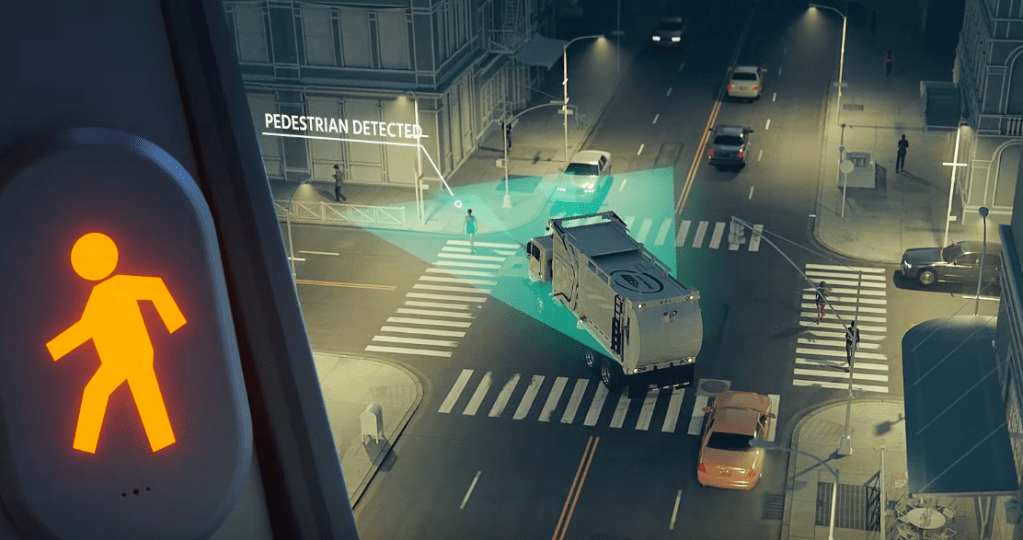
Over the holidays, the Trump administration announced a $2.2 million grant through the federal Safe Streets and Roads for All (SS4A) program to install new safety camera systems that will warn bus drivers about bikes and pedestrians in the blind spots of MBTA buses.
The new grant adds supplemental funding for a separate $2.2 million grant that the T won in fall 2024. With that initial round of funding, which was formally obligated last September, the T had already been planning to install new “MobileEye Shield Plus” collision avoidance camera systems to 160 MBTA buses.
The MobileEye system is “designed specifically for buses with extended blind spots operating in crowded urban environments,” according to the U.S. Department of Transportation’s grant award summary.
The camera system will also generate “visual and audio real-time alerts to warn the driver to react quickly to avoid collisions” and will also “collect safety data that will inform updates to the Boston 2023 Vision Zero Action Plan and the Lynn Safety Action Plan.”
The second grant, announced on December 23rd, could install similar systems on an additional 160 buses.
According to a press release from the Healey administration, the T will initially install the MobileEye systems on buses operating out of the Albany Street and Lynn bus garages before considering a broader, system-wide rollout.
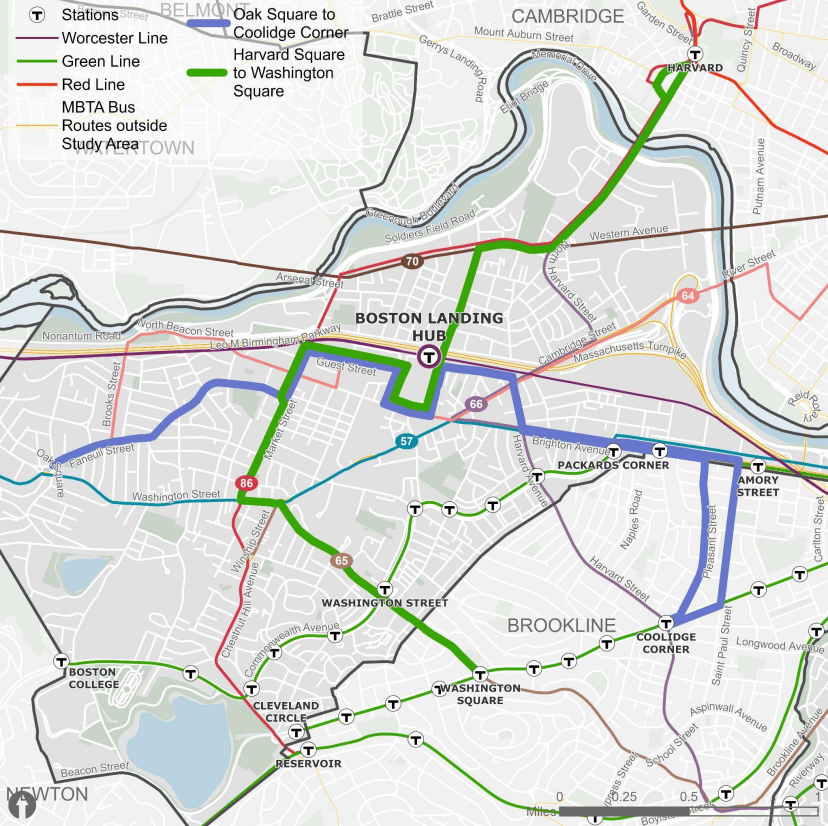
According to the MBTA’s 2014 Blue Book service almanac, the Albany garage services buses on the T’s Route 57 (Kenmore to Watertown) plus the 501 and 504 express routes along the Massachusetts Turnpike and the CT2 and CT3 crosstown routes, among others.
The Lynn garage serves most of the 400-level bus routes in the North Shore plus a handful of routes in East Boston, including the frequent-service 116.
Pledges vs. obligations
The MBTA’s grant is newsworthy in one other respect: it’s one of a tiny handful of grant pledges that the Trump administration has formally “obligated” from the Safe Streets for All program.
Congress appropriated $5 billion for SS4A grants in the Infrastructure Investment and Jobs Act (sometimes referred to as the “Bipartisan Infrastructure Law”) of 2021, with the intent to spend $1 billion a year over the law’s 5-year term.
According to USASpending.gov, a database of federal grants, out of $3.5 billion in funding that’s currently available for SS4A programs, the USDOT has only formally “obligated” $232.4 million – just 7 percent of what’s available.
The MBTA and other grant recipients can’t actually receive their SS4A funding until it has formal grant agreement with Washington – a process called “obligation.”
In the eyes of the federal Treasury, once a federal grant as been obligated, the money is considered spent, whether or not the recipient has used it yet. But without an obligation agreement, the funds remain under the Trump administration’s control, and vulnerable to cancellation.
In Massachusetts, USDOT has obligated $13.8 million in SS4A grants to date. The Biden administration obligated the majority of those grants, and most of them are paying for “safety action plans,” instead of actual physical safety improvements.
Meanwhile, many larger-scale safety projects remain in limbo.
In December, the Boston Regional Metropolitan Planning Organization, a regional agency that allocates federal transportation funding in eastern Massachusetts, amended its multi-year Transportation Improvement Plan budget to acknowledge that $36 million in SS4A funding for seven projects would not arrive in fiscal year 2025, as they had originally anticipated.
Among the delayed grants are $9.5 million for the City of Lynn to implement hundreds of speed humps, raised crosswalks, curb extensions, and other safety improvements on high-risk streets across the city, $14.4 million for the City of Boston to upgrade traffic signals, and $223,360 for the City of Peabody to install quick-build traffic calming measures on Lynnfield Street.

Read More:
Streetsblog has migrated to a new comment system. New commenters can register directly in the comments section of any article. Returning commenters: your previous comments and display name have been preserved, but you'll need to reclaim your account by clicking "Forgot your password?" on the sign-in form, entering your email, and following the verification link to set a new password — this is required because passwords could not be carried over during the migration. For questions, contact tips@streetsblog.org.