Eyes On the Street: Three Weeks After the Storm, Snow Woes Remain Across Greater Boston

In my trips around Boston and its suburbs this week, it’s clear that cities and property owners are still struggling to cope with the snow, even though it’s been nearly three weeks since the storm that dropped more than 20 inches of snow on the region.
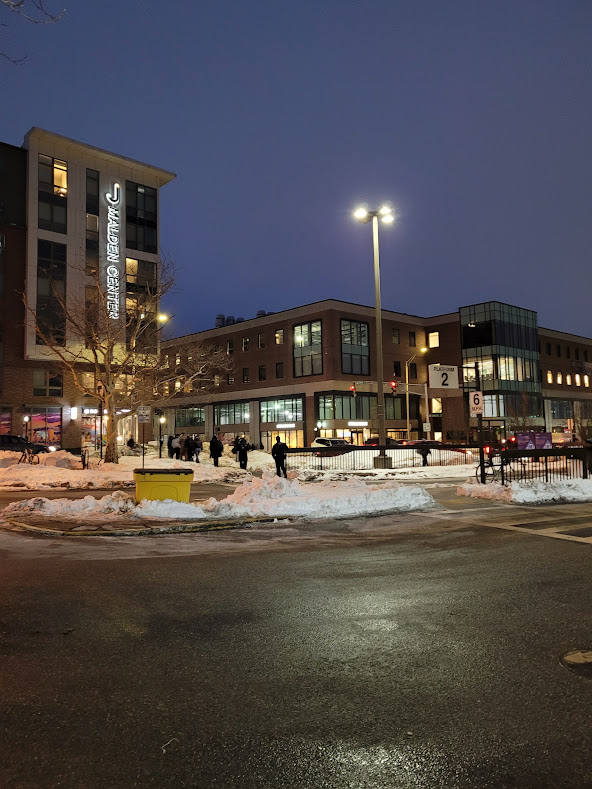
In Malden Center, the downtown in particular has been cleared up quite well. Walking to the T station, I had ample space on the sidewalks to share with the other commuters.
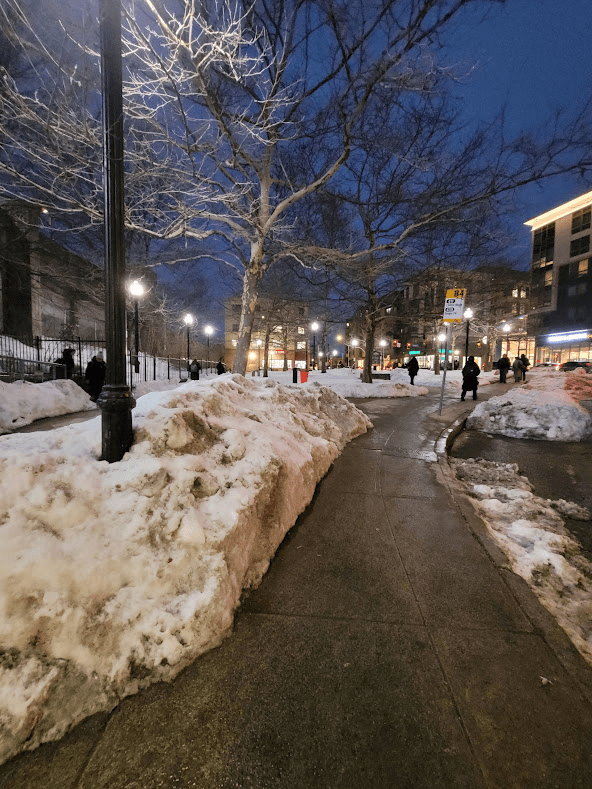
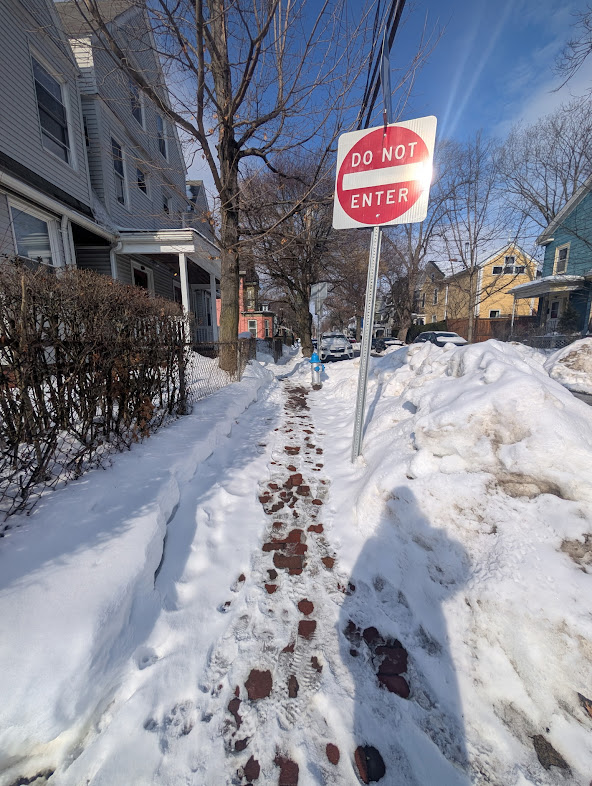
But other parts of the city are visibly less manicured, with people relying on the footsteps of literally those who came before them to get around.
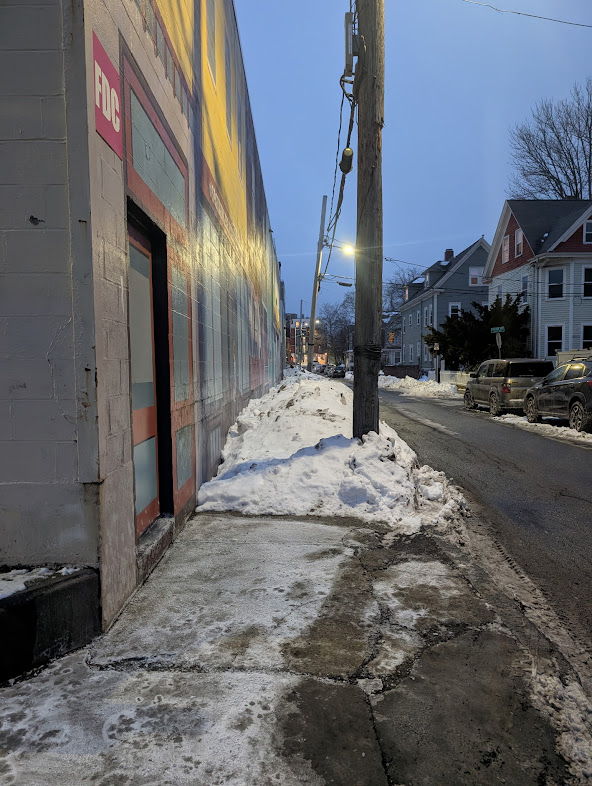
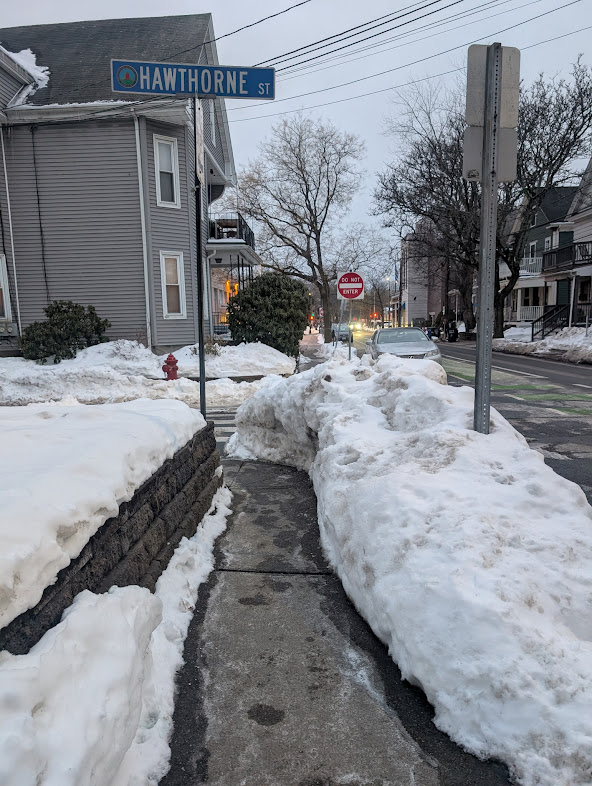
Making my way down to Somerville and Cambridge was a different story. On many side streets around Porter Square, there was a pretty narrow path cleared for pedestrians, but sometimes it appeared as though snow was just consolidated onto one side of the street, as I saw on Davenport St. in Porter Square, behind the Star Market (right).
Other streets were not cleared as well, with footsteps largely carving the path forward.
The bike lanes I saw in Cambridge and Somerville were a clear beneficiary from the snowbanks – city plow crews had cleared the lanes, and snow banks also acted as de facto protection from motor vehicles.
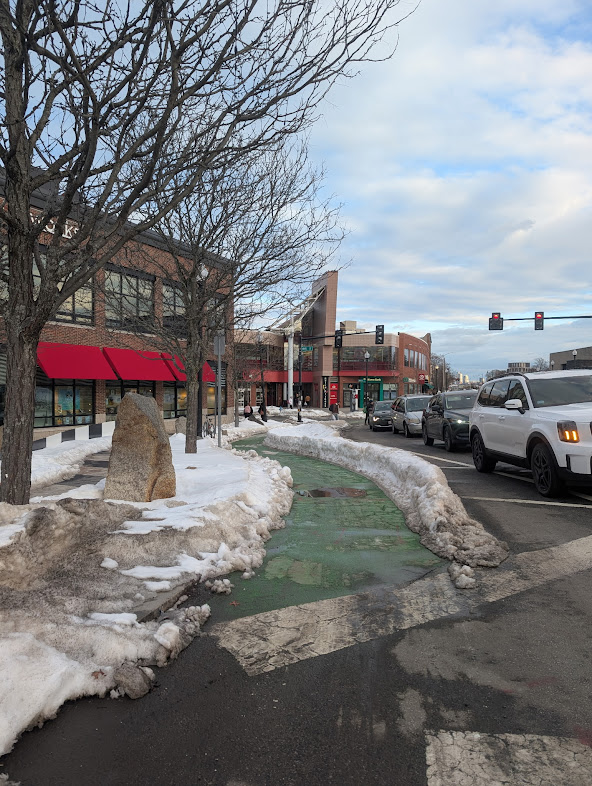
The buses, however, are having a harder time. Many bus lanes are still obstructed by snow, and drivers have had to adjust their stops so people did not disembark the bus right into a snow pile.
In Harvard Square, the pedestrian pathways in the core of the square were cleared quite well, but public amenities like trash cans and bike racks remained stuck in deep snow.
Heading into the city, Kenmore Square was a strong showing of efficient snow removal, with the bus berth and most crosswalks leading to it having a good clearance of a couple folks wide.
However, one path I couldn’t help but notice was just next to the stop, crossing Commonwealth Avenue along Kenmore Street. This path was not cleared in the slightest, and it was very much a one-foot-in-front-of-the-other challenge.
Some large themes stuck out to me as I moved through the Greater Boston area.
Uneven Clearing
There was visibly uneven clearing throughout the region. Back Bay in Boston was generally the best-cleared neighborhood, and train stations were generally accessible, with some strange exceptions like the Kenmore Street crosswalks.
From one day to the next, I would notice if something that wasn’t clear before suddenly was, and wondered who exactly had done the work to move the snow.
As the snow is being moved or melted, everyone has had to adjust their commutes in some way. However, the difference between modes is sometimes quite stark.
Drivers and train riders are seemingly running into the least amount of diversions and reroutes, I would say, while bus and bike riders as well as pedestrians have had to adjust more to the conditions.
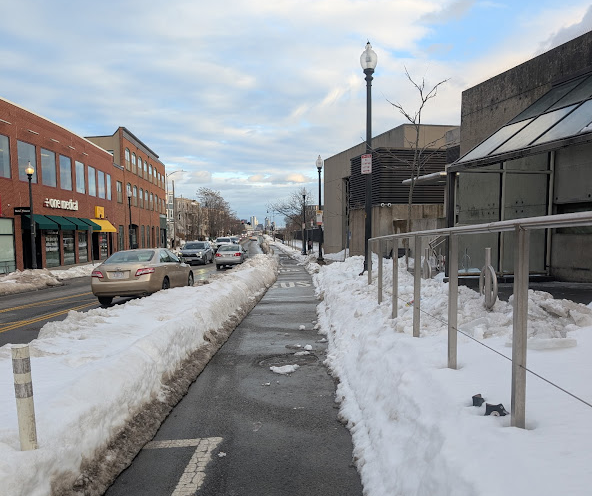
For example, in Porter Square, buses can’t pull over to the curbside stop next to the subway station on Somerville Avenue (above).
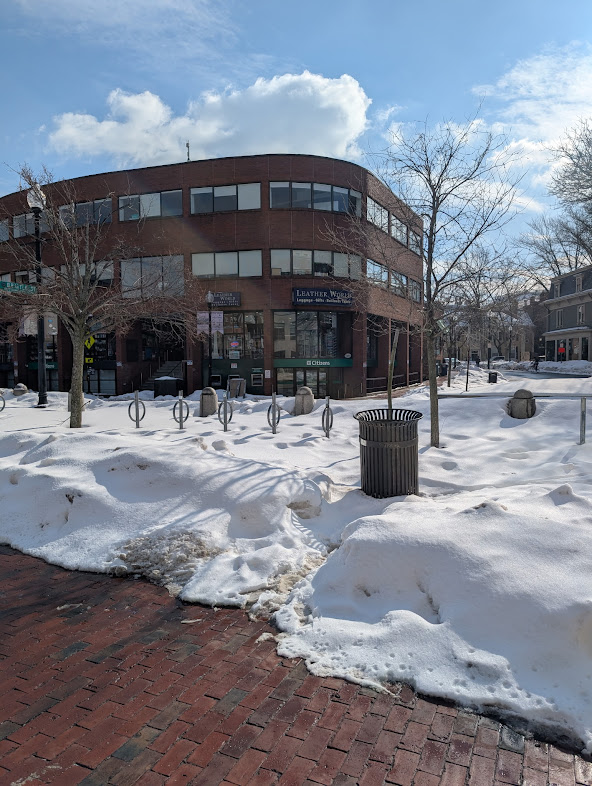
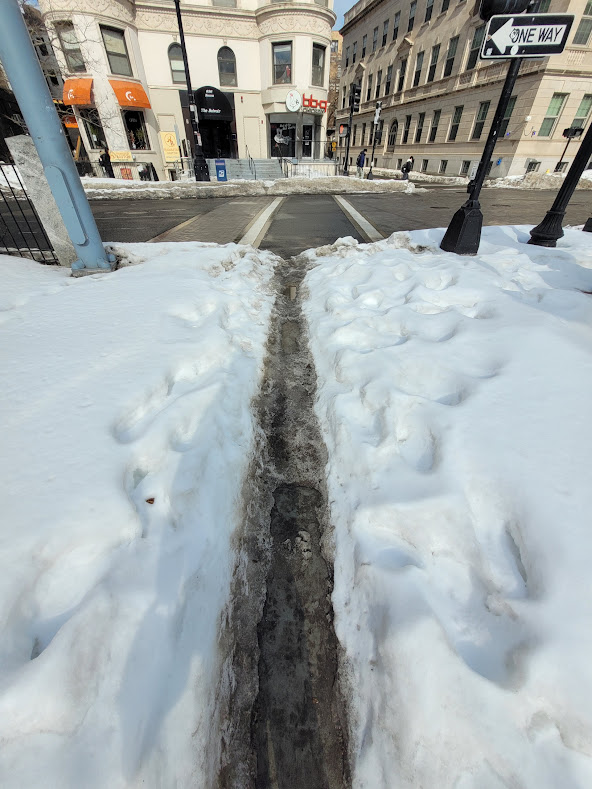
And over in Harvard Square, I saw bike racks buried in the snow and footprints in deep snow that formed a path to a public trash can (left).
Unsung Operators
As I navigated different transportation methods, I ran into a number of other commuters doing the very same thing.
A Cambridge resident waiting for the 96 bus to Medford Square was not thrilled about how challenging it has become to get on and off the bus without being impacted by mounds of snow, but she was appreciative of the bus drivers for doing their best to accommodate for rider comfort and safety.
“Props to the bus drivers, they are unsung heroes,” she said. “They have adjusted well amongst all the chaos and unshoveled nonsense.”
Melting and Exposure
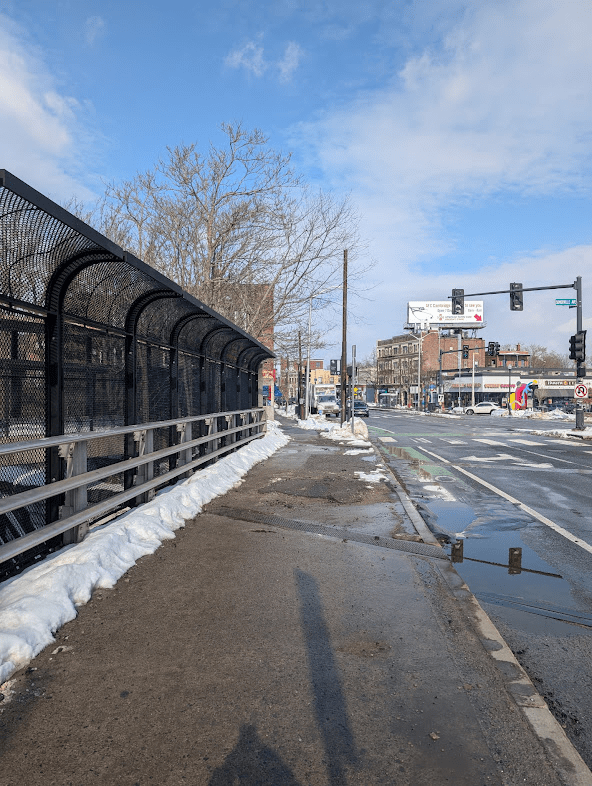
While the 40 degree day on Wednesday this week did its share of work in terms of melting everything, a decent amount of streets still have large snowbanks. And the thaw doesn’t just melt snow, it also exposes some potential infrastructure issues.
I noticed some leaking in the concourse between the Orange Line at Downtown Crossing and the Green Line at Park Street that was being attended by construction workers. For me, it raised the question of how our climate reality continues to affect aging transit infrastructure.
When we can have accumulated snow, freezing temperatures, and a double-digit midweek swing in the same short span of time, it’s imperative to incorporate climate adaptation into our previous run-of-the-mill snow removal and maintenance practices and policies.
Seeing the pigeons in the snow in Harvard made me worried that the food they were looking to uncover was in fact dog feces, which has been a growing problem being revealed in the melting snow. I did not stick around to find out.
Piles of snow and uncollected waste both raise questions about individual and community responsibility to maintain our public spaces, especially in times of inclement weather.
With more snow in the forecast for this weekend, we may soon find out whether the cycle will repeat itself, and whether we have learned from it.
Streetsblog has migrated to a new comment system. New commenters can register directly in the comments section of any article. Returning commenters: your previous comments and display name have been preserved, but you'll need to reclaim your account by clicking "Forgot your password?" on the sign-in form, entering your email, and following the verification link to set a new password — this is required because passwords could not be carried over during the migration. For questions, contact tips@streetsblog.org.