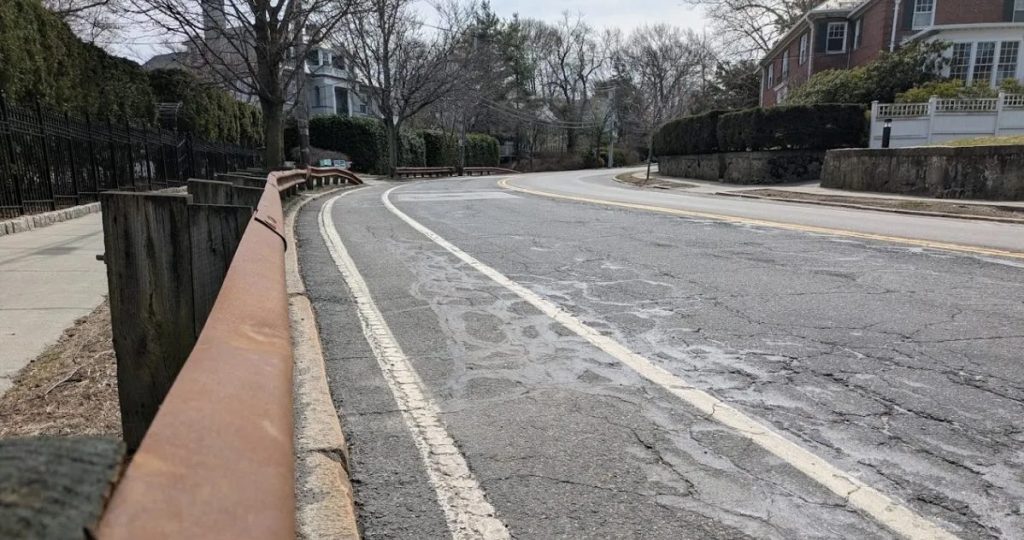
Wu Administration Delays Columbus Ave. Transit Project; City Hall Planners Told to Cancel Meetings With MBTA
Mayor Wu’s administration is throwing up more roadblocks for MBTA transit improvements in Boston while her constituents struggle with rapidly-rising transportation costs and worsening congestion on the city’s streets.
Through a public records request, StreetsblogMASS has obtained emails that reveal how senior officials in Mayor Wu’s administration have delayed work on a long-planned MBTA project to create a dedicated bus transitway in Roxbury, potentially putting $34 million in federal transit funding at risk.
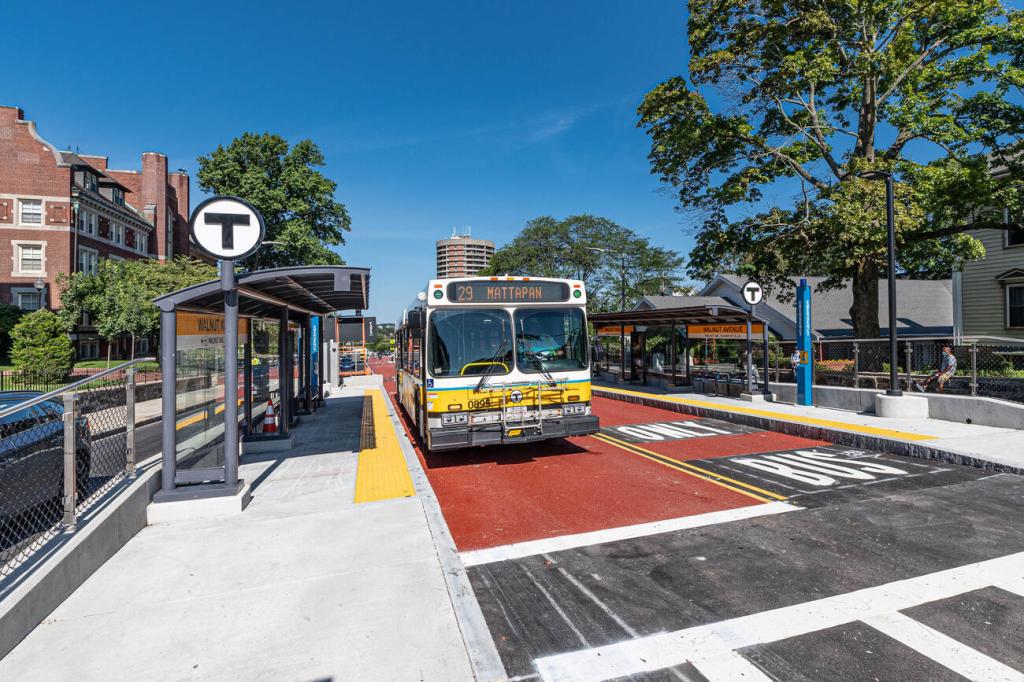
The emails concern the proposed “Columbus Avenue Phase II” bus lane project, which would extend an existing center-running busway built on Columbus Avenue in 2021.
The longer second phase would extend the busway to Ruggles so that it can serve more bus routes, and thousands of additional riders. The project would also improve pedestrian crossings between Roxbury and the Southwest Corridor Park, and build several new sheltered bus platforms like the ones pictured above.
In public hearings that it hosted in spring 2023, the MBTA said that it hoped to finish this project in 2025.
When StreetsblogMASS inquired about the project last November, an MBTA spokesperson told us that the project was in its final design phase and that “we do expect to bid the project in 2026.”
When City Hall tells its planners they can’t even have a check-in with partner agencies without a permission slip from the top, the gears of progress just grind to a halt.
Caitlin Allen-Connelly, executive director of TransitMatters
As of March 25, the MBTA’s construction solicitations website still lists the project as an upcoming project with an expected advertising date for construction bids on April 1, 2026.
However, the project still hasn’t appeared on any agendas of Boston’s Public Improvements Commission, the city board that must approve every construction project that affects the city’s streets.
At the beginning of March, StreetsblogMASS filed public records requests to the City of Boston and to the MBTA for email correspondence related to the project.
The City of Boston did not fulfill that request, but the MBTA did.
The emails show that MBTA project managers were repeatedly asking City of Boston to review final design plans for the Columbus Avenue project over the winter – and City of Boston Chief of Streets Nick Gove repeatedly denied those requests.
“Hi Phillip and Erik, I just received notification from Chief Gove that the City will not have feedback on the Tremont / Columbus Phase 2 design by 2/20,” wrote City of Boston transit planner Tyler Wood in a Feburary 5th message to the MBTA’s project team.
The MBTA’s project manager, Phillip Cherry, responded the next day (note: BTD here refers to the Boston Transportation Department, and PW is Public Works).
“Thanks for the official heads up,” wrote Cherry. “When we talk on Monday we will ask (and perhaps formally respond here) about when BTD / PW staff can actually begin reviewing, since it doesn’t seem that’s begun yet either.”
The next week, on February 12, Cherry reached out to City Hall again to request coordination with the city regarding Mayor Wu’s new plan to expand Madison Park High School on the city-owned “P3” site on Tremont Street.
“I was surprised to hear BPS (Boston Public Schools) was ready to initiate these discussions already, but the earlier planning/design stage we can coordinate with BPS, the better,” wrote Cherry.
The next day, City Hall transit planner Tyler Wood responded to tell Cherry that there would be no coordination meeting.
“I’ve canceled our check-in this Monday for Presidents Day – I’ve also been informed that Streets Policy & Planning has been directed to not participate in external meetings, including meetings with partner agencies, without express approval for (Chief of Streets) Nick Gove,” wrote Wood. “I will refrain on rescheduling until I have more clarity from my leadership on how to proceed.”
On Wednesday morning, after repeated requests for comment from StreetsblogMASS, a spokesperson for mayor’s office supplied a statement.
“The Mayor has not called for more consensus on the need for safe, accessible streets — we all agree on that,” the spokesperson wrote.
The spokesperson went on to assert that “the city is working closely with the MBTA to ensure every dollar delivers on our shared goal for multimodal streets that work for everyone.”
“Our top priority is getting this project right for the residents who live, work, and commute along this corridor, and we look forward to continued collaboration to achieve a design solution that reflects the community’s needs,” they added.
Collaboration collapse
The Columbus Avenue project was slated to receive $29.3 million from the Federal Transit Administration’s Congestion Mitigation and Air Quality Improvement Program (CMAQ), plus $4.75 from the federal Transportation Alternatives Program, according to officials from the Boston Regional Metropolitan Planning Organizaton, the group that allocates federal transportation funding in eastern Massachusetts.
That funding had been budgeted for fiscal year 2026, which ends on June 30th. It’s unclear what would happen to those funds if the MBTA misses that deadline to begin construction.
But transit advocates say that while the Columbus Avenue busway is an important project, there’s even more at stake if senior officials are restricting communication between staffers at City Hall and their colleagues at the T.
“When City Hall tells its planners they can’t even have a check-in with partner agencies without a permission slip from the top, the gears of progress just grind to a halt,” says Caitlin Allen-Connelly, the executive director of TransitMatters.
“In this volatile political environment, failing to move on a shovel-ready project doesn’t just lose us this one grant — it signals to the federal government that Boston and the MBTA aren’t reliable partners. We are putting our future seat at the table for federal funding at serious risk,” she added.
Better bus service gets stuck
The project’s delays also mean longer commutes for thousands of Roxbury residents who rely on the corridor’s buses.
If the new Columbus Avenue busway ever gets built, the T would be able to considerably expand bus service through Roxbury. The project would also facilitate a planned extension of the frequent-service Route 22 into the Longwood Medical Area, giving Roxbury and Dorchester bus riders a direct bus trip into one of the region’s biggest employment centers.
But all of those service improvements are dependent on assurances that those buses won’t get stuck in Boston’s worsening traffic.
Over the course of Mayor Wu’s first term, from fall 2021 to fall 2025, trip times for the T’s 10 busiest bus routes got 15 percent longer, thanks to increasing traffic congestion throughout Boston.
That means that the T has had to burn more fuel, hire more drivers, and put more buses on congested streets just to maintain its existing schedules.
“We need transparency, and we need it yesterday. We can’t let internal gatekeeping put projects on hold,” says Allen-Connelly. “It’s time for the City to show the same sense of urgency that a person waiting at a bus stop in the rain feels every single day.”

Read More:
Streetsblog has migrated to a new comment system. New commenters can register directly in the comments section of any article. Returning commenters: your previous comments and display name have been preserved, but you'll need to reclaim your account by clicking "Forgot your password?" on the sign-in form, entering your email, and following the verification link to set a new password — this is required because passwords could not be carried over during the migration. For questions, contact tips@streetsblog.org.