Boston’s Bus Lane Projects Are Stuck In Red Tape, Leaving Riders Stuck In Traffic
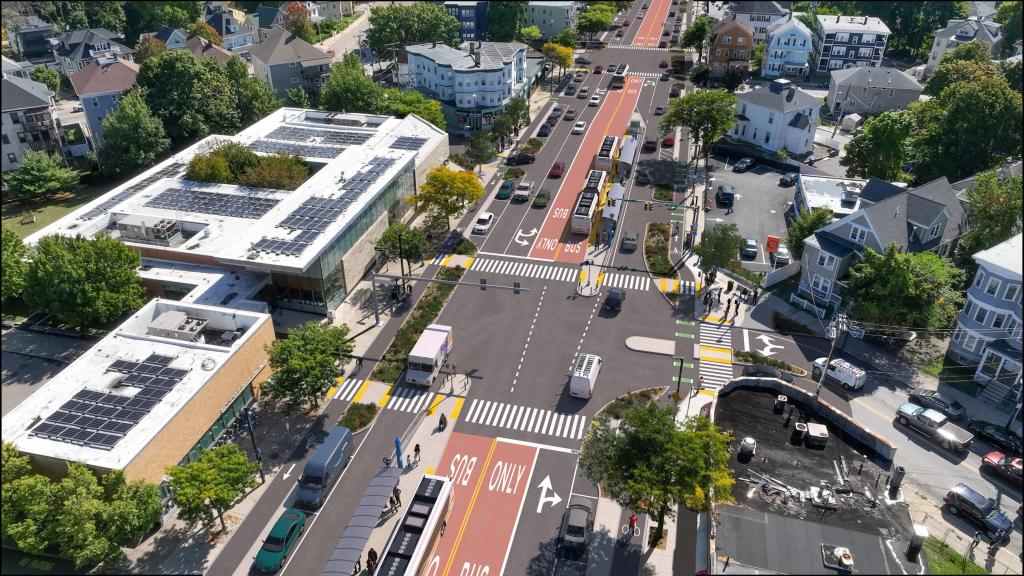
When Mayor Marty Walsh’s administration hosted their first open house for their plan to build a new dedicated bus transitway on Blue Hill Avenue in early 2020, they predicted that the project could save daily riders of the MBTA’s 28 bus two to three hours every week, and hundreds of hours over the course of a year.
At a time when the nation was going through a historic reckoning with structural racism in the wake of George Floyd’s murder, the city’s plan to deliver reliable transit service through historically neglected and segregated Black neighborhoods in Roxbury and Mattapan quickly gained momentum.
In late 2021, in the same week that newly-elected Mayor Michelle Wu took office, the Biden administration awarded Boston and the MBTA a $15 million federal grant to finance the Blue Hill Avenue bus lanes from Grove Hall to Mattapan Square.
Four years have passed since then, and instead of enjoying faster, more reliable bus trips between Nubian and Mattapan Squares, bus riders in Roxbury and Mattapan are instead contending with worsening traffic and some of the slowest, least reliable bus routes in the entire MBTA service area.
Mayor Wu’s press office did not respond to multiple inquiries from StreetsblogMASS about the project’s lack of progress during her first term.
But the MBTA, a partner in the project and an agency that stands to gain considerable savings in its bus operations and labor costs if the project ever gets built, did provide a response.
“Blue Hill Ave. is continuing towards the 30 percent design milestone,” an MBTA spokesperson wrote to StreetsblogMASS. “On achieving that milestone, the MBTA together with the City of Boston expect to re-engage with the community before advancing the project towards implementation.”
Warren Street and Nubian Square
When the city began hosting public meetings for dedicated bus lanes for Warren Street in 2019, under Mayor Marty Walsh’s administration, city officials said that the average bus rider on Warren Street loses 20 to 30 minutes stuck in traffic every day – and 90 percent of Warren Street’s bus riders are Black.
“These bus stops (on Warren Street) serve more riders than some commuter rail stations,” a City of Boston transit planner told StreetsblogMASS in 2019.
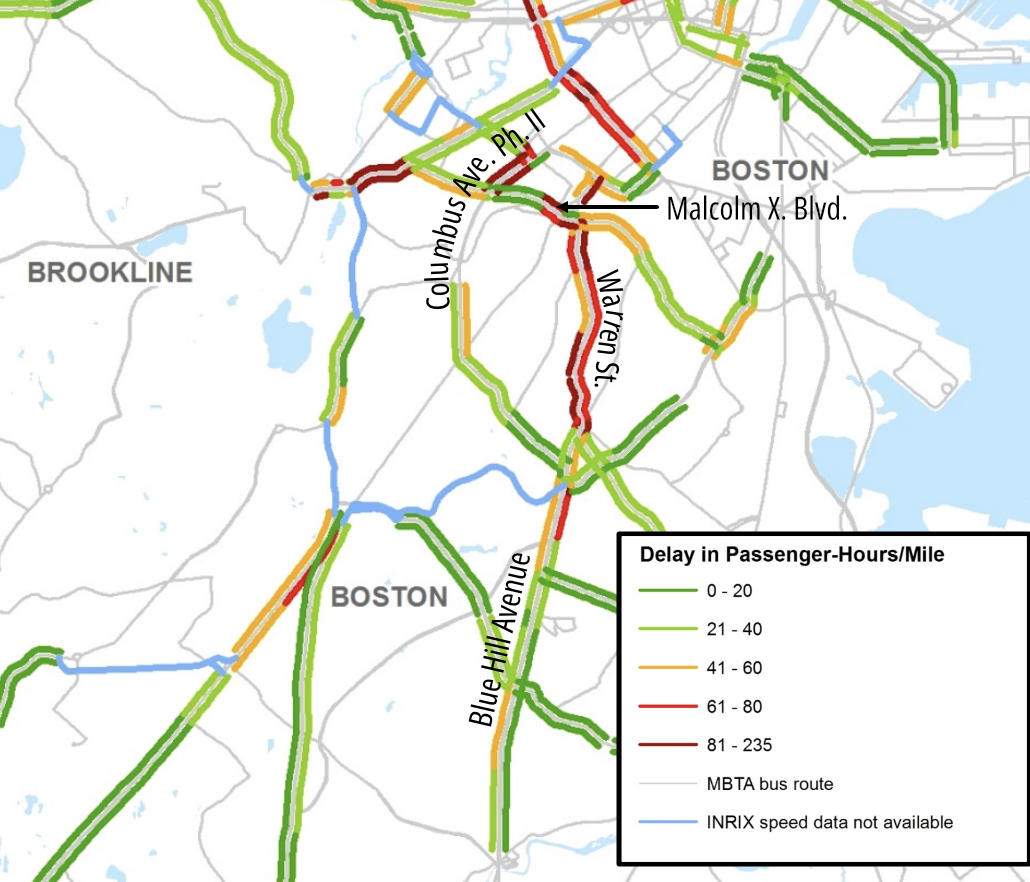
Warren Street and Malcolm X Boulevard both carry multiple frequent-service bus routes in and out of Nubian Square, which makes them some of the worst bottlenecks for bus delays in the entire MBTA service area (see map above).
In 2022, Boston won a $20 million federal grant for the “Roxbury Resilient Corridors” project. In the city’s grant application, officials said that they planned to add dedicated bus lanes, improved sidewalks, new bus shelters, bikeways, and other improvements to Malcolm X Boulevard and Warren Street.
Then, three years passed by without any signs of action from Mayor Wu’s administration.
When President Trump took office earlier this year, the grant’s focus on racial equity turned in into a political target. The White House cancelled the $20 million grant.
Columbus Avenue project might begin construction next year
In public hearings that it hosted in spring 2023, the MBTA told riders that it was aiming to open new center-running bus lanes on Columbus Avenue in Roxbury sometime in 2025.
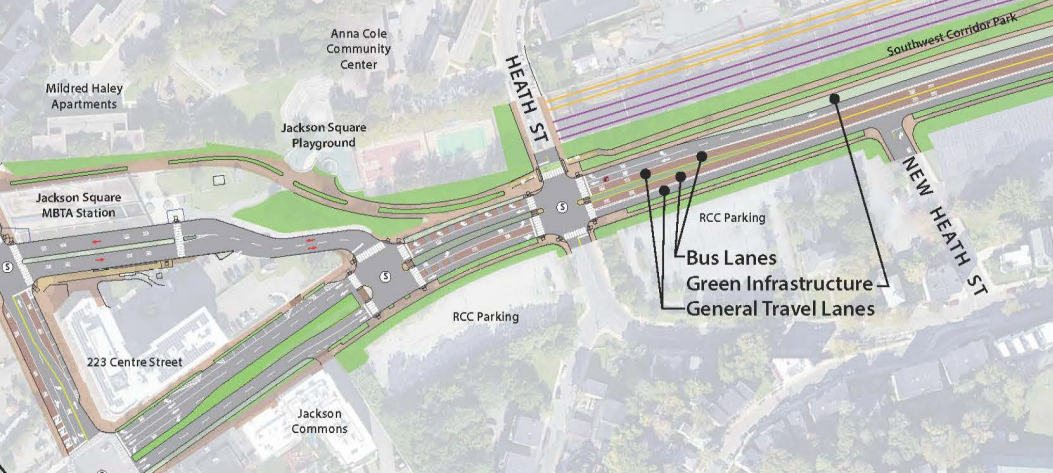
The proposed “Columbus Avenue Phase II” bus lane project still hasn’t broken ground – but MBTA officials now say that they hope to begin work sometime next year.
The project would more than double the length of the existing busway that opened on Columbus Avenue in 2021, extending protected bus lanes all the way to Ruggles in order to serve more bus routes and considerably more riders.
Under the T’s proposed bus network redesign, an estimated 50 to 60 buses an hour would use this new busway – but those service improvements are dependent on assurances that those buses won’t get stuck in traffic.
The project also aims to tame traffic and improve pedestrian safety on Columbus Avenue, which is currently a lethally dangerous 6-lane highway that divides Roxbury from the Orange Line and Southwest Corridor Park.
An MBTA spokesperson told StreetsblogMASS that the project “continues to advance in design.”
“The MBTA and City of Boston expect to conduct at least one more round of community engagement before advancing the project design to 100 percent (construction-ready) plans. We do expect to bid the project in 2026,” the spokesperson wrote.

Read More:
Streetsblog has migrated to a new comment system. New commenters can register directly in the comments section of any article. Returning commenters: your previous comments and display name have been preserved, but you'll need to reclaim your account by clicking "Forgot your password?" on the sign-in form, entering your email, and following the verification link to set a new password — this is required because passwords could not be carried over during the migration. For questions, contact tips@streetsblog.org.