Against Neighbors’ Wishes, Boston Streets Commissioners Cancel Planned Bikeway Near Day Square
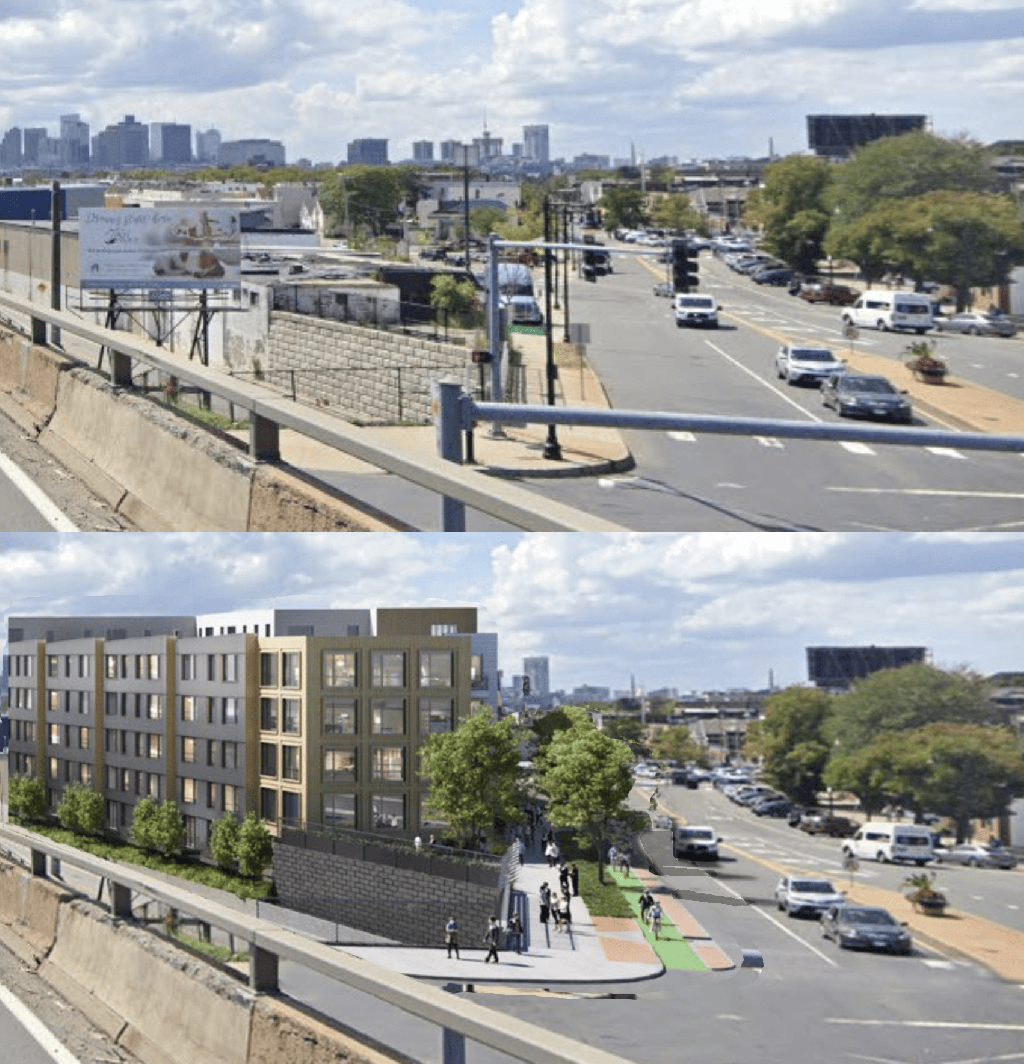
In defiance of testimony from nearly a dozen residents and advocates asking them to honor principles of good governance and public transparency, the Boston Public Improvements Commission voted unanimously Thursday morning to cancel their previously-approved plans for a new protected bikeway along a one-block segment of Bennington Street, one of East Boston’s most dangerous roadways.
As StreetsblogMASS reported last week, the developers of a new 170-home mixed-use building that’s currently under construction had been planning to build significant safety improvements, including a new curb-protected bikeway, to a 500-foot segment of Bennington Street between Day Square and Neptune Road.
But earlier this month, the developers came to Boston’s Public Improvements Commission – a panel of city transportation and public works officials that reviews infrastructure changes to the city’s public streets – with a new plan that would scrap the safety improvements in favor of creating more more city-subsidized private vehicle storage on Bennington Street.
At Thursday’s public hearing, developers and City Hall bureaucrats made unverifiable claims that the new plans reflected “feedback from the community members.”
Carlos Garcia, a neighborhood liason for East Boston from Mayor Wu’s Office of Neighborhood Services (ONS), alleged that the new plan to add more parking in lieu of the bike lane had been made at the behest of “feedback from community members, by elected officials, and local small businesses, particularly in the Day Square business district.”
However, Garcia and other city representatives struggled to provide clear answers when others asked them to provide details of where, when, and from whom the city received that “feedback”.
The only people who spoke at Thursday’s public hearing in favor of removing the bike lane were City Hall employees.
The actual neighborhood residents attending the hearing universally complained about the city’s lack of transparency and its failures to keep their neighborhood safe.
“I was part of the impact advisory group for this project, and none of us were informed about this proposed change, and we participated in an 18-month-long process to really make sure that this project was going to work for the community and really bring more safety to the area,” resident Elena Bertkau told the Commission (an “impact advisory group” is a group of neighbors who advise city planners on major planning and development projects in Boston).
Another project advisory group member, Matthew Barison, confirmed Bertkau’s account.
“I never heard about these proposed changes until very recently through the media,” said Barison.
“I urge the Commission to be bold enough to reject the proposed changes and to stick with the plan that’s been long vetted by the (advisory group) and by members of the community, who have looked at this in great detail,” he added.
Noemy Rodriguez, another East Boston resident, offered testimony in Spanish.
“Cómo es que toman las decisiones para hacer esos cambios cuando nostros los residentes quo nos exponemos al peligro?” she asked. “Especialmente en esta area. Por que son personas que no tienen un sentido bien comun para nostros?” (“How do they make decisions about these changes when it is we, the residents, who are exposed to the danger? Especially in these areas. Why don’t these people seem to have our best interests at heart?”)
“Tengo mis hijos que tambien usan bicicletas y caminan, y me preocupa tanto cuando yo salgo con ellos, especialmente el que tiene 12 años y entre 14 años quo manejan sus bicicletas. No hay dias donde se pueda verdad conducir bicicletas, tienan quo manejar,” she added (“I have my children who also use bicycles and walk, and I worry so much when I go out with them—especially the ones who are 12 and 14 and ride their bikes. There isn’t a day when they can ride safely; they have to navigate traffic”).
As they did at the previous meeting, agents for the project’s developers stressed that they had not initiated the proposal.
“It’s important to note to me that this is not a developer-led change,” said Brian Beisel, a project consultant from Howard Stein Hudson, the project’s engineering consultants. “This, as we heard from Neighborhood Services and (East Boston district) Councilor Coletta’s office, was a change that we are trying to implement based on the feedback that we’ve been given.”
Nick Gove is still in charge
Thursday’s Public Improvements Commission (PIC) hearing was chaired by the city’s former Chief of Streets Nick Gove, whom Mayor Wu had demoted earlier this month for his role in delaying street safety improvements in dozens of major infrastructure projects across the city.
Last year, Gove had leveraged his role as PIC chair to indefinitely delay a major MBTA bus rapid transit project on Columbus Avenue in Roxbury. Newly-released public records from Feburary 2025 indicate that the T had been trying to get a PIC public hearing for the project – one of the last steps it needed to take before construction – for the project for more than a year.
In the aftermath of Louisa Gag’s homicide last month, Mayor Wu promised that her administration would “assess” organizational structure of the city’s streets bureaucracy.
However, although she’s recruited former Chief of Streets Chris Osgood to come back into his former role, the mayor has allowed Nick Gove retain his title as the boss of the Public Works Department, which means he still controls the Public Works Commission and its agenda.
Watch the hearing here (discussion on the Day Square project begins at 47:45):

Read More:
Streetsblog has migrated to a new comment system. New commenters can register directly in the comments section of any article. Returning commenters: your previous comments and display name have been preserved, but you'll need to reclaim your account by clicking "Forgot your password?" on the sign-in form, entering your email, and following the verification link to set a new password — this is required because passwords could not be carried over during the migration. For questions, contact tips@streetsblog.org.