Gov. Healey Cuts the Ribbon On Fall River’s Waterfront Highway-to-Boulevard Conversion

On Wednesday, Governor Healey joined dozens of other state and local officials on the Fall River waterfront to cut the ribbon on MassDOT’s Route 79/Davol Street highway-to-boulevard conversion project, which tore down an obsolete 20th-century expressway to free up around 20 acres of developable land around the city’s new MBTA rail station.
“For too long, Route 79 separated Fall River neighborhoods from their waterfront. Today, we’re changing that,” said Governor Maura Healey. “This project is creating safer roads, better connections and new opportunities to build housing, support local businesses, and bring more people to Fall River’s waterfront.”
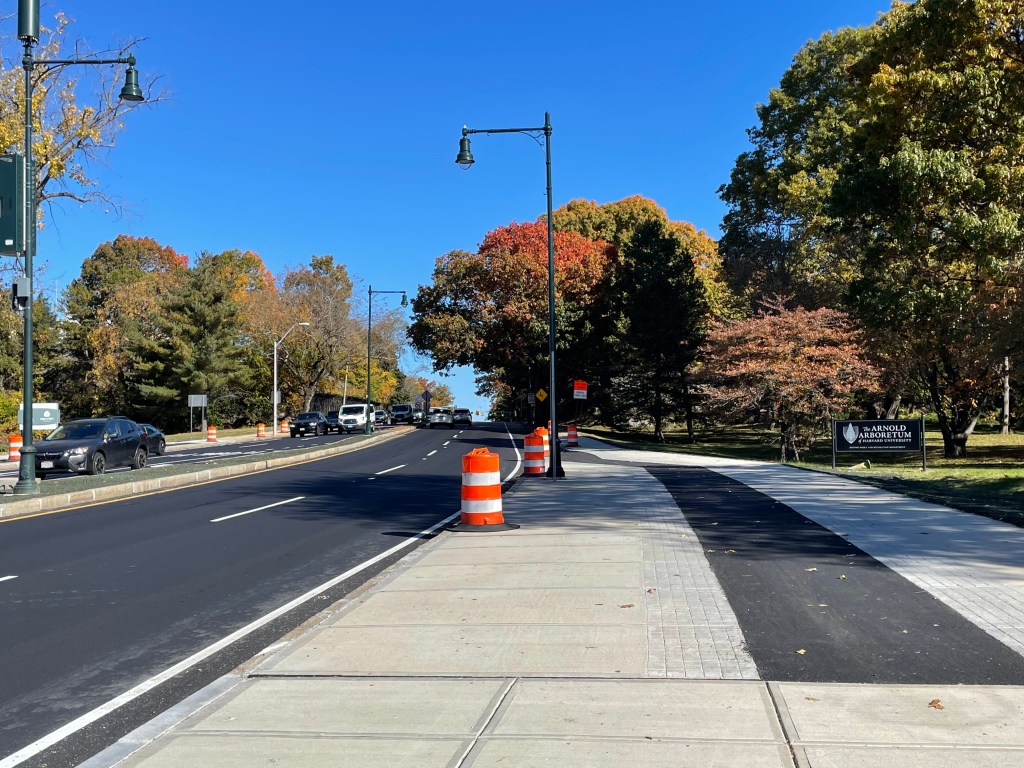
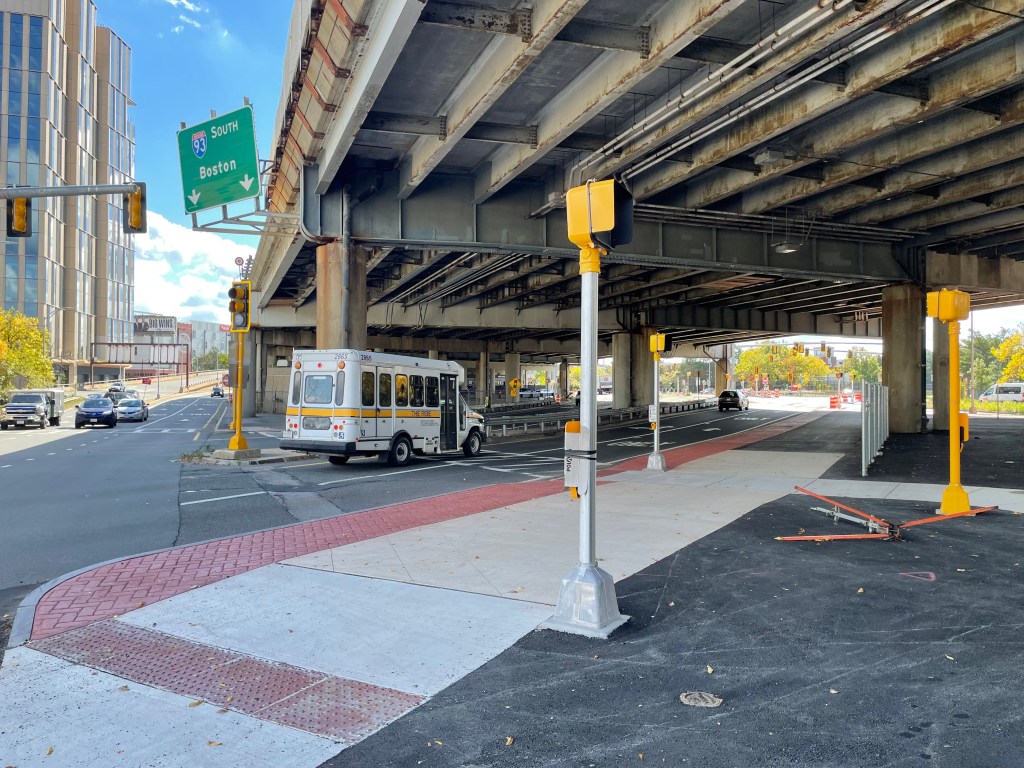
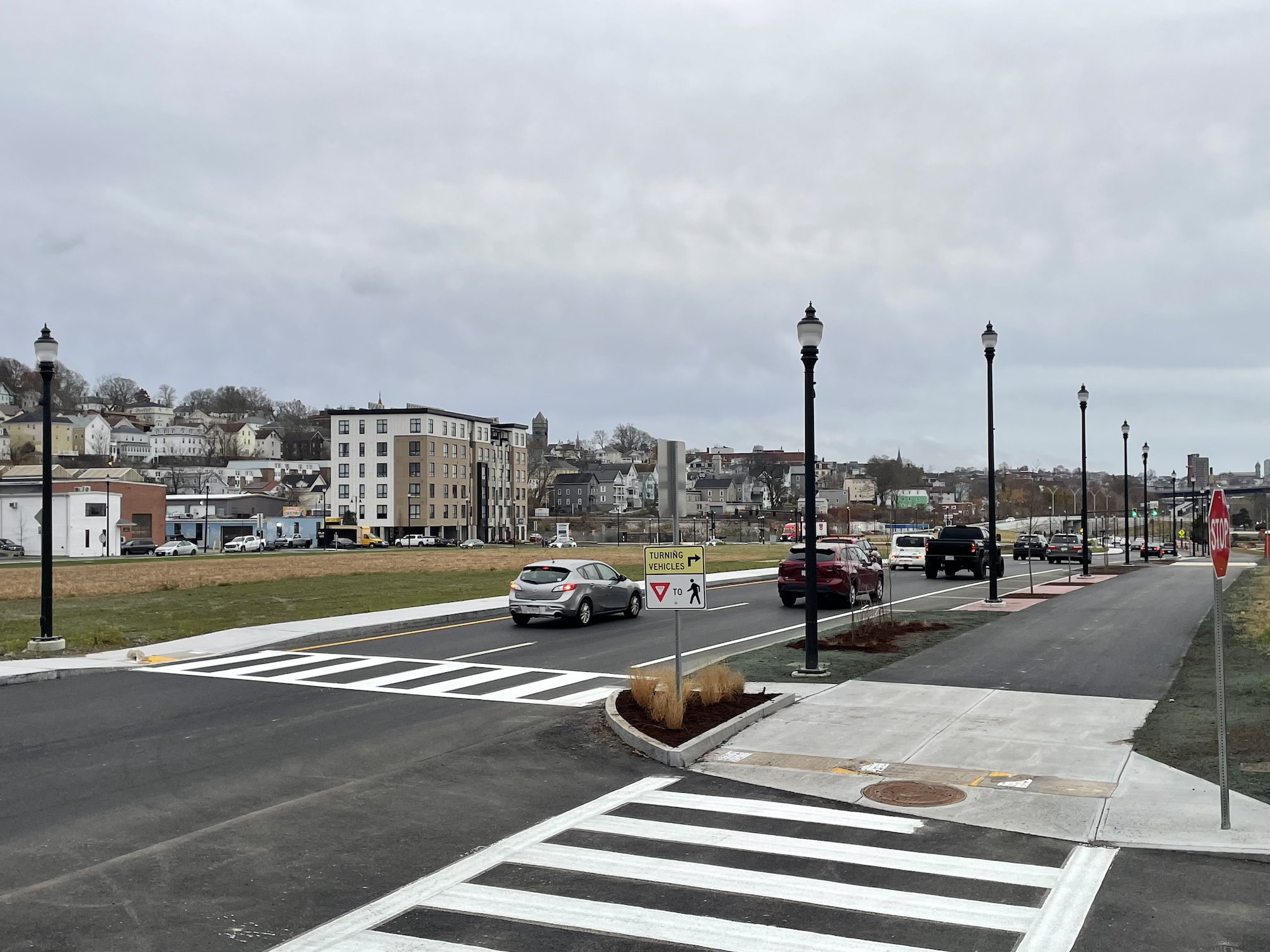
The project has remade about one mile of the city’s west side, along the Taunton River, from the Route 6 Veterans Memorial Bridge to Battleship Cove. Over the past three years of construction, MassDOT demolished obsolete highway interchanges and replaced them with a pair of one-way, two-lane boulevards lined with new sidewalks and an interconnected network of shared-use pathways.
The project began construction in 2023, during the administration of former Governor Charlie Baker, and has been substantially complete since January.
Developers bid for empty land
This week’s ribbon-cutting coincided with MassDOT’s formal opening of bids for the rights to develop roughly 20 acres of state-owned land that had formerly been stranded between the former expressway’s lanes and ramps.
In January, MassDOT began marketing the empty land to potential developers, and issued a formal “invitation to bid” in July. Proposals were due by October 21.
MassDOT officials told StreetsblogMASS that they had received three bids to buy the land:
- The Cordeiro Group of Fall River: $10,340,500
- The Michaels Development Company LLP, a nationwide housing developer: $15,220,000
- Mark Development of Newton and Atlanta-based Wood Partners: $13,968,000
Developers typically budget around 10 percent of their total development costs for land acquisition, and as a rough rule of thumb, housing developers typically budget $40,000 to $50,000 for land costs for every apartment they plan to build.
Based on those rough guidelines, the bidders could be planning projects worth $100 to $150 million for the site, with several hundred new homes.
Fall River’s City Council has already approved a “Waterfront and Transit-Oriented Development District” for the former expressway land. The zoning allows for buildings up to 6 stories high, or 12 stories with a special permit from the city’s zoning board, and requires at least 1.25 off-street parking spaces per home.
The district’s parking quotas are an expensive requirement that will make development more challenging, but they’re marginally less burdensome than the 2-spaces-per-home requirement that applies in other parts of the city.