Boston Will Build Another New Curb-Protected Bike Lane On Harrison Ave. Next Year
The City of Boston will rebuild a short segment of Harrison Avenue in the South End to narrow the roadway and add protected bike lanes, in a design similar to its recently-completed Tremont Street road diet.
The Harrison Avenue reconstruction project will reconfigure a 1,000-foot section of the street between Berkeley and Herald Streets in the South End.
The project recently won approval from Boston’s Public Improvements Commission, and a spokesperson for the city’s Public Works office told StreetsblogMASS that construction should begin in spring 2025.
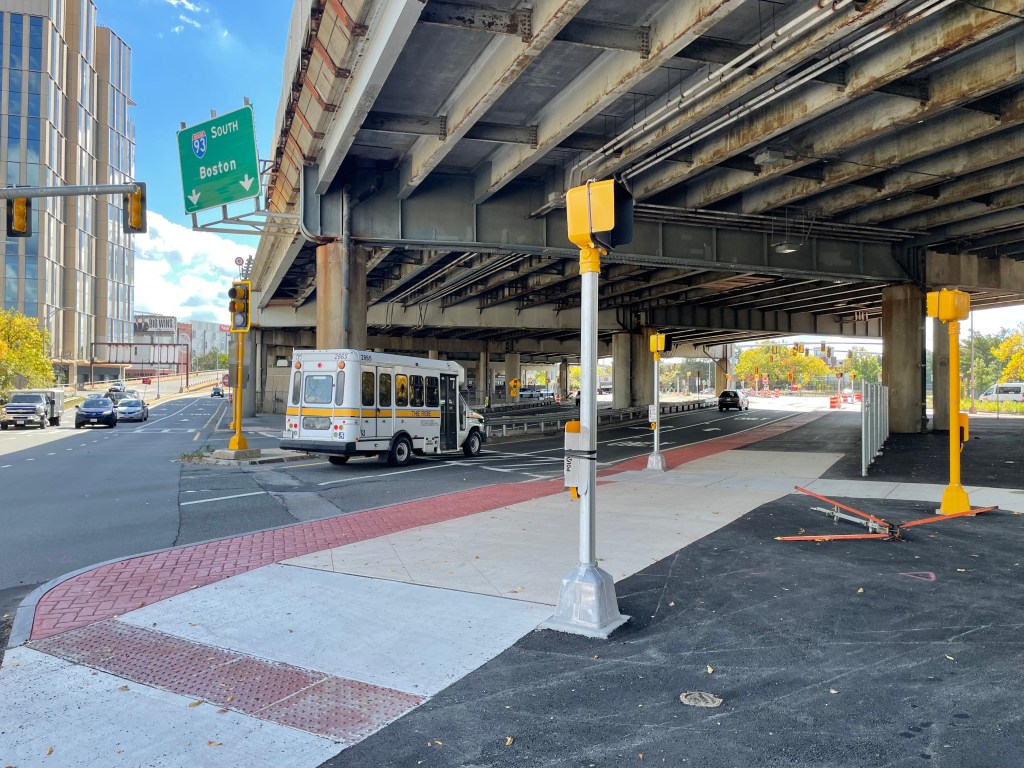
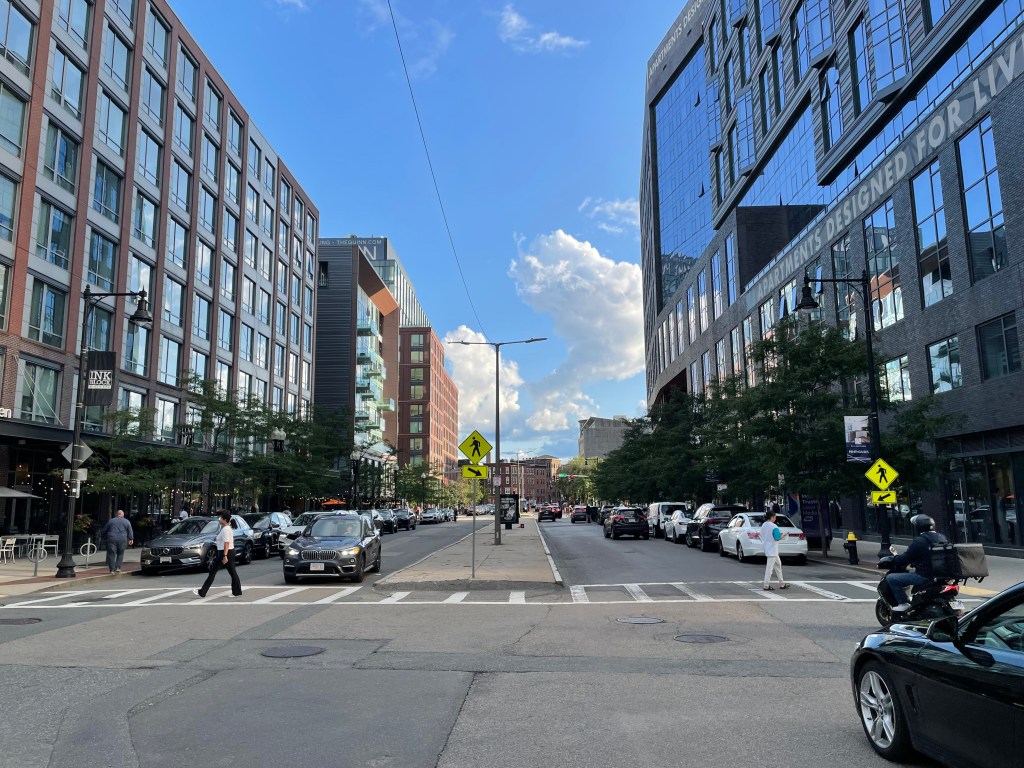
The existing Harrison Avenue (pictured at the top of this article) is unusually wide through these blocks, with a crumbling 14-foot-wide concrete median that frequently gets used as a parking and loading zone.
The city’s redesign will remove that median to consolidate motor vehicle traffic in the middle of the roadway, and create space for new protected bike lanes along the existing curbs.
At four intersections – East Berkeley Street, Traveler Street, Mullins Way, and Herald Street – the city will build landscaped islands to create a physical buffer between a new bike lane and motor vehicle lanes.
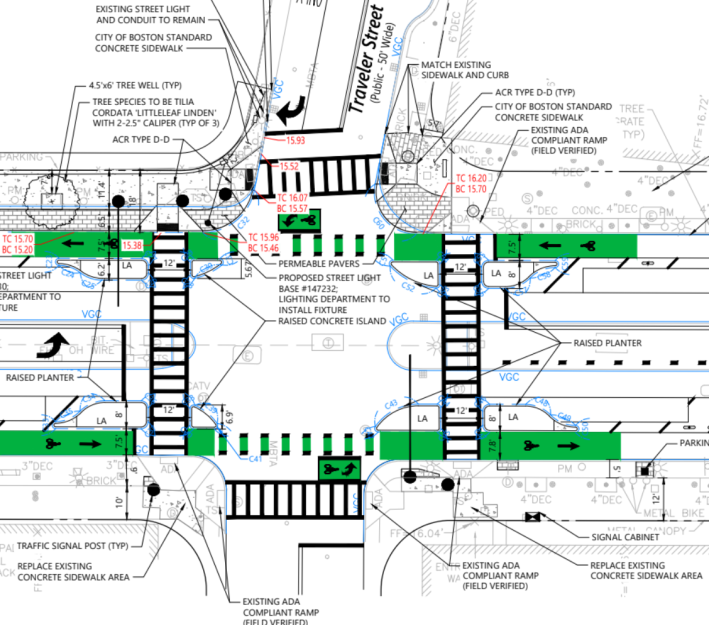
These corner islands will be similar in form to the ones that the city built at intersections along Tremont Street, with one notable difference: while the Tremont Street islands are paved in bricks, the new Harrison Avenue islands will be filled with gardens to help absorb stormwater, mitigate the urban heat island effect, and add some more greenery into the neighborhood.
As on Tremont Street, those islands will also reduce the distance through which pedestrians are exposed to traffic at intersections. Pedestrians will also get a wider sidewalk along the western side of Harrison between East Berkeley and Traveler Streets.
This segment of Harrison Avenue has seen a dramatic increase in foot traffic over the past decade as the Ink Block development replaced the defunct Boston Herald printing plant with hundreds of new apartments, restaurants, and a supermarket.
The city’s plans also indicate that the Harrison Avenue bridge over I-90 will be re-striped to create painted bike lanes on both sides of the bridge. The city will also reduce the number of motor vehicle travel lanes on the bridge from three to two (the new configuration will have one westbound through-lane and one westbound left-turn lane, plus curbside bike lanes in both directions).

Read More:
Streetsblog has migrated to a new comment system. New commenters can register directly in the comments section of any article. Returning commenters: your previous comments and display name have been preserved, but you'll need to reclaim your account by clicking "Forgot your password?" on the sign-in form, entering your email, and following the verification link to set a new password — this is required because passwords could not be carried over during the migration. For questions, contact tips@streetsblog.org.