The T Has Come a Long Way On Its Path to Accessibility – But Many Barriers Remain
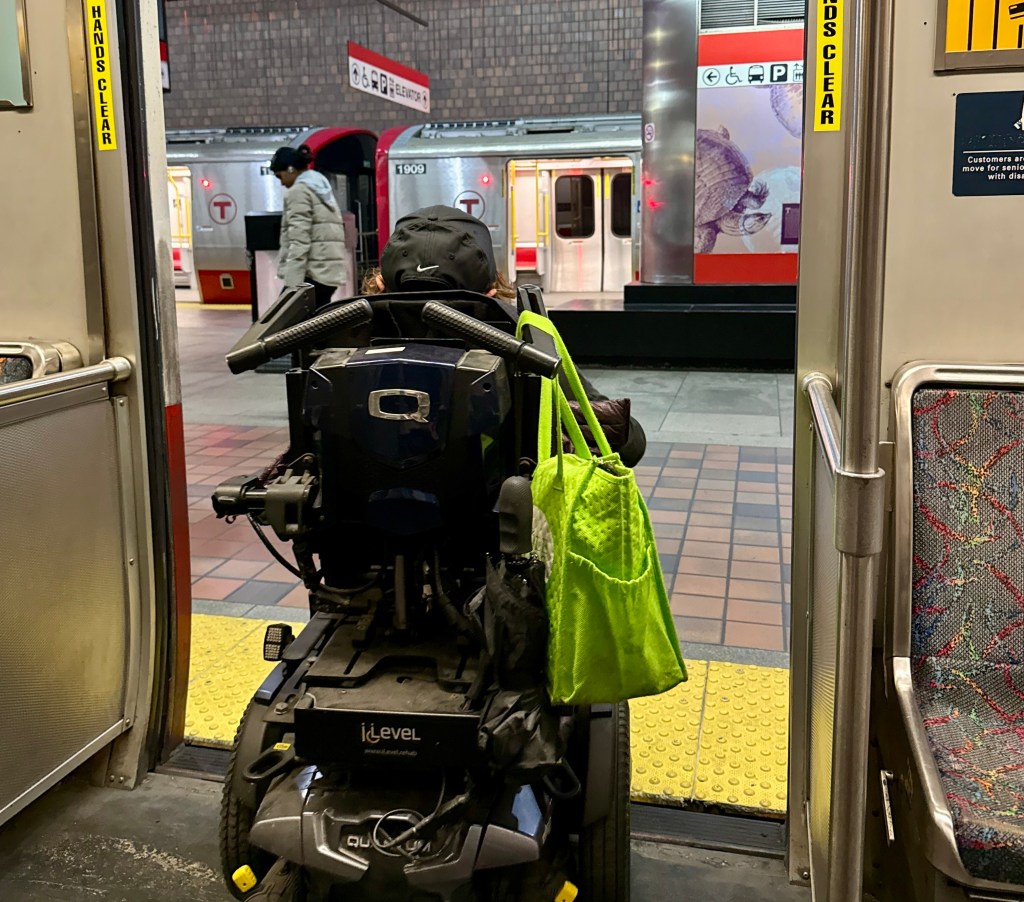
Like most Bostonians, I rely on the MBTA to get around the city.
But unlike most Bostonians who walk onto trains and buses and find their seats independently, I use a power wheelchair, and frequently must wait for assistance.
There’s a lot of hope involved in navigating a public transportation system that nondisabled people take for granted.
When I arrive at a station that has an elevator, I hope it is functional. Then I have to muster up the courage to zoom over the gap between the train and the platform, hoping I don’t get stuck. Alternatively, I can try to find a staff member who can set up a bridge plate to narrow the gap.
If I’m attempting to ride the Green Line, I have to hope the operator notices me waiting on the platform in time to operate the ramp. On both trains and buses, I must rely on other passengers to make room for me by moving out of the few dedicated wheelchair spaces.
Approximately 12 percent of the Boston population identifies as having at least one disability, according to data from the 2017-2021 American Community Survey. Even if you don’t count yourself among that group today, there’s a strong chance that you will someday: the Social Security Administration estimates that 1 out of 4 of today’s 20-year-olds will become disabled before they reach retirement age.
That means accessibility cannot be sidelined in transportation planning efforts; disability is an intrinsic part of the Boston experience.
“It should be as easy for everybody to take the T and get around. We’re all paying for it, and so we should all get the same amount of service out of it,” says Paul Foley, a wheelchair user.
Foley was one of many disabled Bostonians I interviewed about accessibility on the T. While they acknowledged that the system has become more accessible in recent years, they also described key pitfalls and areas for further improvement.
Evolution of Accessibility on the MBTA
Accessibility varies considerably depending on where you are in the MBTA system. According to the MBTA’s accessibility page, all Orange Line and Red Line stations are accessible, as are 11 of the 12 Blue Line stations, 117 of the 142 commuter rail stations, and seven of the eight Mattapan Line stations.
But only 44 of the 70 Green Line stations are accessible.
All MBTA buses are theoretically accessible, because the MBTA started purchasing low-floor buses in 2006 with a ramp that folds out for wheelchair users.
But approximately 10 percent of the 7,690 bus stops have two or more significant barriers, according to the T, and all bets are off when a driver is illegally parked in your bus stop.
The MBTA has made significant improvements in the last 20 years. Much of this progress can be traced back to a class-action lawsuit, Joanne Daniels-Finegold, et al. v. Massachusetts Bay Transportation Authority, which a group of 11 riders and the Boston Center for Independent Living (BCIL) filed in 2002.
The parties reached a settlement in 2006 that established the Department of System-Wide Accessibility the following year, and led to a dedicated effort to improve accessibility throughout the system.
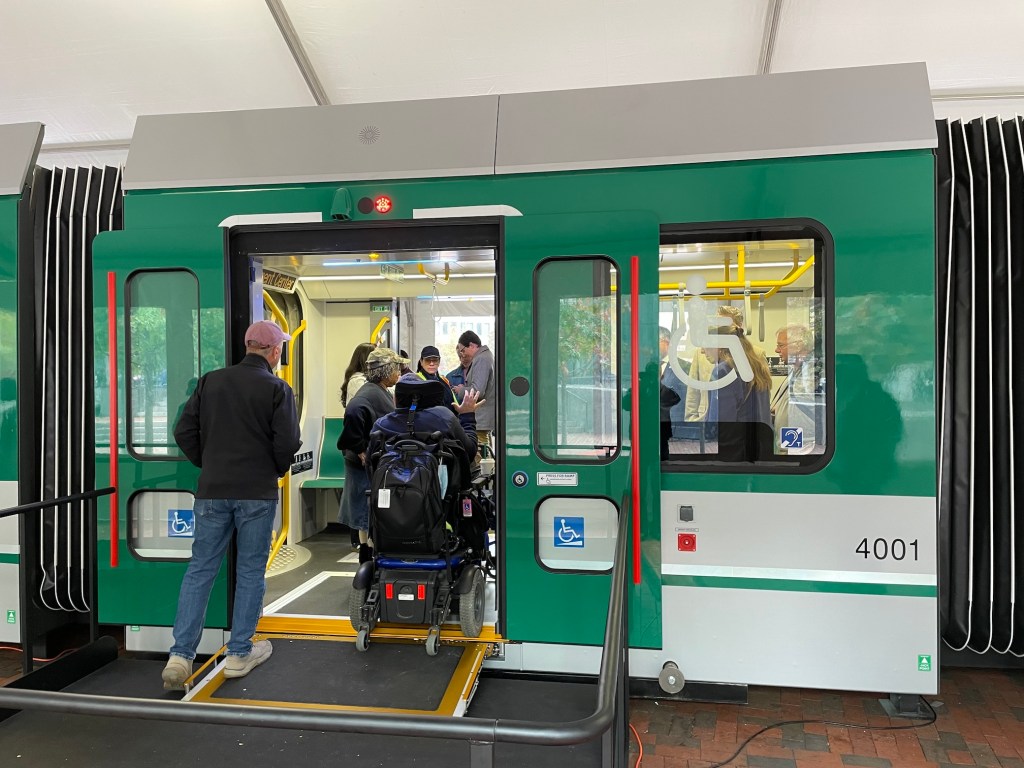
Laura Brelsford leads that department as the MBTA’s assistant general manager for system-wide accessibility.
She is also a wheelchair user with first-hand knowledge of the barriers disabled passengers face, and says that many of her department’s staff also have disabilities.
“The fact that through the settlement, the MBTA committed to creating a department solely focused on accessibility and really prioritized the inclusion of people with disabilities within the team, both 18 years ago and today, has really been at the core of a lot of the progress we’ve been able to make, and the credibility we’ve been able to make with the community and our riders,” she said.
The Riders’ Transportation Access Group
In 2018, the MBTA formed the Riders’ Transportation Access Group (RTAG), a community-based advisory group run through BCIL.
The court-ordered monitoring required as a condition of the Daniels-Finegold settlement concluded in December 2025, and now, RTAG is now the primary group overseeing MBTA’s accessibility efforts.
Katarina Torres Radisic works at BCIL as RTAG director. With its expanded role, the group has brought on three additional staff, paid for by the MBTA.
“I think there was some fear with the lawsuit ending and this legal component going away that the MBTA might fall back on previous patterns and not be held accountable, or maybe not be as attentive to accessibility, because there’s no longer a judge and an attorney and a legal group overseeing them,” Torres Radisic said.
“But through this transition so far, we have received the commitment from the current executive leadership of the MBTA that they will continue to work with us, and have accessibility and safety be at the forefront of what they do,” they added.
Still, there are many improvements necessary to ensure full access.
Physical barriers
For people with mobility aids, the T still has dozens of inaccessible platforms that can prevent them from using the T safely. And even at stations designated as accessible, the gap between the platform and the train can sometimes be unsurmountable.
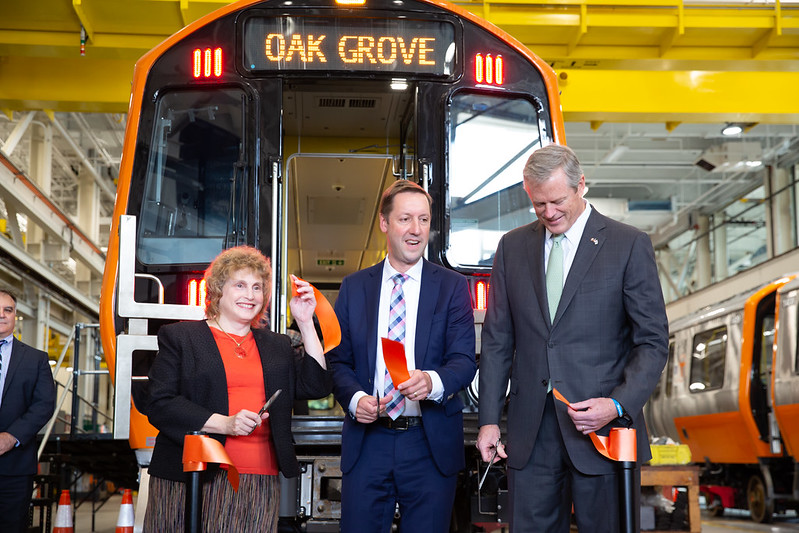
During his first time riding on the Orange Line trains, which began operating in 2019, Paul Foley got stuck in the platform gap while trying to board with his wheelchair. Luckily, his group of disabled friends were there to help.
“My mid-wheels were in the train, and so my body and stuff was already in the train,” Foley said, “and I was just kind of tipped back and couldn’t really move forwards or backwards.”
“But I wasn’t really too worried. I knew my friends were there, so I knew they would get people’s attention. The doors weren’t gonna close and the train wasn’t gonna pull off or anything like that.”
Desi Flores, another wheelchair user, witnessed Foley’s incident, and she wonders why the new trains have a larger gap.
“It’s really frustrating because they put all this investment into getting new trains, and clearly accessibility was not a priority in that decision,” she said. “In some stations, the gap is fine, but it’s still not perfect, and it’s not consistent across stations.”
Charlie Miller, who has multiple disabilities and often uses a cane for mobility, faces extra challenges boarding Green Line trains at inaccessible stations because the ramp does not fully reach the platform.
“It is kind of weird knowing that everyone else has an easy time getting on, and I’m there trying to summon my strength to be able to get up,” they said. “So it’s a little bit difficult, but it works out in the end. I can use my cane for leverage and push myself up because my arms work pretty OK.”
Communication Inaccessibility
Another common barrier in the MBTA system is a lack of accessible information.
Brelsford explained that accessible information is a priority at the MBTA. As an example, she described large-format digital panels at stations with information about service diversions and elevator outages, with a push-button audio system and a tactile Braille component.
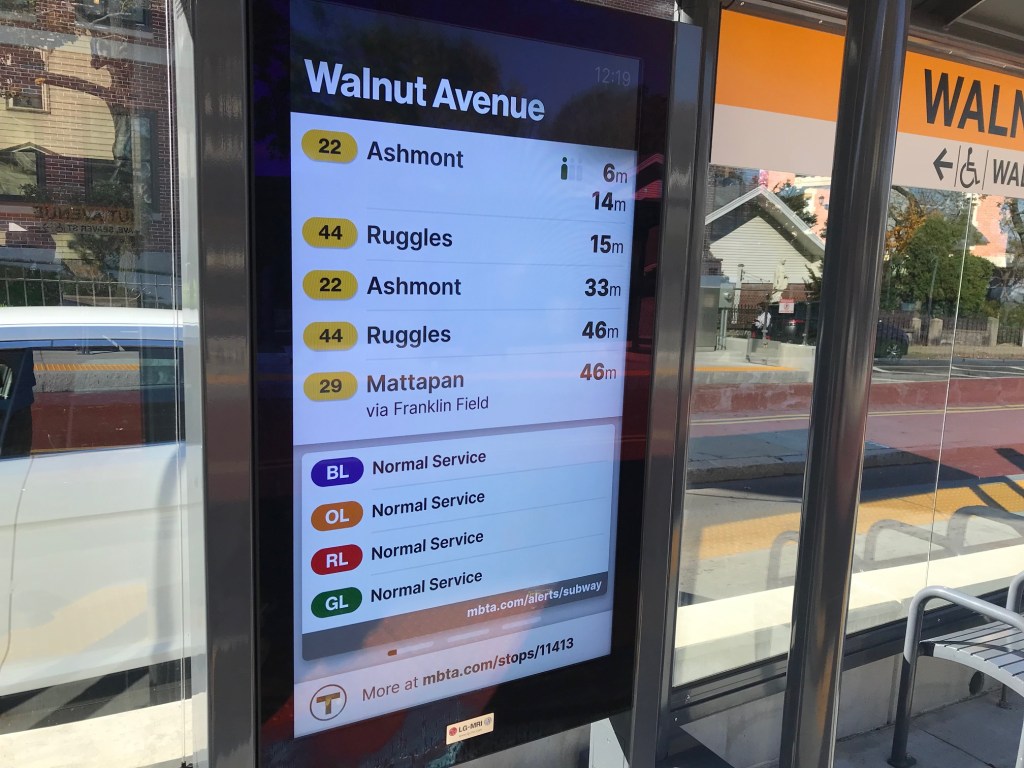
“One thing we’ve been really committed to for a long time now is this concept of dual-mode, effective communication, so making sure that with some minor exceptions, anywhere we are broadcasting information audibly, that we’re also doing it visually and vice versa,” she said.
Even with this commitment, some disabled people described challenges navigating the MBTA due to inaccessible information.
Lupin Thurrott, who is legally blind, said he must pay extra attention to stop announcements just to ensure he knows where to get off the T.
“The speaker quality on the Orange Line is better because some of the trains are newer,” he said. “But I’d say if I’m taking the train two or three times throughout the day, definitely at least one of those times the speaker will probably be an issue.”
Inaudible announcements also affect the hard of hearing and deaf communities. Asa Pereli Silberstein, who is hard of hearing, explained how written information is more accessible for him.
“They’ll announce what stop is next, but not all of the different trains on the different lines will have it in writing,” he said. “So it can sometimes be challenging to not know where I am or what’s happening, unless I’m really paying attention to outside the window.”
“No one wants to have to be constantly vigilant in order to be able to get where they need to go,” Silberstein added. “You should be able to either use audio or visual or both, depending on what meets your needs, even if you’re not hard of hearing.”
Attitudinal Barriers
Beyond inaccessible infrastructure and information, disabled people often experience ableism from MBTA staff and passengers. Some people I interviewed described how operators sometimes leave them behind.
Charlie Miller explained how using a cane can cause them to need more time to board trains, but the operator is not always understanding of the extra effort it takes them.
“I might be pushing myself very hard to get to a train on time or get off the train and the lights are already blinking by the time that I get there, and so they’re like, ‘No, you can’t get on actually,’” Miller said.
Tina Caruso, who has multiple disabilities, including blindness and autism, also said she encounters issues with the doors closing early.
“I’ve had other drivers where they’re holding the (doors to an inaccessible car) open for me, and then they shut the ADA doors in my face,” she said.
Caruso recalled rude comments she has received from fellow passengers.
“I’ve had some jerk- ass kids from the school near MassArt, that is I think a middle school, literally play musical chairs and say, ‘Haha, you can’t sit down,’” she said.
She described the frustration of being denied a seat.
“Half the time I don’t have spatial awareness, let alone trying to make sure I don’t fall somewhere. And then people are like, ‘No, you can’t have a seat,’” Caruso continued.
Flores said she and her group of disabled friends who ride the T together once could not get an attendant to bring them a bridge plate to reduce the gap between the platform and train.
“We’ve never had issues before with asking them for a bridge plate,” she said, “but we asked this person for a bridge plate, and they were very hesitant about it, and they were like, ‘Are you sure you need that?’”
Advocacy delivers improvements
The RTAG, which is actively seeking new members, has become an increasingly influential venue for disabled riders to demand improvements.
“We’ve been able to increase awareness about RTAG to the point where various departments of the MBTA, and even outside organizations started to proactively reach out to us, like during the design phase, for feedback and comment,” says RTAG director Torres Radisic.
Some of that influence is evident in the T’s 5-year capital investment plan, which includes dozens of accessibility improvements.
The MBTA’s Brelsford says that about 25 Green Line stations will be made accessible over the next five years, including most of the surface-level stops on the B branch in Brighton and the C branch in Brookline.
Symphony station will close for three years beginning on June 6 in order to construct elevators, add accessible bathrooms, raise the platform, and improve wayfinding.
Additionally, the new Green Line trains that will be introduced starting next year will allow for future platform adjustments to ensure level boarding.
In spite of its hassles, the T’s riders still value how public transit gives them the opportunity to travel independently around the city.
“Without it, I would just be in my apartment all the time,” says Thurrott. “Having access to public transit and having it be welcoming for everybody and usable for everybody means that you get to more fully participate in your community and go do fun stuff.”
“One of the main reasons why I live in the city is because of the transportation access,” says Flores. “It’s a crucial lifeline to be able to get around, and I’m glad to see that improvements have happened and are now continuing to happen, but there is still a ways to go to make it fully accessible.”

Read More:
Streetsblog has migrated to a new comment system. New commenters can register directly in the comments section of any article. Returning commenters: your previous comments and display name have been preserved, but you'll need to reclaim your account by clicking "Forgot your password?" on the sign-in form, entering your email, and following the verification link to set a new password — this is required because passwords could not be carried over during the migration. For questions, contact tips@streetsblog.org.